Correctly attaching a trailer to a vehicle is one of the most important safety steps in towing. Most trailer-related incidents happen not on the road, but at the point of hitching up - missed connections, unsecured couplings, incorrect nose weight or forgotten cables.
The key is to be methodical and consistent every time you hitch up or unhitch. Follow the same routine and you dramatically reduce the chance of missing something critical.
This guide walks through the safe, correct way to attach a trailer, suitable for UK towing rules and best practice.
Before You Hitch Up: Preparation
Apply the trailer handbrake
Fit towing mirrors if the vehicle mirrors do not give a clear view past the trailer
Remove:
Towball dust cover
Electrical socket cover
Any security devices
Check the towball:
It should be lightly oiled, not greased
⚠️ Do not lubricate if using a stabiliser coupling (e.g. AL-KO, Winterhoff, BPW)
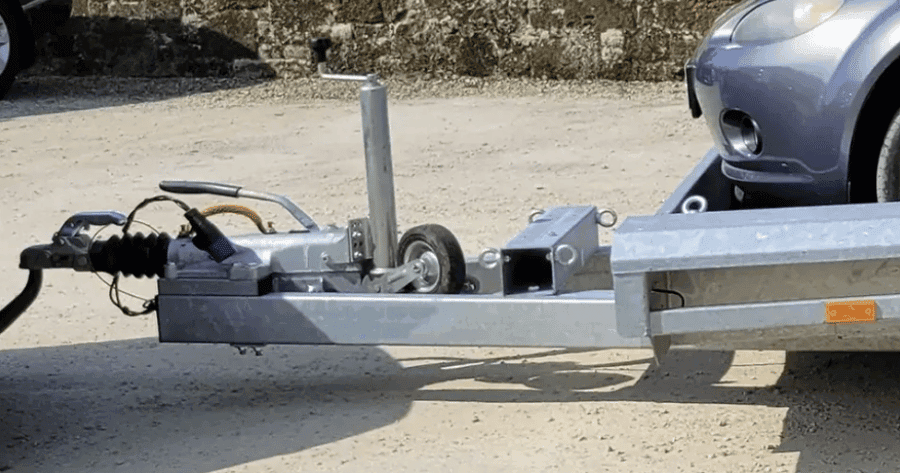
Wind the jockey wheel to a suitable height so the coupling head can clear the towball.
Lining Up the Tow Vehicle and Trailer
If possible, use a reversing helper
They should stand where you can see their hands clearly
They will guide you if you’re off-line
If alone, lean a broom or marker against the coupling so you can see it through the rear window
Reverse slowly and steadily - accuracy matters more than speed.
Positioning the Trailer Correctly
Raise the front of the trailer using the jockey wheel to the required height
Roll the trailer up to the rear of the vehicle
For tandem axle trailers:
Raise the front enough to lift the front axle wheels clear of the ground
This makes manoeuvring far easier
⚠️ Never attempt to lift the trailer front manually - always use the jockey wheel.
Lowering Onto the Towball
Lower the trailer onto the towball using the jockey wheel
Over the final foot:
Your helper should indicate the distance between towball and coupling head
If you stop short:
Judge movement by watching the trailer wheels relative to a ground reference
Some coupling heads:
Lock automatically when lowered
Others require the handle to be held up
Many have visual indicators to confirm correct engagement
Proving the Coupling Is Secure
Once the coupling appears locked:
Lower the jockey wheel a few turns to lift the rear of the vehicle slightly
This proves the coupling is fully engaged
Fully wind the jockey wheel up
Clamp and lock it securely in the raised position
Check that the jockey wheel:
Does not interfere with the overrun coupling movement
Breakaway Cable & Safety Connections
Attach the breakaway cable(s) to the rear of the vehicle:
This cable applies the trailer handbrake if the trailer becomes detached
Correct attachment:
Use the dedicated breakaway ring if fitted
Or loop around the towbar (not the towball neck unless no alternative exists)
Ensure the cable cannot foul the coupling head
Check cables:
Enough slack for cornering
Will not drag on the ground
Electrical Connection & Light Checks
Plug in the lighting connector (it only fits one way)
Align the cut-out with the lug on the socket
If two sockets are fitted:
Use the black flap socket (standard trailer lighting)
The white flap is for caravan supplementary systems
Check all lights:
Side lights
Tail lights
Indicators (vehicle and trailer must match)
Brake lights
If alone, use a short stick or tool to hold the brake pedal down while checking.
Mirrors, Loading & Nose Weight
Adjust mirrors so you can see:
Down both sides of the trailer
The trailer wheels and body
If this isn’t possible, fit extension mirrors.
Loading the Trailer
Distribute weight evenly
Avoid heavy loads behind the axle(s)
Nose Weight
Critical for stability
Should be at least 50kg when stationary (unless very light trailer)
Always follow:
Tow vehicle manufacturer limits
Trailer manufacturer limits
Too little nose weight can cause snaking. Too much can overload the vehicle and coupling.
Eye Couplings (If Fitted)
If the trailer uses an eye coupling:
Ensure the towing pin safety catch is fully engaged
Fit the safety pin or clip
⚠️ If this is not secured, the trailer can detach while towing.
Final Checks Before Driving Off
Jockey wheel fully raised and locked
Handbrake released
Lights working
Breakaway cable attached correctly
Mirrors adjusted
Load secure and legal
Brent’s Bottom Line
Attaching a trailer safely isn’t difficult - but it does demand discipline. Rushing or skipping steps is how trailers become detached, lights fail, or instability starts before you even reach the road.
Follow the same hitching routine every time and you’ll:
Tow more confidently
Reduce risk
Protect your vehicle, trailer and everyone around you
Hitch it right - every time.
-Brent