Regular overrun coupling inspection and servicing is essential for safe, predictable braking when towing a braked trailer. A worn or poorly maintained overrun coupling can cause harsh braking, banging noises, poor stopping performance, or even loss of control.
This guide covers what to check, how to test components, and when parts must be replaced, helping keep your trailer legal, safe, and smooth on UK roads.
What Is an Overrun Coupling?
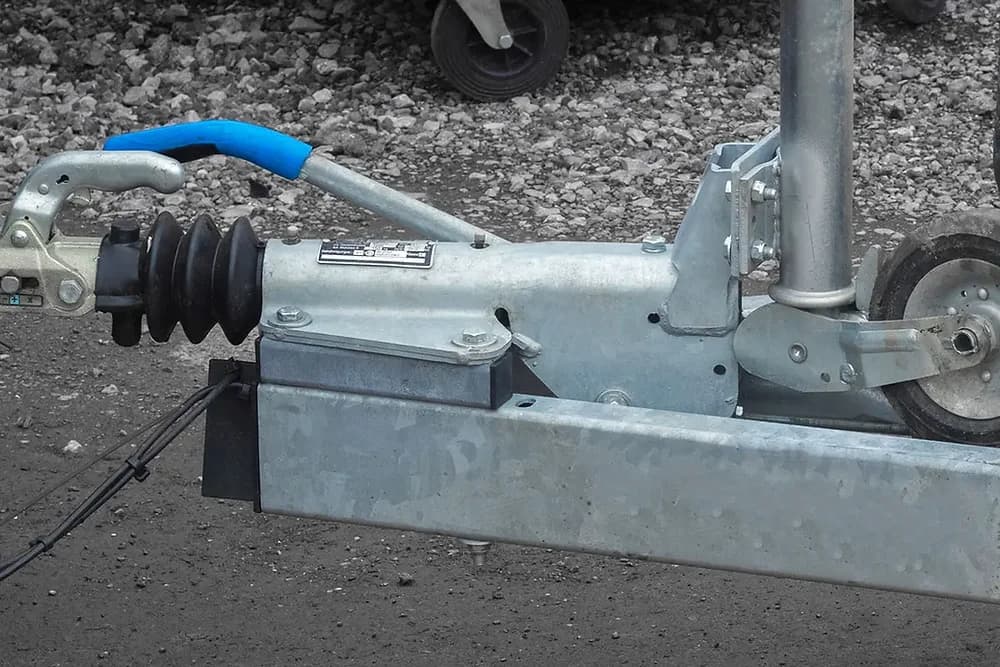
An overrun coupling allows the trailer to brake automatically when the towing vehicle slows. As the tow vehicle decelerates, the trailer compresses the coupling, activating the braking system via the drawtube and damper.
Because it’s a mechanical system, wear, corrosion and lack of lubrication can seriously affect performance.
Overrun Capacity Check (Start Here)
Confirm the overrun coupling capacity matches the trailer’s gross weight
The coupling must always be rated equal to or higher than the trailer’s maximum authorised mass (MAM)
Using an underrated coupling is unsafe and can lead to premature failure.
Mounting & Structural Fixings
Coupling Mounting Bolts
Check all bolts securing the coupling to the drawbar
Ensure correct torque and no signs of elongation or movement
Coupling Head Bolts
Check tightness and condition
Look for cracked paint or rust trails, which can indicate movement
Coupling Head & Towball Check
Coupling Head Operation
Using a 50mm test towball, check that:
The coupling locates fully
The locking mechanism engages correctly
Any wear or engagement indicators function properly
To meet UK standards, a 50mm towball must measure between 49.61mm and 50.00mm.
Lubrication
Lubricate the coupling mechanism
Lightly grease inside the coupling socket
⚠️ Important:If the coupling is fitted with a 50mm stabiliser coupling, DO NOT GREASE the socket, as this will reduce stabiliser effectiveness.
Eye Fittings (If Fitted)
Inspect for irregular or uneven wear
Excessive wear can indicate incorrect coupling geometry or misalignment
Replace worn components immediately
Drawtube Inspection
Move the drawtube shaft up and down
Check for excessive play in the supporting bearings
Acceptable end float between the drawtube and brake lever varies by manufacturer, so always refer to the specific service instructions.
Drawtube Gaiter
Inspect the rubber gaiter for:
Splits
Tears
Perishing
A damaged gaiter allows dirt and water into the drawtube, accelerating wear. Replace immediately if damaged.
Overrun Damper Test (Critical Check)
With:
Handbrake off
Wheels securely chocked
Push the coupling in by hand.
Correct Operation
Moves in smoothly
Offers steady, uniform resistance
Returns back out on its own
Faulty Damper Signs
Does not move at all
Slides in with no resistance
Does not return outward
If any of these occur, the damper must be replaced.
⚠️ Always use the correct specification damper and follow manufacturer fitting instructions exactly.
Handbrake Mechanism Check
Check for correct movement and engagement
On ratchet-type handbrakes:
Inspect teeth and pawl condition
Ensure positive locking action
Lubricate:
Pivot points
Ratchet mechanism
Any grease nipples underneath the assembly
Grease Nipples
Apply a grease gun to all nipples on top of the coupling housing
Use a liberal but controlled amount of grease
Stop once resistance increases or clean grease appears
Breakaway Cable Inspection
Check the breakaway cable for:
Kinks or fraying
Secure attachment to the burst ring
Correct operation of the safety clip
If replacement is required:
Use a genuine replacement cable
Ensure it passes through a hole or guide in the chassis front
This ensures a straight-line pull if the trailer becomes detached.
Reverse Cut-Out Lever
If fitted with a self-correcting reverse cut-out lever:
Apply and release it
Confirm it returns smoothly to its normal position
A sticking reverse cut-out can cause braking issues when reversing.
Final Checks & Best Practice
Perform overrun coupling inspections at regular service intervals
Always refer to the specific coupling manufacturer’s maintenance instructions
Address wear early - overrun issues rarely fix themselves and usually get worse
Brent’s Bottom Line
A well-maintained overrun coupling:
Improves braking smoothness
Reduces noise and shock loading
Extends brake and damper life
Keeps your trailer compliant and safe
If the coupling feels harsh, sloppy, or unpredictable - it’s time to inspect it properly, not ignore it.
Safe towing starts at the hitch.
-Brent