Choosing the right trailer is critical when transporting heavy equipment. The best types of trailers for hauling heavy equipment are designed to handle high weights safely, distribute loads correctly, and remain stable during towing. Using the wrong trailer can lead to poor handling, excessive wear, brake issues, or serious safety risks.
This guide explains the most suitable trailer types for heavy equipment, what they’re best used for, and how to choose the right one for your job.
Why choosing the right trailer matters
Heavy equipment places far more strain on:
Axles and suspension
Brakes and bearings
Tow vehicle stability
Couplings and tyres
The correct trailer ensures:
Safe load distribution
Legal compliance
Reduced risk of snaking
Easier loading and unloading
Not all trailers are built for weight - and when equipment gets heavy, strength and design matter more than convenience.
Plant trailers - the go-to for heavy machinery
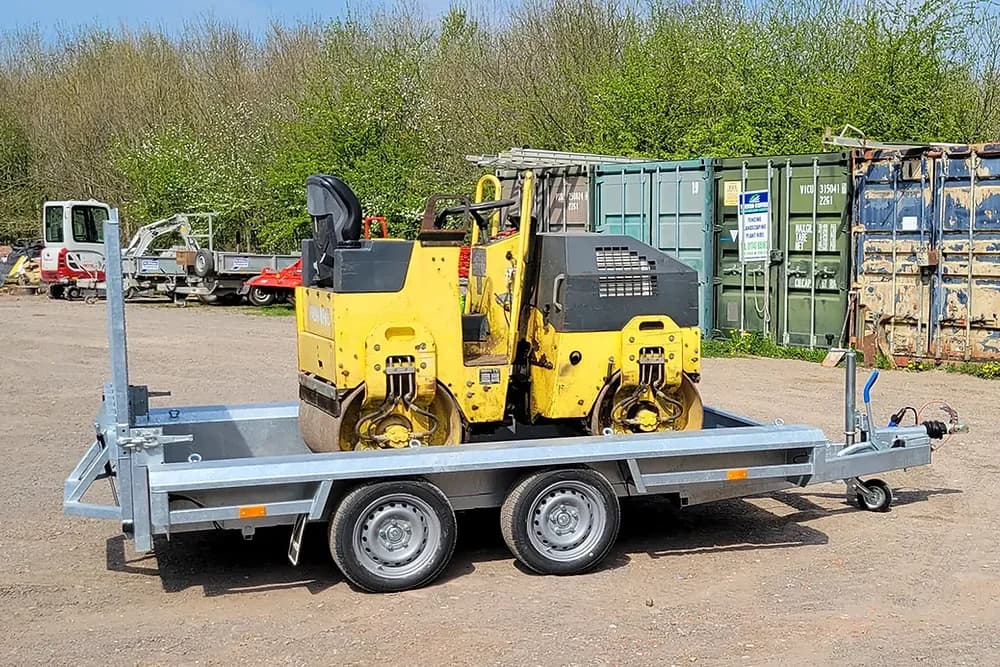
Plant trailers are widely considered one of the best types of trailers for hauling heavy equipment.
Best for:
Mini diggers
Excavators
Dumpers
Rollers
Skid steers
Why they work:
High payload capacity
Reinforced chassis
Heavy-duty axles
Integrated loading ramps
Most plant trailers are braked and designed specifically for construction and industrial use, making them ideal for frequent heavy loads.
Flatbed trailers - versatile and adaptable
Flatbed trailers offer flexibility for equipment that doesn’t fit neatly on a plant trailer.
Best for:
Generators
Compressors
Palletised machinery
Awkward-shaped equipment
Key advantages:
Open deck allows easy access from all sides
Suitable for cranes or forklifts
Multiple tie-down points for load security
Flatbed trailers require careful load securing, but their versatility makes them a popular choice for mixed equipment transport.
Low loader trailers - ideal for tall or heavy machines
Low loader trailers are designed with a lower deck height to improve stability and clearance.
Best for:
Tall machinery
Heavy tracked equipment
Machines with a high centre of gravity
Benefits:
Lower loading angle
Reduced overall height during transport
Improved towing stability
For particularly heavy or tall equipment, low loaders are often the safest solution.
Car transporter trailers - not just for vehicles
While designed for vehicles, car transporter trailers are often used for heavy equipment transport.
Best for:
Machinery on wheels
Plant fitted with transport wheels
Compact loaders
Why they’re effective:
Strong chassis
Integrated ramps
Designed for high axle loads
It’s important to confirm payload limits, as not all car transporters are suitable for very heavy plant.
Beavertail trailers - easier loading for heavy gear
Beavertail trailers feature a sloped rear section that reduces the ramp angle.
Best for:
Heavy wheeled equipment
Machinery with low ground clearance
Advantages:
Smoother loading
Reduced ramp stress
Safer loading process
This design is especially useful when equipment struggles with steep ramps.
Key factors when choosing a heavy equipment trailer
Even among the best types of trailers for hauling heavy equipment, not every trailer suits every job.
Payload capacity
Always check:
Trailer maximum payload
Gross vehicle weight (GVW)
Axle ratings
Never load to the absolute limit if regular towing is planned.
Braked vs unbraked
Heavy equipment must be carried on braked trailers. Unbraked trailers are not suitable for heavy loads and are legally restricted.
Load distribution
Correct weight placement:
Improves braking performance
Prevents snaking
Protects axles and tyres
Poor distribution is one of the most common causes of towing instability.
Ramps and access
Check:
Ramp weight ratings
Ramp storage and locking
Deck height and approach angle
Loading safety is just as important as towing safety.
Hire or buy - what makes sense?
If you only move heavy equipment occasionally, trailer hire is often the smarter option:
No maintenance responsibility
Access to the correct trailer type for each job
Lower upfront costs
Regular equipment transport may justify buying, but the trailer must match your heaviest and most demanding load.
Final thoughts
The best types of trailers for hauling heavy equipment are built for strength, stability, and safety. Plant trailers, flatbeds, low loaders, car transporters, and beavertail trailers all serve different purposes - and choosing the right one depends on the equipment you’re moving.
If in doubt:
Check weight ratings
Choose braked trailers
Prioritise stability over convenience
Using the correct trailer not only protects your equipment - it protects you and everyone else on the road.
-B.R.E.N.T