
Head to head
Bateson 100LT vs Brian James Hi Max 200
The Bateson 100LT is rated 6.5 tonnes heavier gross.
Last reviewed 13 September 2026

Key differences
- Gross weight: the Bateson 100LT is rated 6.5 tonnes heavier gross.
Specifications side by side
| Bateson 100LT | Brian James Hi Max 200 | |
|---|---|---|
| Gross weight | 10,000kg | 3500Kg |
| Axles | Twin beam axles, cam brakes, leaf spring | Tandem |
| Internal length | 6000mm (20ft) | - |
| Internal width | 2200mm (2300mm overall) | - |
| Wheels/tyres | 400 x 60 x 15.5 | - |
| Bed size | - | 5.0m (16ft5') x 1.95 (6ft5') |
| Load | - | 2760Kg |
Sources: Bateson 100LT, Brian James Hi Max 200. Figures vary by model year and options, so check with the supplier before you commit.
Buy or hire the 100LT if...
- you want one that is rated 6.5 tonnes heavier gross
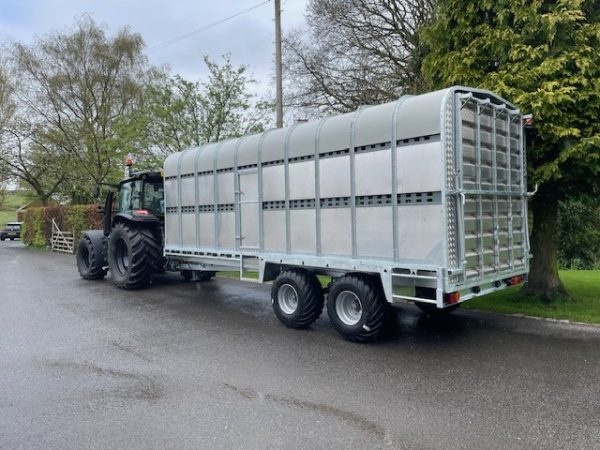
Bateson's largest livestock trailer, a 20ft tractor-drawn unit with a fully galvanised, demountable container. At 10 tonnes gross it suits livestock hauliers and farms moving full loads of cattle or sheep rather than the smaller trailers aimed at hobby keepers.
Listed by
- Liverseed Trailers - Preston, Lostock Hall, Penwortham
Buy or hire the Hi Max 200 if...
Brian James Hi Max 200, carried by UK dealers and hire companies listed on GetBrent for sale. Car transporters in this class are hired and bought by track-day drivers, classic car owners and recovery firms who need to move a vehicle without driving it.
Listed by
- A47 Barwell Trailers Sales Hire Service Ltd - Leicester, Barwell
Common questions
What is the difference between the Bateson 100LT and the Brian James Hi Max 200?
The Bateson 100LT is rated 6.5 tonnes heavier gross. The Bateson 100LT is a tractor-drawn livestock trailer with demountable container, 20ft; the Brian James Hi Max 200 is a car transporter trailer.
Can I tow the Bateson 100LT or the Brian James Hi Max 200 on a car licence?
Bateson 100LT is rated over 3,500kg gross, which is beyond what a car can tow in the UK.
GetBrent is an independent directory and is not a dealer for, nor affiliated with, either manufacturer. Model and brand names are the trademarks of their owners.