
Head to head
Caterpillar 301.7 CR vs Thwaites 3 Tonne Front Tip
The Thwaites 3 Tonne Front Tip has 9kW more power.
Last reviewed 13 September 2026

Key differences
- Engine power: the Thwaites 3 Tonne Front Tip has 9kW more power.
Specifications side by side
| Caterpillar 301.7 CR | Thwaites 3 Tonne Front Tip | |
|---|---|---|
| Engine power | 15.7 kW (21 hp) | 24.8kW (33.2 bhp) @ 2800rpm |
| Operating weight | 1,915 kg (4,222 lb) | - |
| Dig depth | 2,540 mm (100 in) (long stick) | - |
| Payload | - | 3000 kg |
| Heaped capacity | - | 1680 litres |
| Engine | - | Yanmar 3TNV88 |
Sources: Caterpillar 301.7 CR, Thwaites 3 Tonne Front Tip. Figures vary by model year and options, so check with the supplier before you commit.
Buy or hire the 301.7 CR if...
The Cat 301.7 CR is Caterpillar's roughly 2 tonne mini excavator, built around the Cat C1.1 engine and backed by Caterpillar's dealer network for parts and service. It is specified on UK sites for the same drainage, groundworks and utility jobs as the Kubota U27-4 and Takeuchi TB216, with buyers often citing Cat's residual values and dealer support over price. It is one of the smaller models in Caterpillar's wider mini excavator line-up, which extends up to around 10 tonnes.
Full 301.7 CR specifications →Buy or hire the 3 Tonne Front Tip if...
- you want one that has 9kW more power
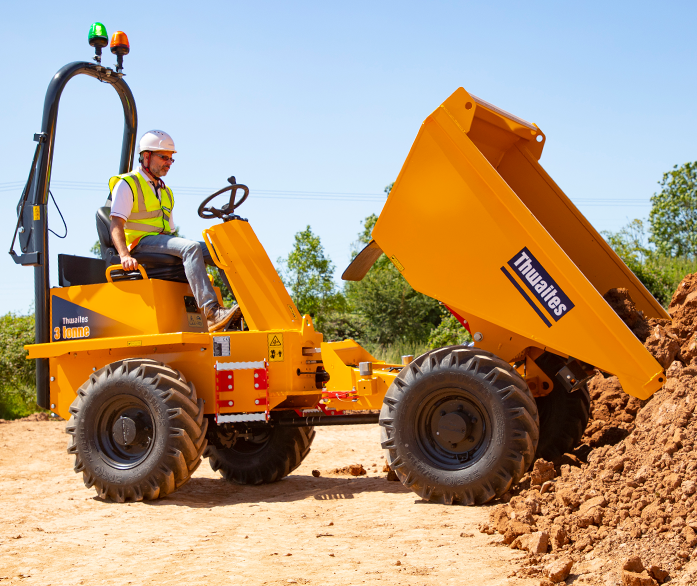
A mid-size front tip dumper for groundworks, drainage and general muck shifting on UK sites where a 3 tonne payload is enough. Sits between the 1 tonne hi-tip and the 6 tonne dumpers in the Thwaites range.
Full 3 Tonne Front Tip specifications →Common questions
What is the difference between the Caterpillar 301.7 CR and the Thwaites 3 Tonne Front Tip?
The Thwaites 3 Tonne Front Tip has 9kW more power. The Caterpillar 301.7 CR is a a sub-2 tonne conventional-tail-swing mini excavator; the Thwaites 3 Tonne Front Tip is a 3 tonne front tip site dumper.
GetBrent is an independent directory and is not a dealer for, nor affiliated with, either manufacturer. Model and brand names are the trademarks of their owners.