
Head to head
Volvo Construction Equipment ECR25D vs Volvo L220H
The Volvo L220H has 264kW more power.
Last reviewed 13 September 2026
Key differences
- Engine power: the Volvo L220H has 264kW more power.
Specifications side by side
| Volvo Construction Equipment ECR25D | Volvo L220H | |
|---|---|---|
| Operating weight | 2,490 kg (ISO 6016) | 68,780-72,970 lb |
| Engine power | 15.6 kW (21.2 hp) at 2,400 rpm | 375hp (Volvo D13J, Tier 4f) |
| Dig depth | 2,672 mm (1,050mm arm); 2,965 mm (1,350mm arm) | - |
| Bucket capacity | - | 5.6-20.9 yd3 |
| Breakout force | - | 55,075 lbf |
| Static tipping load | - | 46,295 lbs |
Sources: Volvo Construction Equipment ECR25D, Volvo L220H. Figures vary by model year and options, so check with the supplier before you commit.
Buy or hire the ECR25D if...
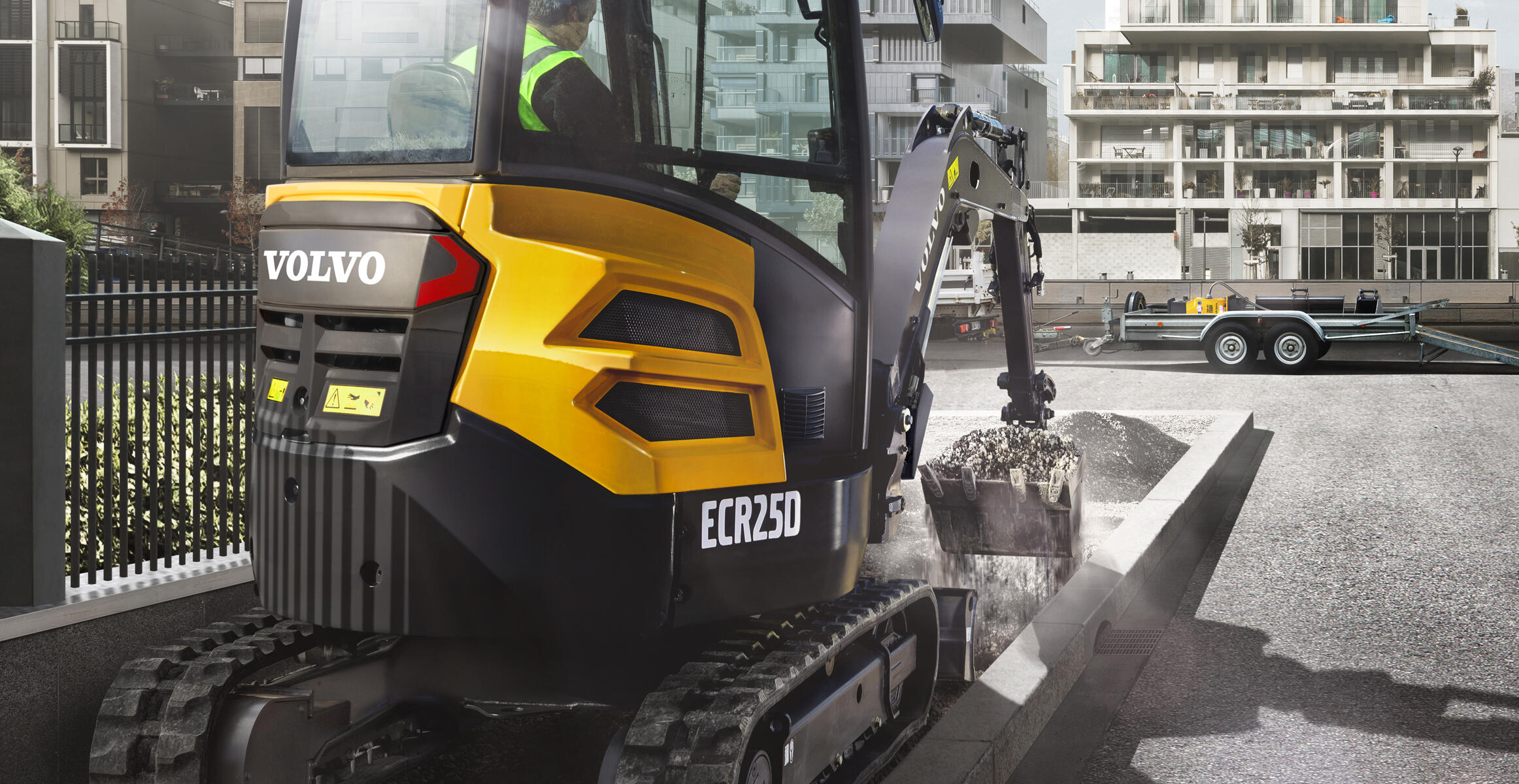
The Volvo ECR25D is Volvo CE's short-swing mini excavator in the popular UK 2.5-3 tonne hire class, competing for the same jobs as the Kubota U27-4 and similarly sized Takeuchi and JCB machines. Its short-radius superstructure lets the counterweight stay close to the tracks when slewing, useful on confined urban and residential sites. It is sold across Great Britain exclusively through SMT GB's dealer network.
Full ECR25D specifications →Buy or hire the L220H if...
- you want one that has 264kW more power
A large production wheel loader for quarries and bulk material handling rather than general building sites. Its wide bucket capacity range lets one machine be set up for anything from aggregates to woodchip, which suits quarry and waste transfer operators.
Listed by
- Eco Plant Hire And Sales Ltd - Peterborough, Whittlesey
Common questions
What is the difference between the Volvo Construction Equipment ECR25D and the Volvo L220H?
The Volvo L220H has 264kW more power. The Volvo Construction Equipment ECR25D is a a 2.5-3.0 tonne short-swing mini excavator; the Volvo L220H is a large wheel loader.
GetBrent is an independent directory and is not a dealer for, nor affiliated with, either manufacturer. Model and brand names are the trademarks of their owners.