
The maximum weight your trailer can be depends on your licence category, your vehicle's kerb weight, and whether the trailer is braked or unbraked. Getting it wrong can mean fines, penalty points, or worse, so here's how UK trailer weight limits actually work.
Understanding Gross Vehicle Weight Rating (GVWR)
The first thing to grasp is the concept of Gross Vehicle Weight Rating, or GVWR. This is the maximum total weight your vehicle and trailer combination can weigh when fully loaded. It's not just about the empty trailer - it's everything together.
Your driving licence category determines what you're legally allowed to tow. Most car drivers hold a Category B licence, which permits you to tow trailers up to a certain limit. The key rules are straightforward: if the trailer weighs more than 750 kg (when loaded), the combined weight of your car and trailer cannot exceed 3,500 kg. If you're towing a heavier trailer, your vehicle's unladen weight plus the trailer's maximum authorised mass (MAM) must not exceed 4,250 kg.
Exceeding these limits isn't just risky - it's illegal. The DVSA (Driver and Vehicle Standards Agency) takes this seriously, and you could face fines up to £1,000 plus penalty points on your licence.
Different Licence Categories and Their Limits
Your driving licence category is crucial. Here's what you need to know:
- Category B (standard car licence): You can tow trailers up to 750 kg unladen weight without any additional training. For heavier trailers, the combined weight rule applies (car + loaded trailer must not exceed 4,250 kg maximum).
- Category B+E (acquired after 19 December 2021): Allows you to tow larger trailers, with a maximum trailer mass of 3,500 kg.
- Category C1 (3.5-7.5 tonne vehicles): Requires additional training and testing.
- Category C (HGV licence): For professional drivers handling the heaviest loads.
If your licence was issued before 19 December 2021, you may have different entitlements - it's worth checking your photocard to be certain. Many older licences grandfathered in higher towing capacities, so don't assume you know your limits without checking.
Practical Weight Calculation Checklist
Before you hire any trailer, use this simple checklist to ensure you're within legal limits:
- Check your driving licence category (look at the codes on the back of your photocard).
- Note your car's kerbside weight (usually in your vehicle manual or service booklet).
- Find the trailer's Maximum Authorised Mass (MAM) - the hire company will provide this.
- Calculate: your car's weight + trailer's MAM = total combination weight.
- Compare this against your licence limits and your car's towing capacity (also in your manual).
- Never load beyond the trailer's MAM, even if calculations suggest you could.
- Consider a safety margin - aim for 10-15% under the limit to account for fuel, passengers, and cargo weight.
It's easy to get this wrong, so I always recommend double-checking with the hire company before you collect your trailer. A five-minute conversation can save you a £1,000 fine.
What About Axle Weights?
Here's something many people overlook: it's not just about the total weight. The DVSA also enforces strict axle weight limits. A standard car towing a trailer cannot exceed 12 tonnes of combined axle weight on any single axle. This becomes particularly important when loading, because uneven weight distribution can breach axle limits even if your total weight is legal.
When you're loading a hired trailer, spread your load evenly and keep heavier items low and centred. This isn't just about legality - it's about safety. Poor weight distribution can affect braking, handling, and stability on motorways.
Common Mistakes to Avoid
After years in this industry, I've seen the same mistakes repeated. The most common? People assume their towing capacity and their licence limits are the same thing. They're not. Your car might be capable of towing 1,500 kg, but your licence might only permit 750 kg. The limiting factor is whichever is lower - usually your licence.
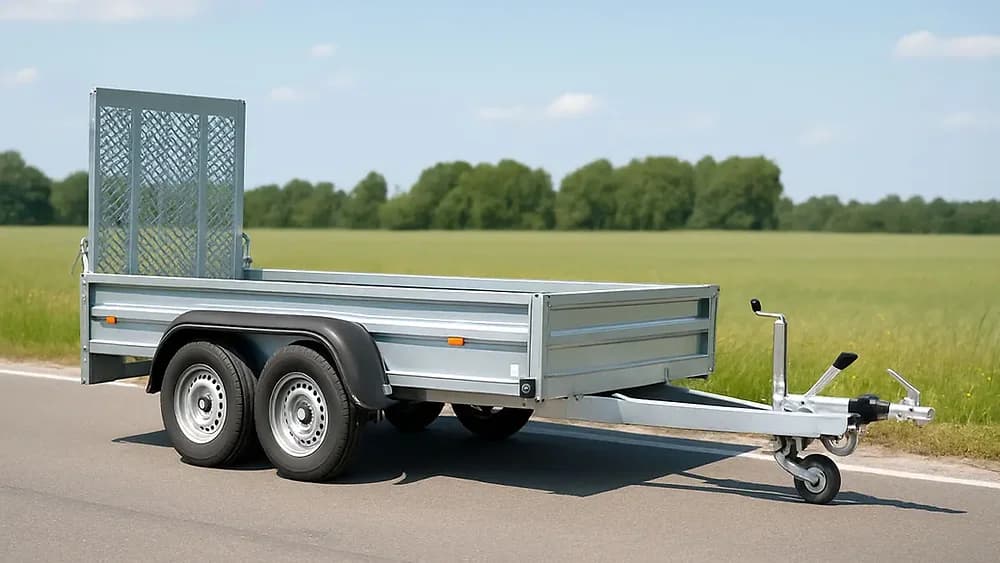
Another frequent error is not accounting for the weight of the trailer itself. A utility trailer might weigh 600 kg empty, so you only have 150 kg of cargo capacity if you're staying under 750 kg total. Always ask the hire company for the unladen weight.
Finally, don't guess your vehicle's weight. A fully-loaded family car with fuel and passengers can easily weigh 200-300 kg more than the kerb weight. Get accurate figures before you hire.
Getting Professional Advice
If you're uncertain about your specific situation, it's absolutely worth getting professional advice. The DVSA website has clear guidance, and reputable trailer hire companies (like those listed on GetBrent) will always help you verify your entitlements before hire. It's better to ask than to risk a fine or, worse, an accident.
Finding the right trailer for your needs means finding a hire company that understands both the regulations and your requirements. At GetBrent.co.uk, we've listed trusted trailer and equipment hire companies across the UK who can guide you through weight limits and help you choose the perfect trailer for your job. Search your local area today and chat with the experts who know the rules inside out.