
Head to head
Ford Transit Transit Connect vs Mercedes Sprinter eSprinter
The Mercedes Sprinter eSprinter holds 5.9 cubic metres more.
Last reviewed 6 October 2026

Key differences
- Load volume: the Mercedes Sprinter eSprinter holds 5.9 cubic metres more.
Specifications side by side
| Ford Transit Transit Connect | Mercedes Sprinter eSprinter | |
|---|---|---|
| Payload | 790kg | 563-570 kg (L2, 3.5t, 81kWh); 1197 kg (L2, 4.15t); 414-421 kg (L3, 3.5t, 81kWh); 1148 kg (L3, 4.25t, 81kWh); 920-927 kg (L3, 4.25t, 113kWh) |
| Load volume | 3.1m3 (L1); 3.7m3 (L2) | 9 m3 (L2); 14 m3 (L3) |
| Load length | 1,797mm (L1); 2,150mm (L2) | - |
| Gross weight | - | up to 4250 kg |
| Towing capacity | - | up to 2000 kg |
Sources: Ford Transit Transit Connect, Mercedes Sprinter eSprinter. Figures vary by model year and options, so check with the supplier before you commit.
Buy or hire the Transit Connect if...
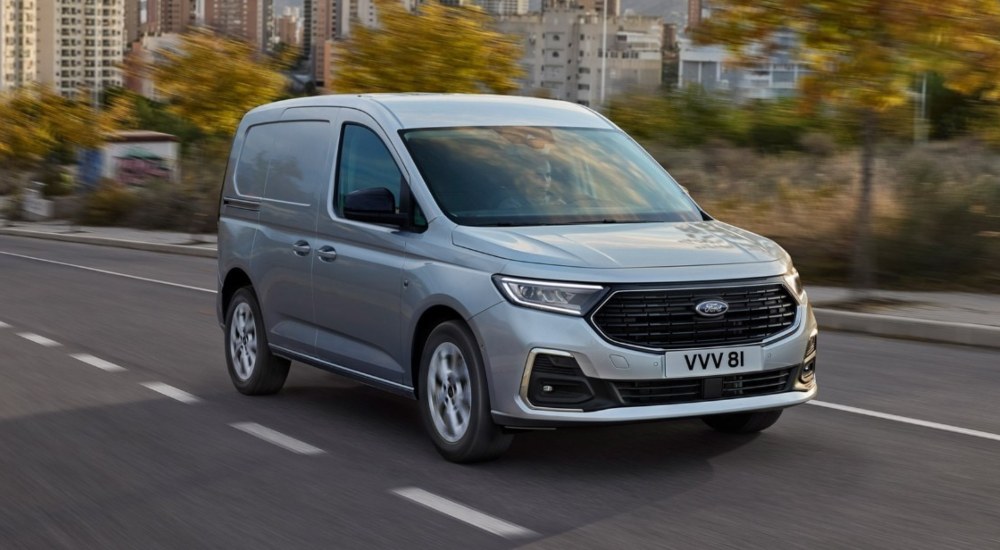
A compact panel van for tradespeople, couriers and facilities teams who want a small van that still takes two Euro pallets in the long version. It suits hire for tools, parts and light deliveries around town.
Full Transit Connect specifications →Buy or hire the eSprinter if...
- you want one that holds 5.9 cubic metres more
The eSprinter trades payload for range and battery size, so fleets running it for last-mile and urban delivery routes typically spec the heavier 4.15-4.25t GVW derivatives to recover payload lost to the battery pack.
Full eSprinter specifications →Common questions
What is the difference between the Ford Transit Transit Connect and the Mercedes Sprinter eSprinter?
The Mercedes Sprinter eSprinter holds 5.9 cubic metres more. The Ford Transit Transit Connect is a compact panel van in L1 and L2 lengths; the Mercedes Sprinter eSprinter is a battery-electric version of the Sprinter large van, offered with 81kWh or 113kWh batteries..
GetBrent is an independent directory and is not a dealer for, nor affiliated with, either manufacturer. Model and brand names are the trademarks of their owners.