Public liability insurance is not a legal requirement for most tradespeople in the UK, but it is widely considered essential protection for you and for them before any work starts on your home.
What public liability insurance actually covers
Public liability insurance is designed to cover claims made against a tradesperson if their work causes injury to a third party or damage to someone else's property. For example, if a builder's ladder damages your roof, or a plumber's work causes a flood that ruins a neighbour's ceiling, a public liability policy is what pays out.
It does not cover the tradesperson's own tools or equipment, and it does not cover injuries to the tradesperson's own employees. Those risks require separate cover. Despite being highly recommended across the industry, no general law in the UK forces a sole-trader tradesperson to hold public liability insurance. It is a commercial and contractual matter, not a statutory one.
The cover that is required by law
Two areas do carry clear legal obligations that you should be aware of when hiring someone for work in your home.
Employers' liability insurance
Under the Employers' Liability (Compulsory Insurance) Act 1969, any business that employs staff, including part-time workers, apprentices and casual labour, must hold employers' liability insurance. This applies to trades firms that bring a team to your job. A sole trader working entirely alone is not required to hold it, but the moment they take on even occasional help, the legal obligation applies. If a firm is sending two or more workers to your property, it is reasonable to ask whether they hold this cover.
Gas Safe Register
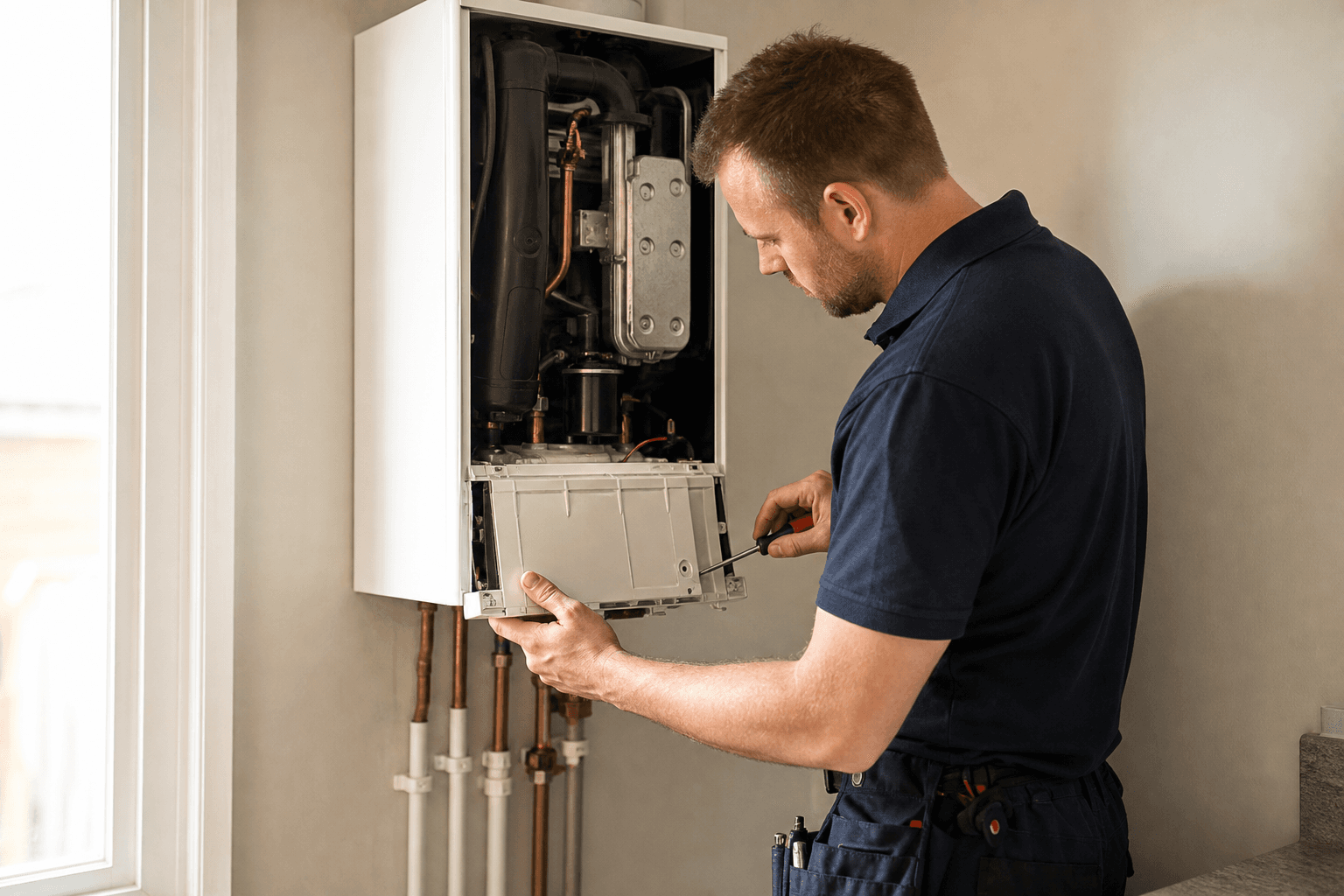
Under the Gas Safety (Installation and Use) Regulations 1998, enforced by the Health and Safety Executive (HSE), anyone carrying out work on gas appliances, fittings or associated pipework as part of their business must be registered with the Gas Safe Register. This is a mandatory legal registration scheme, not an optional accreditation. Always ask to see the engineer's Gas Safe ID card before any work on a boiler, hob, gas fire or pipework begins, and check their details at the Gas Safe Register website.
Electrical work and Part P
According to Electrical Safety First, the government-approved electrical safety body, you must either notify your local-authority building control before certain types of electrical installation work begin, or use an electrician who is registered with one of the government-approved competent person schemes, such as NICEIC or NAPIT. A registered electrician can self-certify their work and will give you a certificate within 8 weeks of completion which can be used as evidence of compliance. GOV.UK notes that competent person schemes also carry insurance-backed warranties and complaints procedures if a problem arises. You can search for a registered electrician on the Electrical Competent Person Register.
You can find local trade services across the UK and check which firms list their accreditations and insurance details before you make contact.
Why public liability still matters even when it is not compulsory
Although public liability insurance is not required by law for most trades, the practical consequences of hiring someone without it can fall on you. If an uninsured tradesperson damages your property and cannot pay to put it right, pursuing a claim through the courts can be slow and uncertain. Your own home insurance policy may not cover damage caused by a third-party contractor.
Seeing a TrustMark logo or trade body registration is therefore a reasonable indirect signal that cover is in place, though you should still ask to see a current certificate.
If you are looking for trade services in London or any other part of the country, reputable local firms will generally have no hesitation in sharing their insurance details when asked.
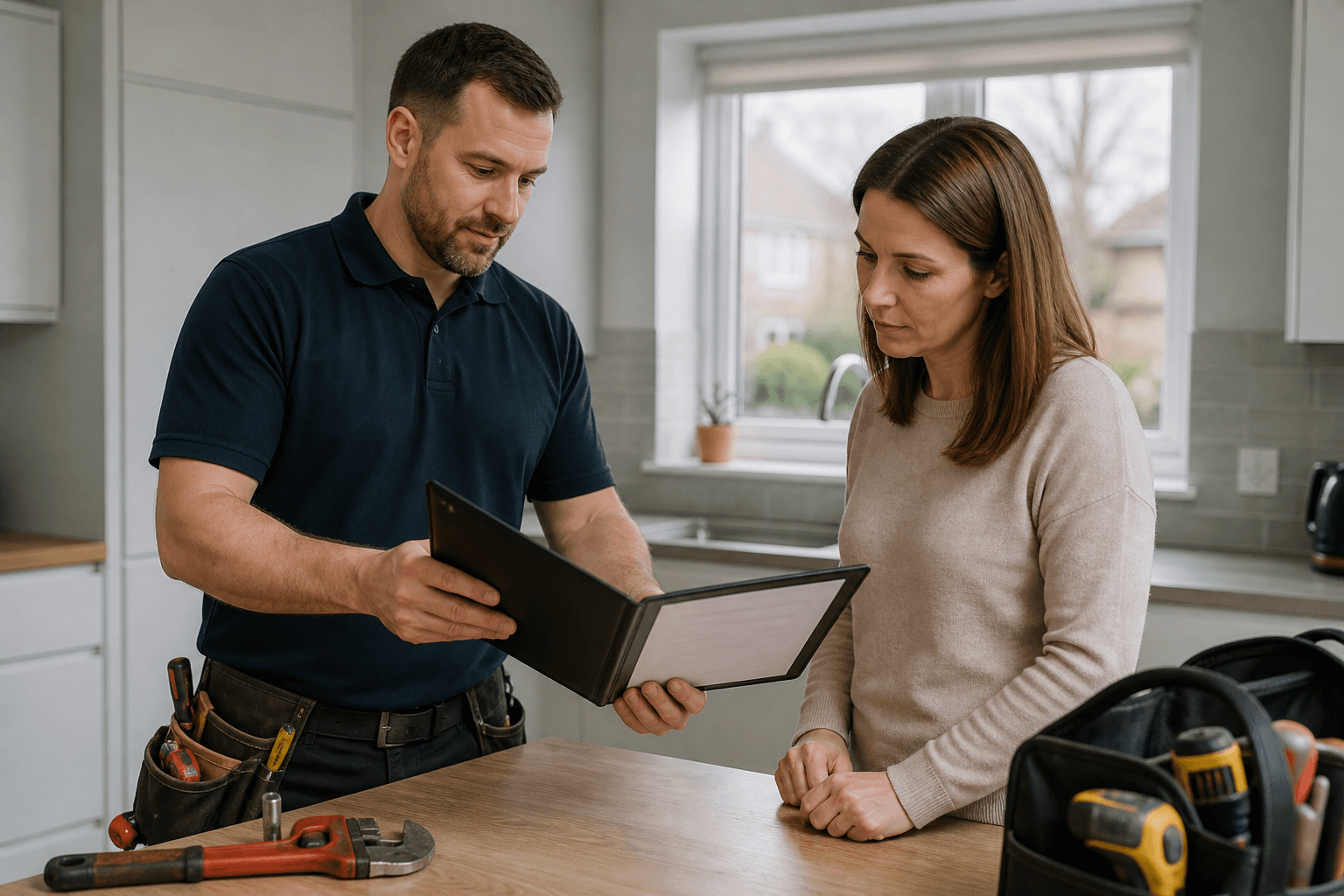
What to ask before work starts: a short checklist
- Do you hold public liability insurance? Ask for a copy of the current certificate, not just a verbal assurance.
- What is the level of cover? For domestic jobs, a minimum of £1 million is standard; some local authorities and housing associations require £5 million or more.
- Are you Gas Safe registered? Ask this for any gas work, and check the registration card matches the person doing the job.
- Are you registered with a Part P competent person scheme? Ask this for notifiable electrical installation work in England.
- Do you employ anyone who will be on site? If yes, confirm they hold employers' liability insurance under the 1969 Act.
- Will you provide a written certificate or completion notice? For Gas Safe and Part P work this is a standard part of the job, not an optional extra.
For smaller jobs in specific areas, such as trade services in Bromley, it is worth confirming insurance and registration details at the quote stage, before you agree to anything in writing.
What to do if something goes wrong
If a tradesperson has caused damage and you cannot resolve the matter directly, Citizens Advice provides guidance on your rights under consumer law, including the Consumer Rights Act 2015, which requires that services are carried out with reasonable care and skill. If the work was notifiable under building regulations and was not certified, your local authority building control department can advise on your options for regularisation.
If a gas engineer was not Gas Safe registered and work was carried out illegally, you can report this to the Gas Safe Register directly. The HSE takes reports of unregistered gas work seriously.
Find insured local tradespeople on GetBrent
GetBrent brings together local trade services firms so you can compare them and ask for a quote direct. Browse trade services near you to find builders, plumbers, electricians, handymen and landscapers in your area. When you contact a firm through GetBrent, use the checklist above to ask the right questions before any work begins.