Plant servicing intervals are set by two overlapping pieces of UK legislation: the Provision and Use of Work Equipment Regulations 1998 (PUWER), enforced by the Health and Safety Executive (HSE), and the Lifting Operations and Lifting Equipment Regulations 1998 (LOLER), which adds a separate layer of statutory examination for any plant used to lift or lower loads. Getting the intervals right matters because poorly maintained plant is a leading cause of site injury and, under both sets of regulations, duty holders face enforcement action where records cannot be produced or plant is found in a condition that falls short of the required standard.
What the Law Actually Requires
PUWER requires UK employers, the self-employed, and anyone with control over work equipment to ensure that equipment is suitable for its intended use, maintained in safe condition, inspected by a competent person, and used only by people who have been properly trained. PUWER applies to almost every piece of equipment used at work, from hand tools to industrial machinery, from office furniture to mobile plant.
The regulation separates two distinct duties. Maintenance and inspection are separate duties: Regulation 5 sets the condition equipment has to be kept in, and Regulation 6 requires inspection by a competent person with the result recorded - a service log satisfies only the first.
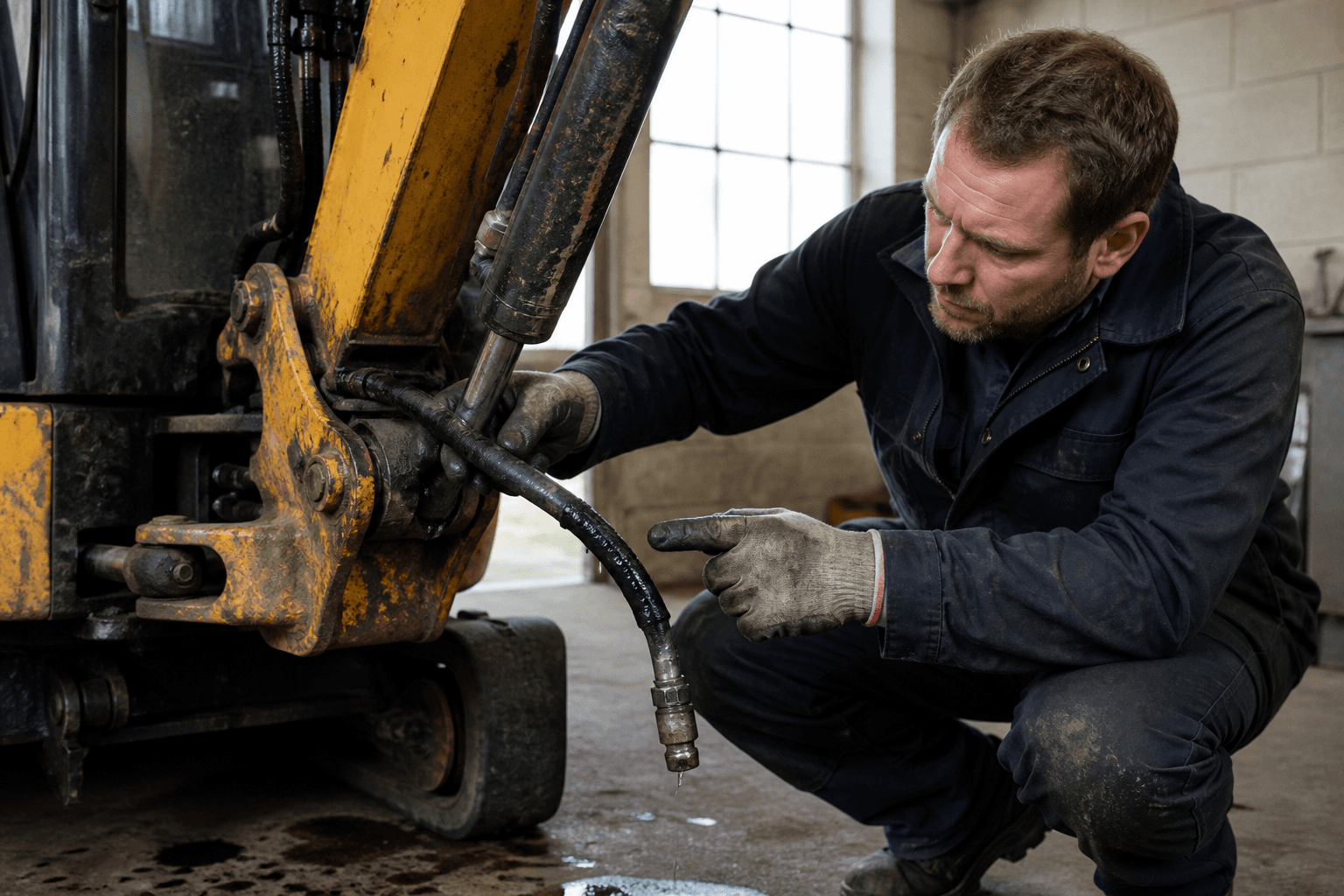
Under Regulation 5, equipment must be maintained in efficient working order and in good repair. Where machinery has a maintenance log, it must be kept up to date. Maintenance is preventive - planned servicing, lubrication, inspection of wear parts - as well as reactive, covering the repair of identified faults.
The wording "efficient working order" is broader than simply "working." Equipment that runs but vibrates excessively, runs hot, or has degraded guards is not in efficient working order. The maintenance duty covers the whole condition of the equipment, not just whether it functions.
For lifting equipment, LOLER goes further. Thorough examination of lifting equipment must be carried out in all cases: every 12 months; or every 6 months when used to lift people, or for any lifting accessory. The examination intervals may differ where there is a written scheme drawn up by a competent person, which may specify other intervals that may be shorter or, exceptionally, longer.
The examination will usually be arranged by the crane hire company, although it is the responsibility of the crane user to ensure that all necessary examinations are carried out and that the required reports are in order. This point applies broadly: wherever plant is hired in, the legal duty to confirm that thorough examinations are current rests with the person or business in control of it on site.
How Intervals Are Determined for General Plant
Where the safety of work equipment depends on the installation conditions, it should be inspected after installation and before first use, and after reassembly at any new site or location. At suitable intervals, where work equipment is exposed to conditions causing deterioration liable to result in dangerous situations, further inspection is required. Each time exceptional circumstances - such as major modifications, known or suspected serious damage, or a substantial change in the nature of use - are liable to have jeopardised the safety of the work equipment, an inspection is also required.
The frequency of inspection may vary, depending on environmental conditions: equipment subject to harsh outdoor conditions is likely to need more frequent inspections than if used in an indoor environment.
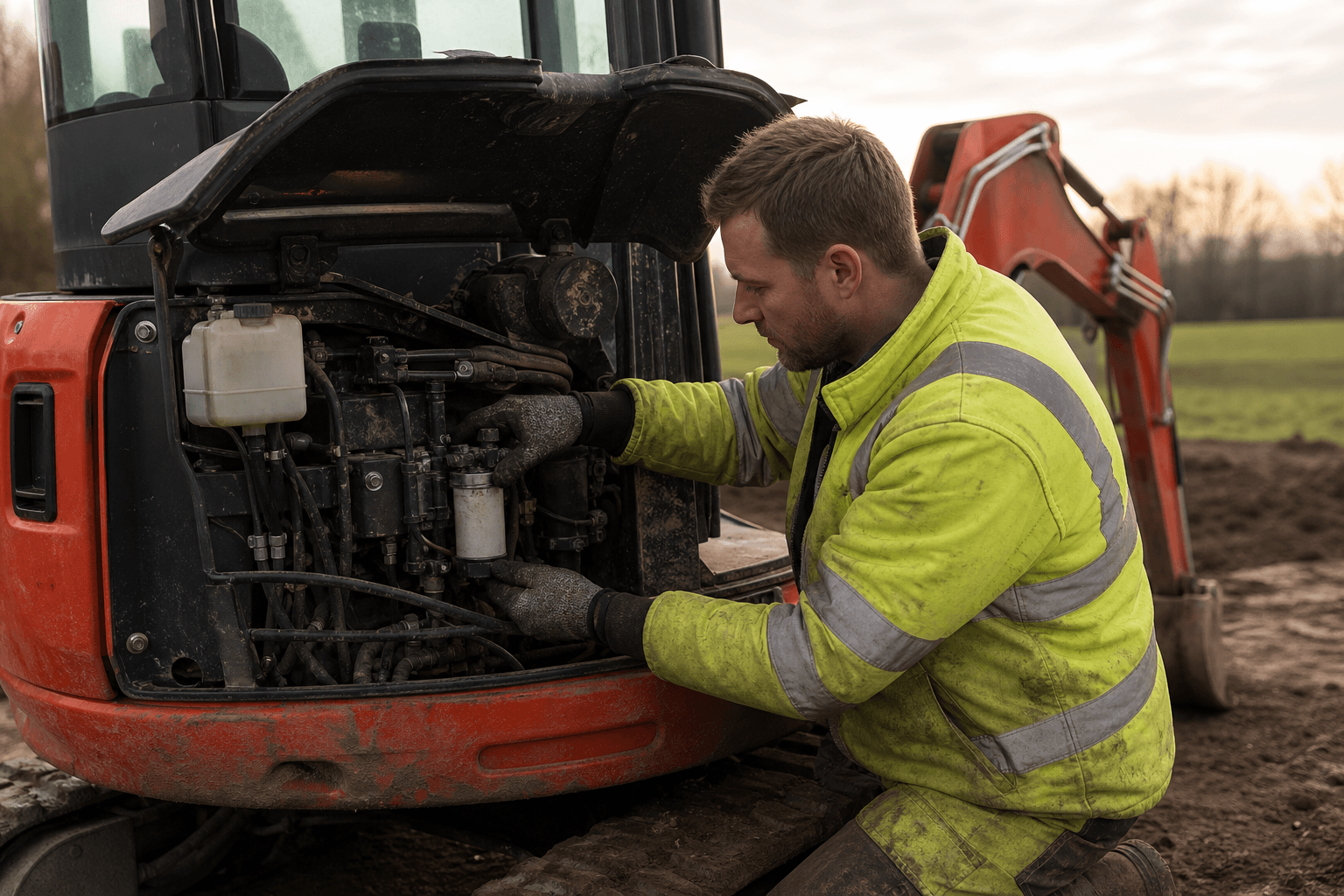
In practice, the HSE describes a hierarchy of checks. Quick checks before use - for example, functional testing of brakes and lights on mobile machinery - should take place every time a machine is operated. Weekly checks cover the presence of guarding, the function of safety devices, tyre pressures, and the condition of windows, mirrors and CCTV on mobile plant. More extensive examinations, undertaken every few months or longer, cover general structural condition and safety-critical components.
Typical intervals for general plant are daily or pre-use checks, weekly checks, and more extensive examinations undertaken every few months or longer. Exact intervals need to be based on risk assessment, taking into consideration factors such as the manufacturer's instructions, the nature of the task and conditions of use, as well as other factors that contribute to wear and tear.
Who Counts as a Competent Person
Inspection has to be carried out by a competent person - someone with sufficient training, experience, knowledge and other qualities to determine whether the equipment is safe to use. For routine PUWER inspections this may be a suitably trained employee. For LOLER thorough examinations, the bar is higher.
A thorough examination under LOLER is a systematic and detailed examination of the equipment and safety-critical parts, carried out at specified intervals by a competent person who must then complete a written report. The person carrying out a thorough examination must have appropriate practical and theoretical knowledge and experience of the particular lifting equipment. This knowledge and experience will enable them to detect defects or weaknesses and to assess their importance in relation to the safety and continued use of the equipment. It is essential that the competent person is sufficiently independent and impartial to allow objective decisions to be made.
For businesses seeking qualified examiners or repair specialists across London and the surrounding area, a search of vehicle and plant repair services on GetBrent covers a wide range of trades and engineering firms.
Record-Keeping: What Must Be Retained and for How Long
Record-keeping is not optional. Where equipment is exposed to conditions causing deterioration liable to result in dangerous situations, it must be inspected at suitable intervals and each time exceptional circumstances occur. The result has to be recorded and kept until the next inspection is recorded.
A LOLER thorough examination is a complete and thorough check of the equipment and safety-critical parts, carried out at specified intervals by a competent person and concluded with a written report. The report must include the date of the thorough examination and the date the next one is due. It should also specify any defects that are, or are about to become, a danger to people.
Thorough examination may also be required following any accident or dangerous occurrence, a significant change in conditions of use, or long periods of inaction.
A practical checklist of what each inspection record should capture is set out below.
Plant Inspection Record - Minimum Contents
- Equipment identity - type, make, model and unique identifier or serial number
- Location - site or depot where the plant is stationed or was examined
- Date of inspection and date the next inspection falls due
- Name and role of the competent person who carried out the inspection
- Scope of the check - which systems and components were examined
- Defects found - description, severity, and whether the defect is or could become a danger
- Remedial action - what was done, by whom, and when
- Safe to continue in use - a clear pass or conditional pass statement, or a direction to take the plant out of service
Where machinery has a maintenance log, that log must be kept up to date. Keeping maintenance and inspection records separate, as the HSE distinguishes the two duties, also simplifies any enforcement visit or insurance audit.
Why Intervals Matter in Practice
Skipping or deferring servicing does not simply create a compliance gap. All equipment deteriorates subject to the environment it works in, the work it undertakes, and the amount of work it performs. The purpose of thorough examination is to detect such deterioration in sufficient time to allow remedial action to be taken.
Maintenance keeps the equipment safe between inspections; inspection is the independent check that the maintenance is actually working. Where both are neglected, defects compound quickly in the demanding conditions typical of construction, groundworks, and demolition.
The cost of a service varies by machine type, age, hours worked, and the firm carrying out the work. Rather than quoting a figure - which will differ between depots and regions - operators should request a written quote directly from the service provider, making clear the machine's make, model, current hours, and when it was last serviced. Those in south-east London can find local specialists through plant repair firms serving London or, more specifically, through plant repair firms in Dartford and plant repair firms in Bexleyheath.
Operators hiring plant in should also confirm with the hire company that LOLER thorough examination certificates are current before the machine is put to work, and should keep a copy on file for the duration of the hire. A machine returned to the hire yard after an incident may also require a fresh thorough examination before it re-enters service, regardless of when the last scheduled examination took place.
Building a Compliant Service Schedule
A workable schedule combines three sources of information: the manufacturer's service manual, which sets a baseline; the requirements of PUWER and, where applicable, LOLER; and the findings of previous inspections and any defect history. Where the machine is used harder or in harsher conditions than the manufacturer assumed, the intervals should be shortened accordingly.
The schedule should distinguish between:
- Pre-use operator checks - carried out each time the machine is operated, covering controls, lights, brakes, fluid levels and visible structural condition
- Weekly maintenance checks - covering guarding, safety devices, tyre or track condition, and any manufacturer-specified lubrication points
- Periodic service - typically every one to three months depending on hours worked, covering filters, hydraulic fluid, belts and wear components
- Formal PUWER inspection - by a competent person at intervals determined by risk assessment, with results recorded
- LOLER thorough examination - every 12 months for most lifting equipment; every 6 months where it lifts people, or for lifting accessories
Each tier feeds the next. A defect spotted during a daily check should trigger a formal inspection entry; a pattern of defects identified at service should prompt a review of the interval itself. That discipline, applied consistently, is what PUWER Regulation 5 means in practice when it requires plant to be kept in an "efficient state, in efficient working order and in good repair."
GetBrent connects businesses and sole traders across the UK with local firms offering vehicle and plant repair, servicing and inspection. Whether the need is a one-off LOLER examination, a full service schedule for a fleet of site machines, or an emergency repair, use GetBrent to find qualified, rated tradespeople and engineering firms near you.