Hydraulic hose failure is one of the most dangerous faults that can develop on a vehicle or piece of plant equipment. Unlike a worn tyre or a flat battery, a burst hydraulic line does not give a second chance. On a tractor, digger or van, it means loss of braking power, steering control or lifting capacity - sometimes all at once. On the roadside, this is not just inconvenient; it is illegal under DVSA standards for roadworthy vehicles and creates an immediate hazard to the operator and others. The good news is that hydraulic hoses fail gradually, and knowing what to look for means you can catch the problem before it becomes critical.
What Hydraulic Hoses Do and Why They Fail
Hydraulic hoses carry pressurised fluid - usually oil - from a pump to cylinders and motors that do the actual work. On a vehicle, they operate the brakes, steering, suspension and sometimes the clutch. On plant like excavators, skid steer loaders and telehandlers, they control the bucket, boom and other moving parts. These hoses work under intense pressure, often several hundred bar, and they live in harsh conditions: heat from the engine, cold winter air, UV exposure, vibration from the machine running, and abrasion where they pass near sharp edges or moving parts.
Over time, the rubber and wire reinforcement inside the hose degrade. The outer cover cracks. Small holes or weak spots develop. The hose may have been pinched during assembly or maintenance, or struck by a moving part. If the hose is old - typically beyond 10 years - the rubber simply loses flexibility and splits. None of these failures happen instantly; they all produce detectable signs first.
The Main Warning Signs
The most obvious sign is a visible leak. Check under the vehicle or machine after it has been parked for a few hours. Hydraulic fluid is usually red, green or amber coloured and fairly thin - thinner than engine oil. A few drops on the ground or a wet patch on the hose itself means pressure is escaping and the hose wall is compromised. Do not assume a small weep will stop; it will grow.
A soft or spongy brake pedal is another critical warning, especially on a van or tractor. If you have to press the pedal most of the way to the floor before brakes bite, or if the pedal feels mushy rather than firm, air has entered the brake line or fluid is leaking out. This is not safe. According to DVSA guidance, brakes must be reliable and responsive; a soft pedal breaches this requirement and the vehicle should not be driven.
Discoloured or cloudy hydraulic fluid inside the reservoir is a sign of water contamination or heat damage. Fluid should look clear and bright. If it appears milky or very dark, the hydraulic system is under stress and hoses are close to failure. Heavy steering, sluggish or jerky loader arms, and difficulty raising or lowering attachments all point to hose weakness or blockage caused by internal hose degradation.
Listen as well as look. A hissing sound from under the bonnet or from the side of the machine is usually a hose spraying fluid under pressure. This is an emergency sign; stop the vehicle or machine and do not operate it further.
Inspection Checklist
Carry out a basic inspection every month if you own a vehicle or hire plant regularly:
- Park on level ground and wait ten minutes. Walk underneath and look for fresh fluid stains or drips on the concrete.
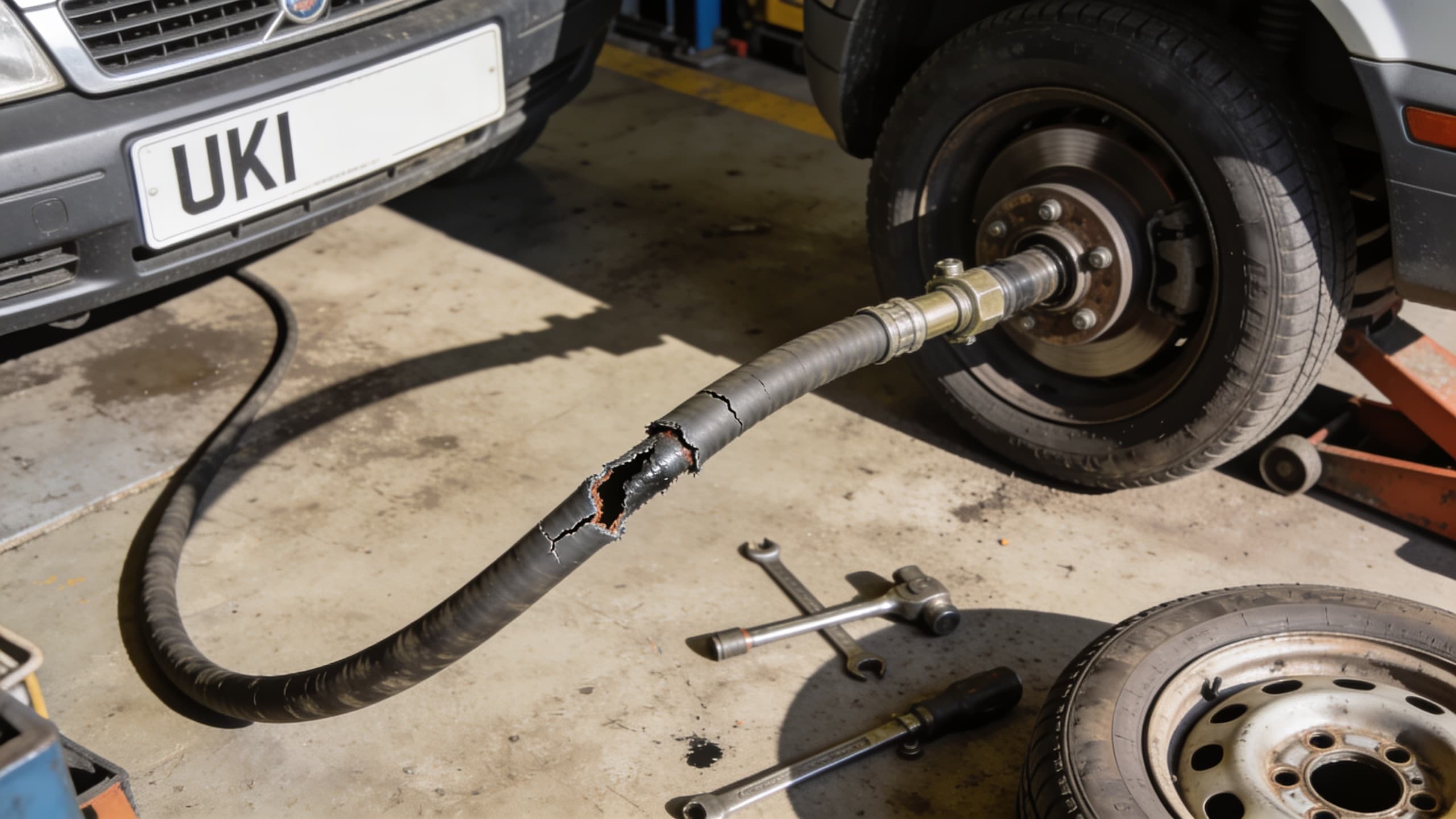
- Inspect all visible hoses along their full length. Look for cracks, blisters, bulges, or areas where the outer cover is peeling or rubbed through to the wire inside.
- Feel the hose gently with your hand (when the engine is off and cool). It should be firm but slightly flexible. A rock-hard hose or a soft, squishy one is ageing.
- Check the fluid level in the reservoir and compare it to the last time you checked. A sudden drop means a leak has developed.
- Note the colour and clarity of the fluid. Take a sample in a clean bottle and hold it to the light.
- Test the relevant controls: brakes, steering, loader arms. They should respond firmly and smoothly. Any delay, soft feel or grinding sensation suggests hydraulic trouble.
What to Do If You Spot a Problem
Do not attempt to patch or tape a hydraulic hose. The pressure inside will defeat any makeshift repair within minutes, and a catastrophic failure in use is dangerous and illegal. The correct action is to stop using the vehicle or machine and arrange professional repair or replacement. If you have hired the equipment, contact the hire company immediately and report the fault. If you own it, contact a specialist in vehicle and plant repair or visit a local repairer such as those available through plant repair services in London or other regions if that is convenient to you.
Under DVSA rules, any fault that affects braking, steering or safe operation must be remedied before the vehicle returns to the road. For hired plant, the hire company is responsible for ensuring it is roadworthy and safe; they will arrange the repair at no cost to you if the hose was already defective.
Prevention and Best Practice
Replace hydraulic hoses every 5 to 10 years regardless of condition as part of planned maintenance. Keep the fluid clean by changing it at the intervals recommended in the manual. Protect hoses from heat and UV by routing them away from the engine and exhaust, and fitting protective sleeves where they pass near sharp objects or moving parts. Avoid parking over rough ground or debris that could puncture a hose from below.
When you return hired equipment, the hire company will inspect it. Mentioning any hose concern you have noticed helps them plan maintenance and means the fault is on record. If a hose fails during your hire period and causes an accident or damage, you may face liability unless you can show you reported it in advance.
Finding a trustworthy local repair firm is straightforward through GetBrent.co.uk. Whether you need emergency hose repair on a van, tractor or hired excavator, or you want to book preventative maintenance on your own plant, search for plant and vehicle repair specialists near you. Report the fault clearly and provide the vehicle or machine registration and history; this helps the repairer diagnose the problem faster and order the correct replacement hose.