For a one-off or occasional job, hiring a pressure washer beats buying one in almost every practical measure. The machine is ready to use, maintained by the hire company, and returned when the work is done. Buying only makes sense when the machine will be used regularly enough to justify the outlay, the storage space it occupies, and the maintenance it demands. The sections below set out the factors that should shape that decision, together with the safety and legal rules that apply either way.
What a Pressure Washer Is Actually Used For
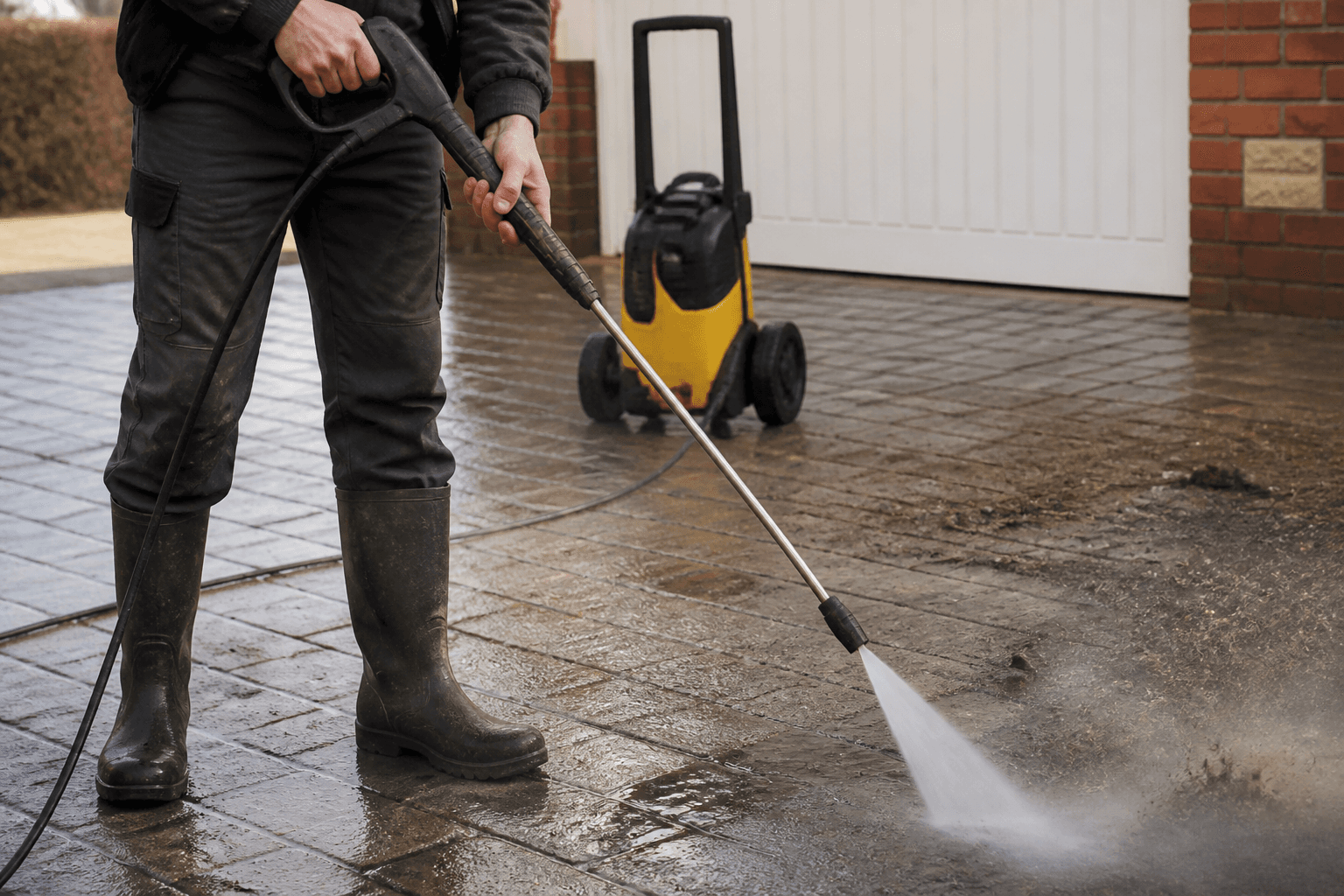
A pressure washer forces water through a narrow nozzle at high pressure to strip dirt, moss, algae and grime from hard surfaces. Common domestic uses include patios, driveways, garden furniture, fencing, and vehicles. Trade and commercial uses extend to building exteriors, plant and machinery, and site clean-down. The machine can be electrically powered or petrol-driven, cold-water or hot-water. The right type depends on the surface being cleaned and the volume of water available at the point of use.
Understanding the task first is important because a machine that is too powerful can damage mortar, soft stone or painted surfaces, while one that is underpowered simply will not shift stubborn biological growth. Hire companies can advise on the correct specification for the job. If you are searching for tool hire across the UK, you can filter by location and equipment type to find the right machine locally.
Hire or Buy: The Key Factors
Neither option is universally right. The decision turns on frequency of use, storage, running costs, and whether the machine needs to be a specific type for a specialist job.
- Frequency of use. A pressure washer used a handful of times a year is a strong candidate for hire. The hire rate is paid only when the machine is needed, and there is no depreciation to absorb.
- Storage. Pressure washers are bulky. Hoses, lances, nozzle sets and detergent tanks all need to be stored dry and frost-free between uses. Hire removes that obligation entirely.
- Maintenance and repair. A hired machine is serviced and tested by the hire company. An owned machine requires the user to inspect it regularly, repair or replace worn components, and arrange PAT testing if it is used in a workplace context. The Health and Safety Executive publishes a booklet called Electrical risks from steam/water pressure cleaners, which identifies the electrical risks that can arise when using this equipment and gives advice on safety precautions to minimise those risks.
- Upfront cost versus running cost. Purchasing a machine involves a larger upfront sum. Hiring involves a day rate or week rate paid each time. Neither figure is published here because rates vary by depot, machine specification and region - confirm the current figure directly with the hire company.
- Specialist requirements. Petrol-driven or hot-water machines are rarely needed domestically but are common in trade use. Hire companies typically stock a wider range of specifications than a homeowner would buy.
In short: hire if the job is infrequent, the machine would sit unused for months at a time, or the task calls for a specification you would never otherwise need. Buy if pressure washing is a regular part of your work or routine property maintenance, and you have space to store and maintain the equipment properly.
Safety Rules That Apply Either Way
Whether the machine is hired or owned, the same legal framework applies. HSE's guidance note PM29, Electrical risks from steam/water pressure cleaners, identifies the electrical risks that can arise when using this equipment and gives advice on safety precautions which will minimise those risks.
HSE states that all work equipment should be regularly checked to ensure it is safe to use, that a visual check each day or each time the equipment is used is likely to identify many potential electrical faults, and that work equipment should also be thoroughly tested regularly - frequently enough that there is little chance a fault will develop that will lead to danger.
In general, equipment used in harsh environments such as building sites or outdoors will need more regular testing than equipment used in an office environment.
For anyone using a pressure washer in a workplace or commercial context, the Provision and Use of Work Equipment Regulations 1998 (PUWER), enforced by the Health and Safety Executive, also apply.
Practical safety checklist before each use
- Inspect the power cable, plug and connectors for damage before switching on.
- Use the pressure washer in conjunction with a residual current device (RCD).
- Use the nearest electric power socket to reduce the length of cable and minimise trip hazards.
- Use the lowest pressure suitable for the task being carried out, to prevent unnecessary aerosols.
- Do not point the nozzle in the direction of electrical equipment, distribution boards, fuse boxes and sockets, or fragile surfaces.
- Wear appropriate personal protective equipment, including safety goggles, waterproof clothing and suitable footwear.
- Always operate the equipment within the safe operating limits.
Hosepipe Bans and Legal Restrictions on Use
This is a point that catches many people out, particularly in summer. A hosepipe ban is the common name for what the Water Industry Act 1991 calls a temporary ban on use. While restrictions are in place, you cannot use a hosepipe, sprinkler or pressure washer for certain activities, such as watering your garden, washing your car or cleaning paths.
Water companies have legal powers under Section 76 of the Water Industry Act 1991 to introduce temporary hosepipe restrictions when water resources are under pressure.
A mains-connected pressure washer is treated exactly like a hosepipe and is banned for the restricted jobs under a UK hosepipe ban. You can generally use a pressure washer fed from a water butt or harvested rainwater, because the ban restricts the mains supply, not the water source.
The practical implication is significant for both hire and purchase decisions. If you hire a pressure washer during a period when a TUB is in force in your area, check your water company's specific notice before using the machine on any of the restricted activities. Hiring does not exempt you from the ban - the restriction applies to how the machine is connected, not who owns it. Check with your water company directly before starting work.
What Drives the Cost of Hire or Purchase
No figure is published here because hire rates vary by depot and machine type, and retail prices shift with demand and specification. However, the factors that drive what you will pay are consistent and worth understanding before you make enquiries.
For hire, the main cost drivers are: the pressure rating and type of machine (petrol or electric, hot or cold water); the hire period (day rate versus week rate); delivery and collection charges if the depot is not local; and whether detergent, additional nozzles or a surface cleaner attachment are included. Always confirm all of these with the hire company before agreeing.
For purchase, the main cost drivers are: pressure output and build quality; brand reputation and warranty length; the ongoing cost of replacement nozzles, seals and hoses; and electricity or fuel running costs per session. Storage and occasional repair or professional servicing should also be factored in over the machine's working life.
Residents in and around north London can compare local options through tool hire in Enfield or tool hire in Harrow, where pressure washers and other powered cleaning equipment are commonly available from local hire depots.
Making the Decision
The table below summarises the main considerations.
- Hire if: the task is one-off or seasonal, storage is limited, the job calls for a specialist machine, or you want to avoid maintenance and testing responsibilities.
- Buy if: the machine will be used regularly throughout the year, you have suitable dry and frost-free storage, and you are prepared to carry out or commission the routine safety checks the Health and Safety Executive requires.
- Either way: check whether a hosepipe ban is currently in force in your area before connecting the machine to the mains. Contact your water company directly, as each company writes its own TUB notice and the permitted activities vary.
GetBrent makes it straightforward to find reputable local hire companies for pressure washers and other tools. Search tool hire near you on GetBrent to compare available machines, get a direct quote from a local depot, and book the right equipment for your job - without committing to the storage, maintenance and ownership costs of buying outright.