Every tyre sold in the UK carries a sidewall code that combines two safety-critical figures: a load index number and a speed rating letter. Together, these form what the British Tyre Manufacturers' Association (BTMA) calls the tyre's Service Description. Understanding both is not optional - Getting either figure wrong can compromise safety, trigger an MOT failure, and expose a driver to serious legal penalties.
What the Tyre Sidewall Code Actually Means
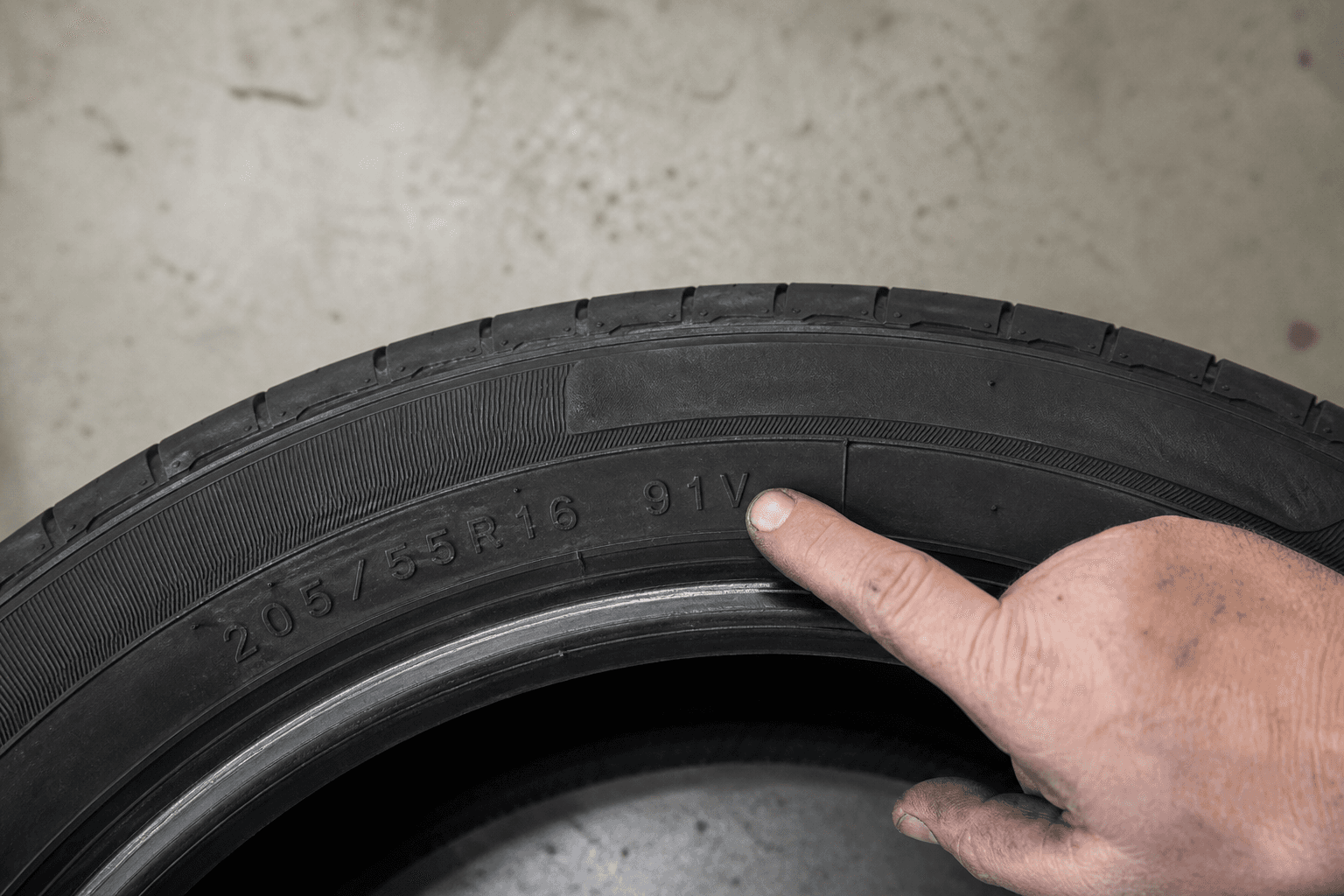
Every tyre is stamped with a string of letters and numbers that describe its dimensions and performance limits. Take a tyre marked with a size code ending in 91V as an example: the two-digit or three-digit number before the final letter is the load index, and that final letter is the speed rating.
The Service Description of a tyre is its load index plus its speed symbol. The load index and speed index appear together at the end of the tyre size code found on the tyre's sidewall. The easiest way to tell the difference between the two is that the load index is a two- or three-digit number, while the speed index is a letter.
The Load Index: Maximum Weight Per Tyre
A tyre's load index is a number that can be used to look up the maximum amount of weight that a tyre can bear at its speed rating when inflated to its maximum pressure. This number is not stated in pounds or any other unit of measurement; it is used to find the actual rated weight in kilograms on a standardised chart.
A tyre with a load index of 91, for example, can hold a maximum load of 615 kg up to its rated speed. However, real-world distribution matters: the front and rear axles bear different loads, and manufacturers specify maximum limits for each.
Tyres are also available in reinforced variants. Tyres designed for higher loads bear the markings XL (Extra Load) or RF (Reinforced). These are worth considering for vehicles that are frequently loaded near their maximum permitted weight, such as large estate cars, vans, or tow vehicles.
It is important not to go over the maximum load as it could be dangerous: the tyre speed rating will not be accurate and it could affect the way the tyres perform and handle.
The Speed Rating: Maximum Safe Speed Under Load
A tyre's speed rating is a letter code that indicates the maximum speed it can safely maintain over time. This rating is essential for ensuring the tyre performs safely under different driving conditions and speeds.
It is a legally approved limit and tyres are only rated after they have been tested in a lab. Speed ratings are achieved through tests performed by engineers who run the tyre at 6.2 mph steps, in 10-minute increments, until the required speed has been met.
Common speed rating letters and their corresponding maximums, as published by the RAC, are as follows:
- S - 112 mph
- T - 118 mph
- H - 130 mph
- V - 149 mph
- W - 168 mph
- Y - 186 mph
Y-rated tyres are rated in excess of 186 mph. The load rating is only valid up to the speed associated with the tyre's speed rating. Drive faster than the tyre's rated speed, and even if the load is within limits, the risk of structural failure rises sharply.
The BTMA notes an important additional point about speed symbols: the speed symbol is not only an indicator of the tyre's maximum speed potential, but also an indicator of how well it copes under braking, cornering and acceleration. Fitting a lower-rated tyre therefore affects more than just top speed.
The Legal Position and Insurance Risks
In the UK, using tyres with a lower load rating is dangerous and, as such, the law prohibits it. When replacing tyres, it is very important that not only the tyre size is equivalent to the original fit tyres, but that the load index and speed symbol are equal to or higher than the original fit tyres.
The consequences of non-compliance are severe.
Beyond the legal penalty, there is an insurance risk. Never fit a tyre with a load index lower than your vehicle manufacturer specifies - doing so risks tyre failure and may invalidate your insurance. Fit a tyre below what the car needs and it can overheat and fail. Insurers can also refuse a claim.
If you need a specialist to check or replace your tyres, the vehicle and plant repair listings on GetBrent are a good place to find local garages and mobile fitters.
Practical Checklist: Buying Replacement Tyres
Use this checklist every time a tyre needs replacing, whether for a car, van, or trailer:
- Read the current sidewall code. Note the full alphanumeric string, for example 205/55 R16 91V, from the tyre being replaced.
- Identify the load index. The number before the final letter is the load index, which tells you the maximum weight each tyre can carry. Your replacement must match or exceed this number.
- Identify the speed rating letter. The speed rating tells you the maximum safe speed your tyre can handle when properly inflated and loaded. Your replacement must match or exceed this letter.
- Check the vehicle handbook. The manufacturer's recommended load index and speed rating are also listed there - use these as your baseline if the existing tyres appear to be non-standard.
- Look for XL or RF markings if relevant. Tyres designed for higher loads bear the markings XL (Extra Load) or RF (Reinforced). If the original tyre carries one of these marks, the replacement must too.
- Check tyre pressure after fitting. You will also need to make sure your tyre pressure is correct , as the load index figure is only valid at the correct inflation pressure.
- Keep all four tyres consistent. Mixing speed ratings across an axle can create handling imbalances and may also be questioned at MOT.
Drivers in south-east London searching for tyre fitting can browse tyre services in London, tyre services in Dartford, or tyre services in Bexleyheath to find nearby specialists.
A Note on Trailers and Commercial Vehicles
Load index requirements apply equally to trailers and commercial vehicles, and the stakes are higher. The DVSA advises that tyre speed rating indicates the maximum speed a tyre is legally approved for. This is important together with the maximum load defined for the tyre, as they are dependent on one another - each tyre has a maximum load rating which must not be exceeded.
For operators running fleets, the driver, not the company, takes the points, but the company carries the fines and the reputational hit of a DVSA record. Checking load index and speed rating at every tyre change is therefore as much a fleet management obligation as a safety one.
GetBrent makes it straightforward to find vetted local tyre fitters, mobile mechanics, and vehicle repair specialists across the UK. Whether the job is a single replacement or a full fleet check, search GetBrent to compare local tradespeople and get the work done correctly.