
Head to head
Hitachi 33U vs Yanmar ViO17
The Hitachi 33U is the bigger machine by 1,657kg.
Last reviewed 13 September 2026
Key differences
- Operating weight: the Hitachi 33U is the bigger machine by 1,657kg.
Specifications side by side
| Hitachi 33U | Yanmar ViO17 | |
|---|---|---|
| Operating weight | 3,487 kg | 1,830 kg |
| Width | 1,550 mm | - |
| Rated power ISO 9249 | 21.2 kW (28.4 HP) at 2,400 min-1 (rpm) (net) | - |
| Fuel tank | 42.0 L | - |
| Dig depth | - | 2,410 mm (blade lowered); 2,310 mm (blade lifted) |
| Engine power | - | 10.1 kW at 2,200 rpm |
Sources: Hitachi 33U, Yanmar ViO17. Figures vary by model year and options, so check with the supplier before you commit.
Buy or hire the 33U if...
- you want one that is the bigger machine by 1,657kg
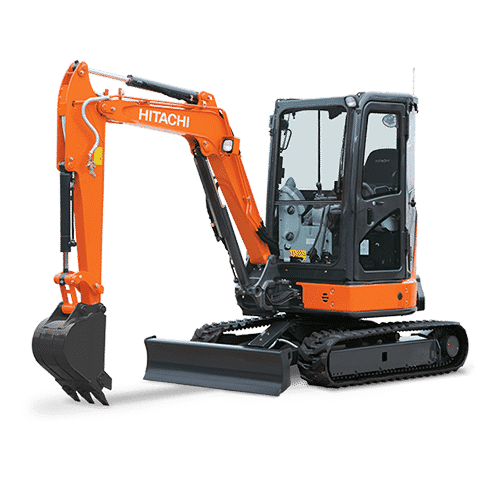
A compact tracked excavator from Hitachi's smaller size class, used for groundworks, drainage and landscaping jobs too tight for a larger machine. It is bought and sold through the used plant market rather than as a current Hitachi catalogue model.
Listed by
- Plant Sales Northern Ireland | P & A Plant Sales - Ballynahinch
Buy or hire the ViO17 if...
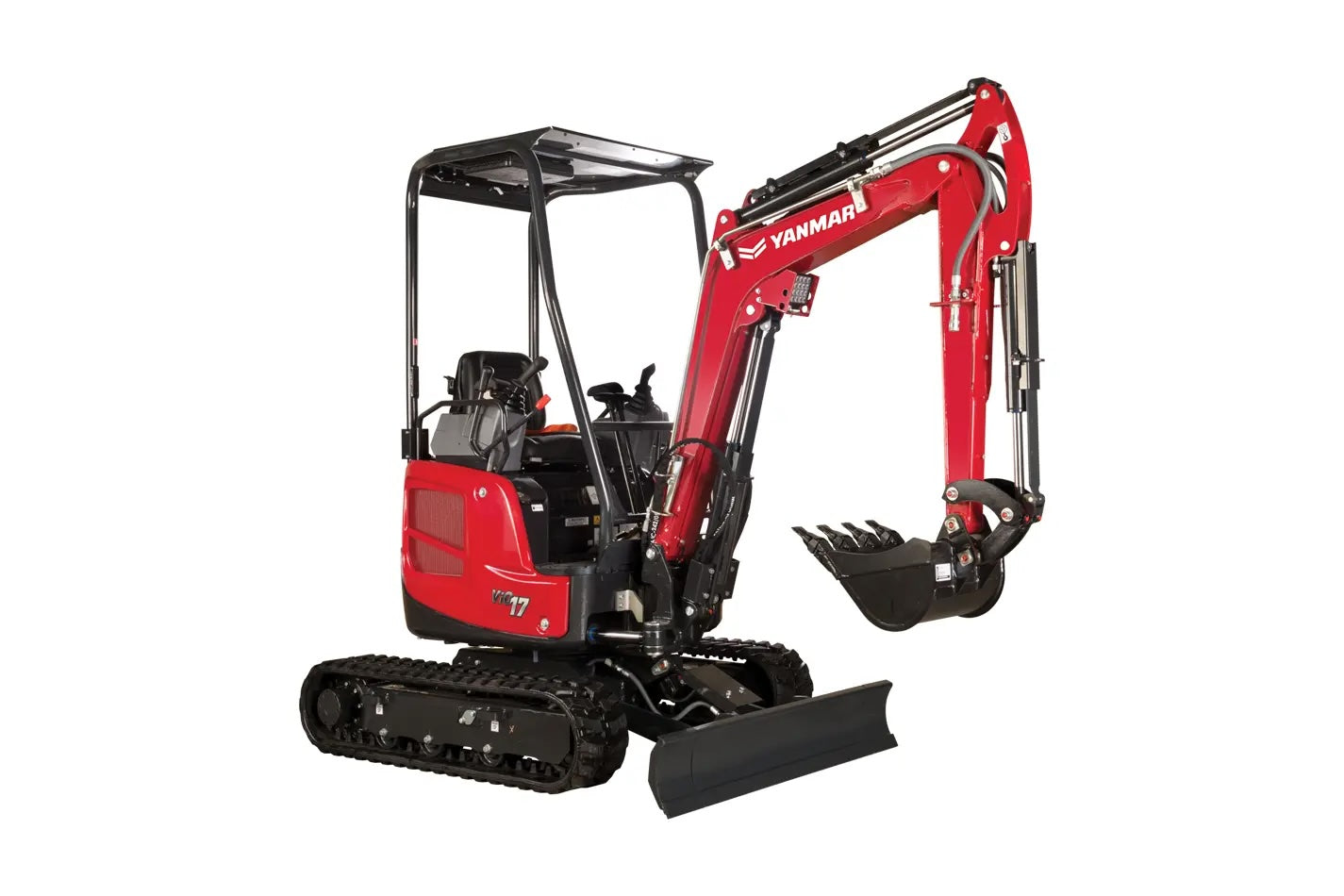
The Yanmar ViO17 is a true zero tail swing mini excavator built for working tight to walls, fences and parked vehicles without the counterweight overhanging, a common requirement on UK residential and urban groundworks jobs. It sits in the same roughly 1.7-1.9 tonne hire class as the Takeuchi TB216 and Kubota KX019-4. Yanmar's compact equipment range is less widely stocked across UK hire fleets than Kubota or JCB, but it has a following among contractors who rate its digging force for its size.
Full ViO17 specifications →Common questions
What is the difference between the Hitachi 33U and the Yanmar ViO17?
The Hitachi 33U is the bigger machine by 1,657kg. The Hitachi 33U is a mini excavator, approximately 3 tonne class; the Yanmar ViO17 is a a 1.8 tonne true zero tail swing mini excavator.
GetBrent is an independent directory and is not a dealer for, nor affiliated with, either manufacturer. Model and brand names are the trademarks of their owners.