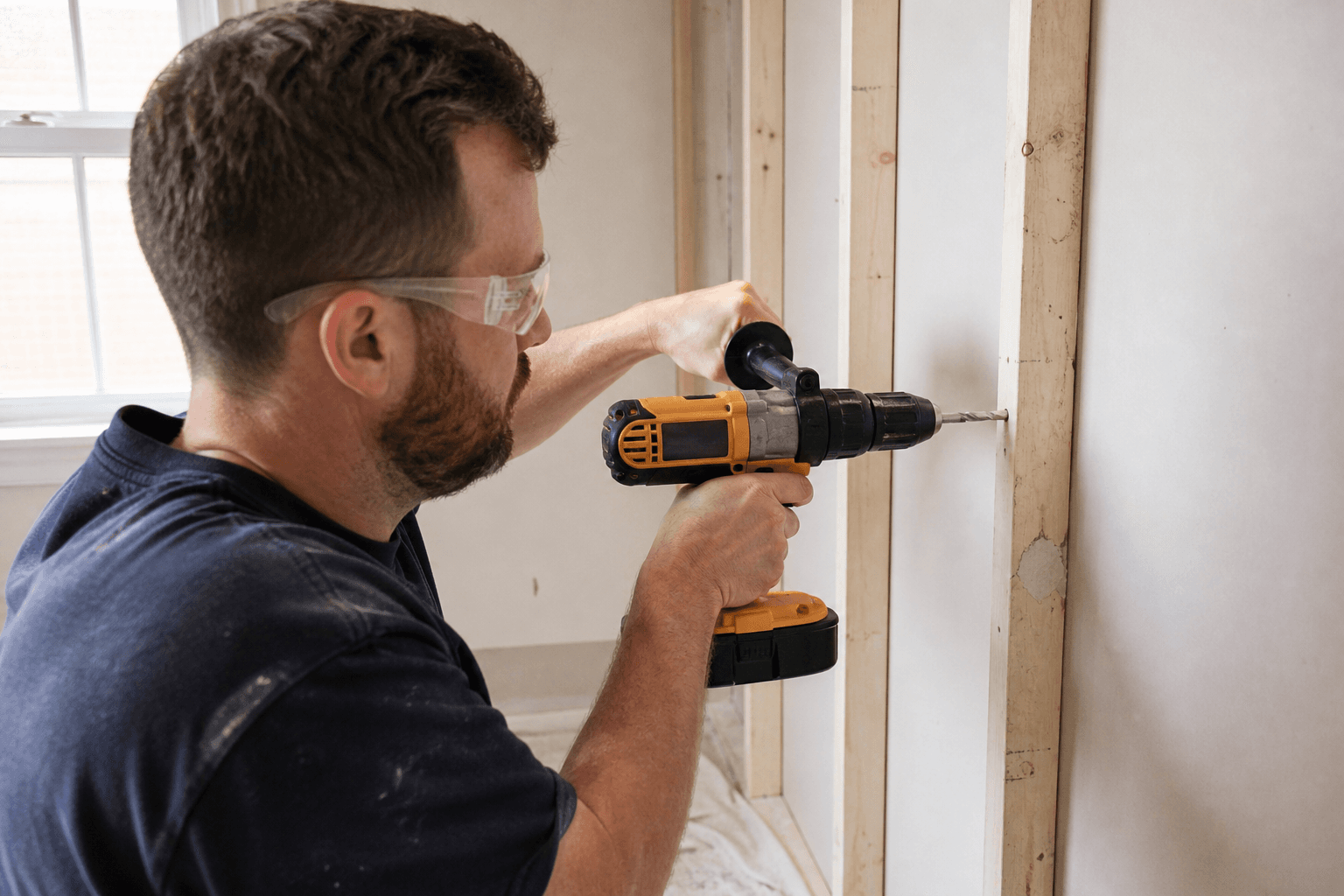
This article does not name five cordless drills to buy. The sources we could check cover the safety rules for portable electric tools, which apply to any drill you hire or buy, so this is a guide to keeping a drill safe rather than a product ranking. The Health and Safety Executive (HSE) is the body whose guidance we have drawn on.
What the law requires for portable electric tools
The Health and Safety Executive explains that where there is evidence that the supply may not be safe, such as damaged equipment or wiring, the supply should not be used until work has been done to correct this. That principle applies to a cordless drill's charger and supply as much as to a mains tool.
For work equipment more broadly, the HSE's guidance on the Provision and Use of Work Equipment Regulations 1998 (PUWER) states that the Regulations, commonly known as PUWER, place duties on people and companies who own, operate or have control over work equipment. PUWER also places responsibilities on businesses and organisations whose employees use work equipment, whether owned by them or not.
User checks before every use
The HSE's guidance on maintaining portable electrical equipment sets out what a user should look for, including damage to the cable or plug and signs of overheating such as burn marks.
The HSE also advises that damaged cable should be replaced with a new cable by a competent person.
Practical checklist before using a drill you have hired or bought:
- Switch off and unplug the equipment before you start any checks.
- Check that the plug is not damaged and that the cable is properly secured with no internal wires visible.
- Check the electrical cable is not damaged and has not been repaired with insulating tape or an unsuitable connector.
- Look for damage to the external casing, and for signs it has been used in unsafe conditions, such as being wet or covered in dust.
- Do not use the tool if any of these checks raises doubt, and report the fault.
Is PAT testing a legal requirement?
Portable appliance testing (PAT) is often assumed to be compulsory, but the HSE states that it's a myth that all portable electrical appliances in a low-risk environment, such as an office, need to have a portable appliance test (PAT) every year. The HSE adds that the law simply requires employers to ensure electrical equipment is maintained in order to prevent danger, and does not state what needs to be done or how often.
The HSE describes a combined inspection and test as a Portable Appliance Test (PAT), or a detailed test with a more sophisticated instrument. It also advises that the person carrying out the tests is trained and competent to do so.
Hiring a drill: what to check
If you are hiring rather than buying, the same user checks apply on collection. The HSE notes that it is a myth that every appliance in a low-risk environment needs an annual test. For tool hire in a particular area, you can compare options for tool hire in London or look at the wider range of tool hire listings on GetBrent.
Costs for hiring or buying a drill depend on factors such as the tool's specification, hire period and the supplier, so confirm any figure directly with the company before you commit.
Looking after your drill
The HSE's guidance on maintaining portable electrical equipment notes that user checks are complemented by formal visual inspections. Keep a note of any faults you find and stop using the tool until it has been repaired by a competent person.
To find local hire companies for drills and other tools, use GetBrent to compare tool hire firms across the UK, and check each supplier's inspection and safety records before you book.