
For most tradespeople, the best small van is one that fits the work, carries the load safely, and can be driven on the licence you already hold. Under the rules set out on GOV.UK, a standard car licence lets you drive a van up to 3,500kg, and a zero-emission electric or hydrogen-powered van up to 4,250kg. The guidance below explains how to check that before you choose, hire or buy a van, and how to avoid the common mistakes around weight, towing and loading.
Check your licence before you choose a van
The starting point is the weight of the van, not its size. With a standard car driving licence you can drive a van up to 3,500kg, and a zero-emission electric or hydrogen-powered van up to 4,250kg, according to GOV.UK's guidance on driving a van. That weight is the maximum authorised mass, which covers the van plus everything in it, including tools, materials and any passengers. A long-wheelbase panel van and a Luton can both sit under the limit, while a similar-looking van on a heavier chassis may not.
If you passed your driving test after 1 January 1997, GOV.UK's guidance says you might need extra tests before you can drive vehicles weighing between 3,500kg and 7,500kg or tow a trailer with your van. Category C1 covers vehicles between 3,500kg and 7,500kg MAM, with a trailer up to 750kg. Anyone who passed before that date may hold entitlements that differ, so check the categories shown on your own licence. The categories shown on your licence are the ones that count.
Towing with a small van
Towing adds a second set of limits. The Highway Code states that you MUST NOT tow more than your licence permits, and that if you passed your car driving test on or after 1 January 1997 you are restricted on the weight of trailer you can tow. The Code also says you MUST NOT overload your vehicle or trailer, and that you should not tow a weight greater than that recommended by the manufacturer of your vehicle.
Look for the towing limit in the vehicle handbook or specification sheet first. Do not assume that because a tow bar is fitted, the van can pull the trailer you have in mind. Tow bar capacity and the van's own towing rating are separate figures.
Loading and securing tools and materials
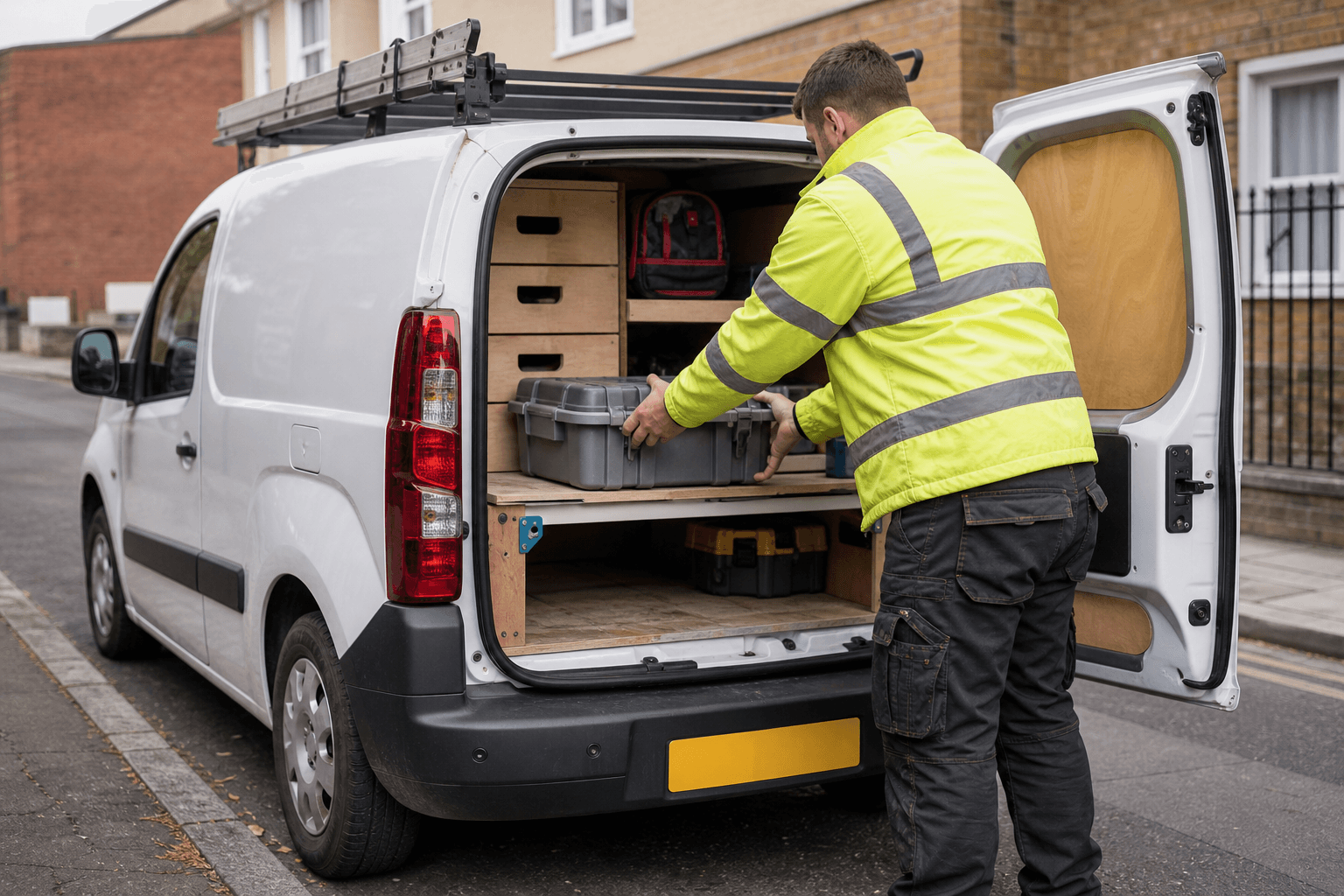
An overloaded or unevenly loaded van is unsafe to drive. HSE also says loads should be secured, or arranged so that they do not slide around, and notes that racking may help stability.
Employers should have appropriate arrangements in place for properly securing loads, such as goods and equipment. If you employ people who drive for you, these points form part of your duties.
Practical checklist before you set off
Use this short check each time you load the van.
- Confirm the van's maximum authorised mass and that your licence covers it, including any electric or hydrogen allowance.
- Check the towing limit in the handbook or on the manufacturer's plate, and make sure the combined weight does not exceed it.
- Spread the load evenly across the floor and keep heavy items low and central.
- Secure tools, ladders and materials so they cannot slide, and confirm the load is not higher than the van's sides or the trailer's sides allow.
- Check that tyres are legal, lights work, and trailer brakes are in full working order before you tow.
- Fit towing mirrors if the trailer or load is wider than the van or blocks your rear view.
Choosing the right van and the right hire
Start with the work you do. A van that carries your regular tools and materials within the 3,500kg limit, and that you can load evenly, is usually a better choice than a larger van that needs a higher licence category you do not hold. If you only need a van occasionally, or need a trailer for a specific job, hiring may suit you better than buying, but check the licence categories and towing limits with the hire company before you collect.
Costs for hiring or buying a van and for towing depend on factors such as the vehicle's weight class, the length of hire, the insurance cover, the location of the depot, and the time of year. Because rates vary by company and location, confirm any figure directly with the hire company or supplier before you commit.
If you need a van or trailer for a specific job, trailer hire in London or van and trailer hire in Birmingham are good places to start, and the wider specialist vehicle hire category lists options across the UK.
GetBrent is a UK marketplace where you can find local firms that hire out vans, trailers, tools and plant, as well as removals, clearance and trades companies. Use it to compare options near you, then confirm the licence requirements, towing limits and costs directly with each provider before you book.