Hiring a car transporter trailer involves more than choosing the right size of deck. Before a wheel turns, the person towing must hold the correct driving licence category, the towing vehicle must be rated to pull the combined weight, and the trailer itself must be roadworthy and properly lit. Getting any of those three elements wrong can invalidate insurance, result in a DVSA prohibition notice, or lead to a fine. This guide sets out what to check, drawing on the DVSA's current guidance on trailer towing entitlement, the Highway Code, and GOV.UK rules on trailer roadworthiness.
Does Your Driving Licence Cover the Weight?
Licence entitlement is the first thing to confirm, because the rules depend on when you passed your car test. If you passed your car test before 1 January 1997, you can usually drive a vehicle and trailer with a combined weight of up to 8,250 kg MAM. Drivers who passed their car test on or after 1 January 1997 can drive a car or van up to 3,500 kg MAM towing a trailer of up to 750 kg MAM, or tow a trailer over 750 kg MAM as long as the combined MAM of the trailer and towing vehicle is no more than 3,500 kg MAM.
For drivers who passed their test from 1 January 1997 onwards, the MAM of the trailer must not exceed 3,500 kg. The DVSA publishes the full breakdown of these categories in its INF30 leaflet, Requirements for Towing Trailers in Great Britain. Check your photocard licence or contact the DVLA if you are unsure which categories are shown.
For a broader look at what different trailer categories are available to hire, the trailer hire listings on GetBrent let you filter by type and specification so you can match the equipment to your entitlement before you book.
Check the Towing Vehicle's Capacity
Your licence entitlement sets the legal ceiling, but the towing vehicle imposes its own, often lower, ceiling. Most cars have a maximum weight they can tow. The Highway Code says you must not tow more than your licence permits, and towing limits are normally found in the vehicle handbook or specification sheet.
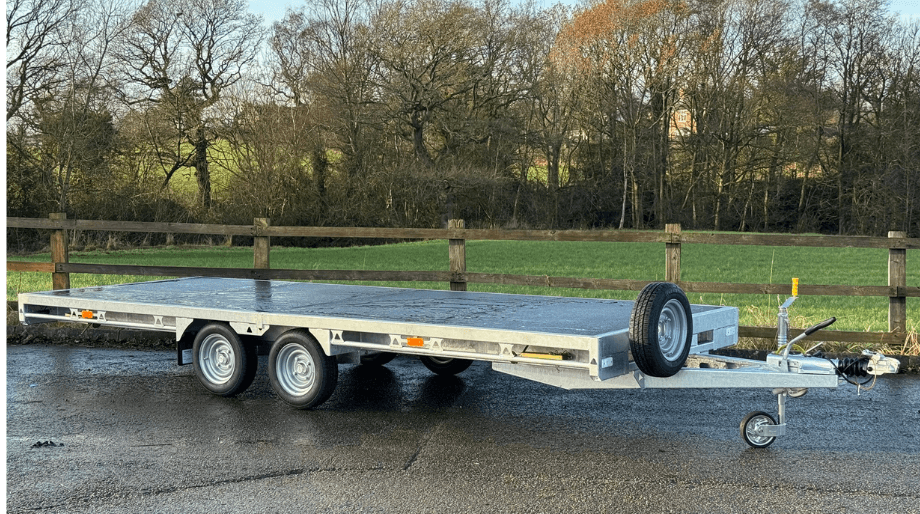
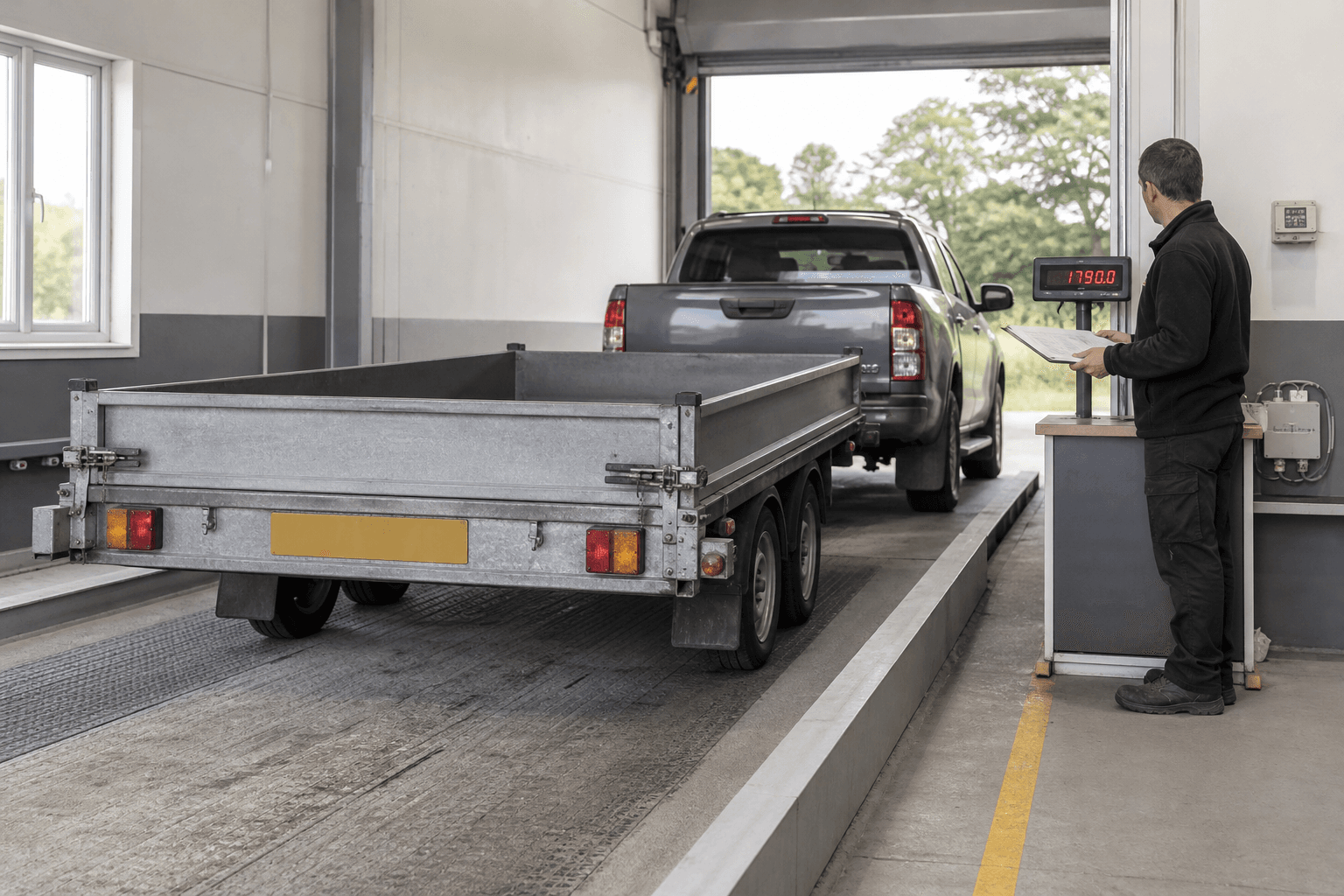
Car transporter trailers carry a significant dead weight of their own before any vehicle is loaded. Always confirm the trailer's unladen weight and its maximum authorised mass (MAM) with the hire company, then add those figures together with the weight of the vehicle being transported. That total must not exceed your towing vehicle's gross train weight (GTW) rating. The MAM is the maximum legal weight of the trailer when fully loaded, including the trailer's own weight plus everything on it. This figure is stated on the trailer's manufacturer plate fixed to the chassis, and you must not load the trailer beyond its MAM, as this is both illegal and a safety risk.
If you are specifically moving a car and want to browse available units, the car transport trailer listings on GetBrent show the specifications for each trailer so you can compare capacity before making contact with a supplier.
Trailer Roadworthiness: What to Inspect Before You Accept the Hire
When you collect a hired trailer, you take on responsibility for its condition on the road. A quick but systematic check before you drive away protects you legally and keeps other road users safe. The DVSA can issue a prohibition notice for an unroadworthy trailer at the roadside, so do not skip this step.
Pre-hire inspection checklist
- Lights: UK trailers must carry two red sidelights, two red stop lamps, an illuminated number plate, two triangular red reflectors and amber indicators flashing 60 to 120 times per minute. Test every circuit before accepting the trailer.
- Number plate: The number plate on the rear of the trailer must match the towing vehicle and must be clearly visible. Confirm the plate is clean, secure, and legible.
- Brakes: Any trailer weighing over 750 kg must have a working brake system. Ask the hire company to demonstrate that the trailer's brakes are functioning and that the breakaway cable is correctly fitted.
- Tyres: Check tread depth and tyre condition on all trailer wheels. Damage or uneven wear can cause instability at speed.
- Ratchet straps and wheel stops: A car transporter trailer should be equipped with properly rated tie-down straps and wheel chocks. Inspect them for fraying, corrosion on the ratchet mechanisms, and correct load rating.
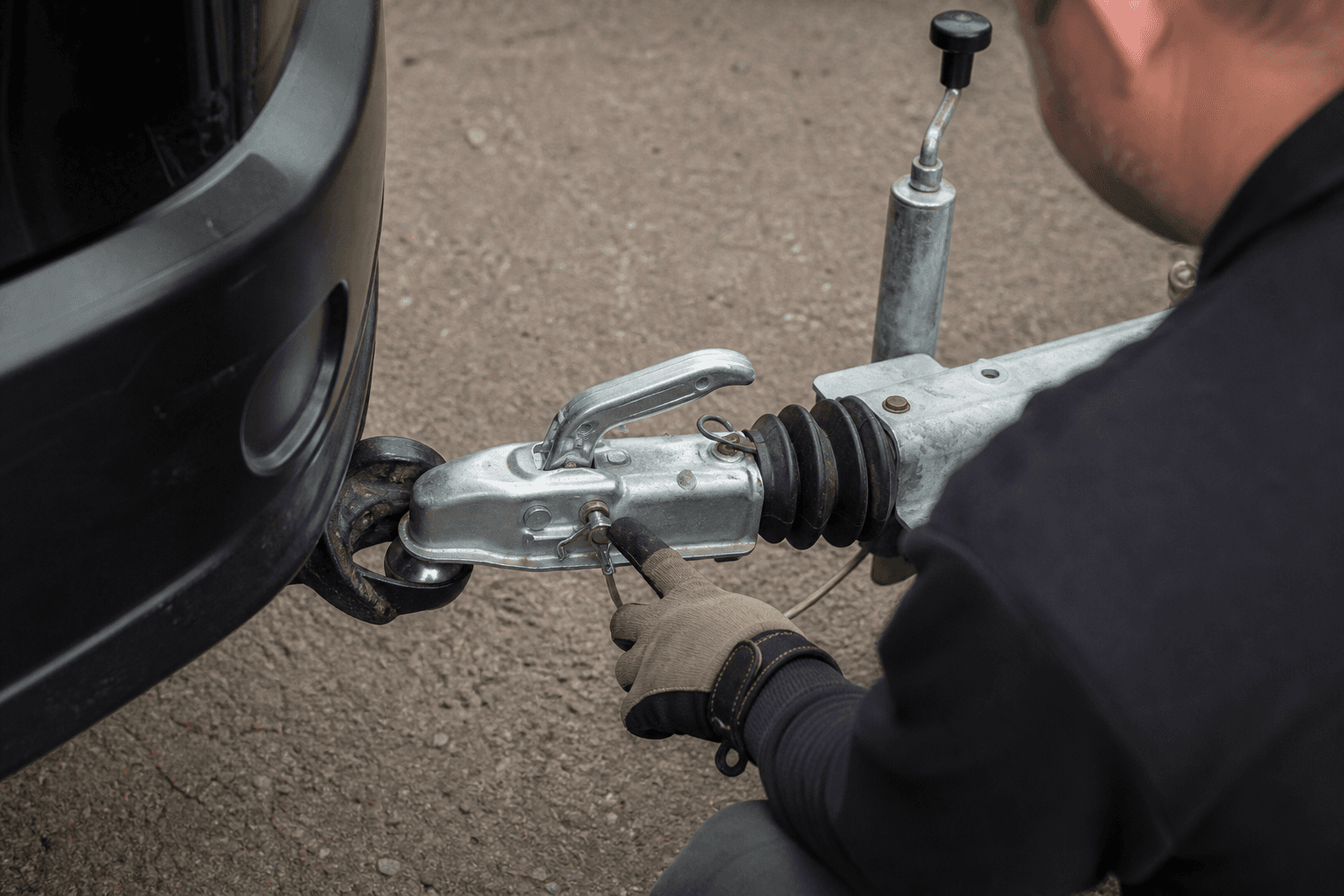
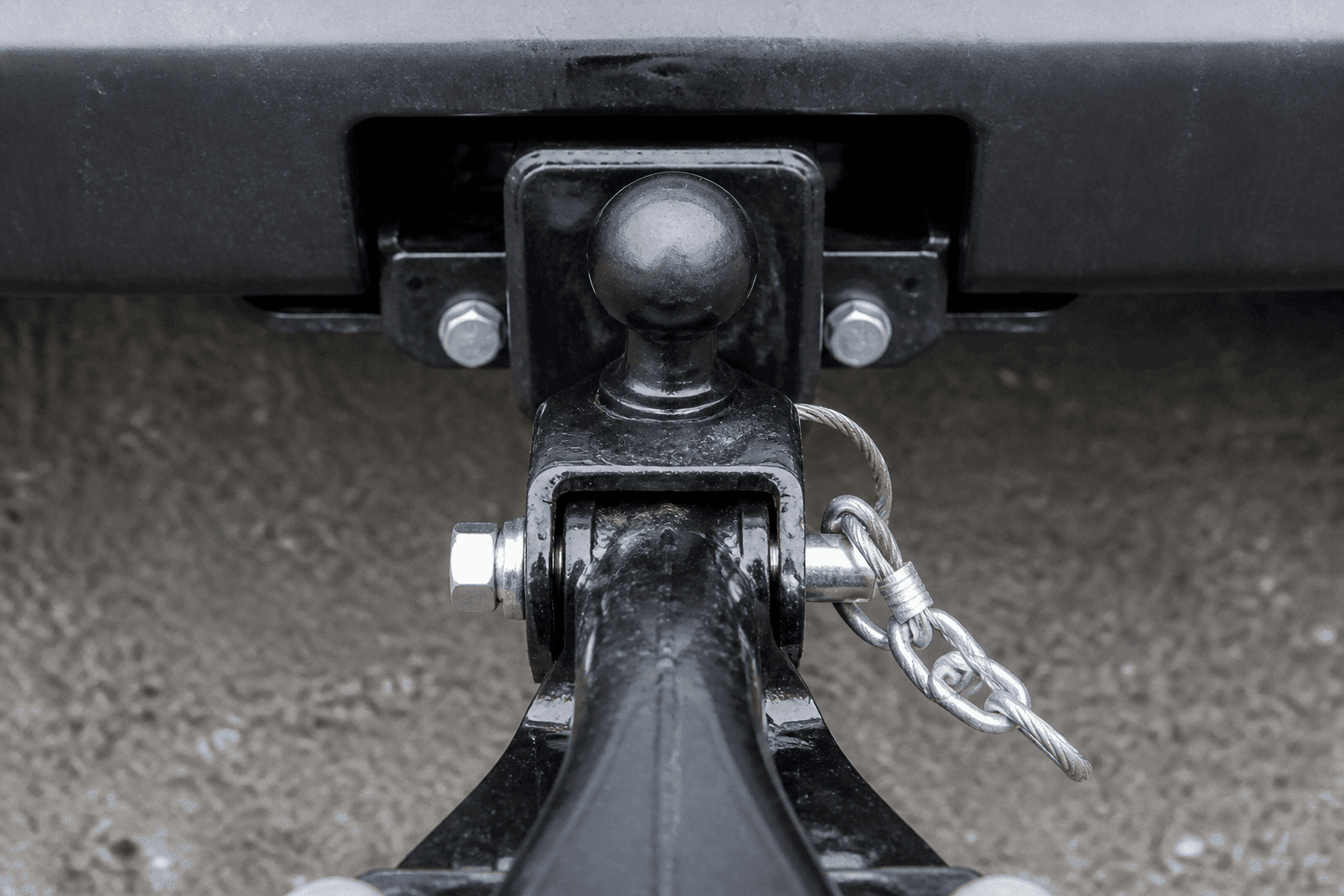
- Coupling and jockey wheel: Check that the hitch locks securely on your vehicle's towball and that the jockey wheel retracts fully and locks in place.
- Wiring plug and socket: Inspect for corrosion or bent pins. A poor connection will cause intermittent brake lights, which is both illegal and dangerous.
Speed Limits When Towing
Many drivers are unaware that towing a trailer on a public road automatically reduces the speed limit that applies to them. Your vehicle's speed limit when towing is determined not just by the road type, but by the type of vehicle you are driving and whether you are towing.
When towing a trailer in Great Britain, cars, motorcycles, car-derived vans and dual-purpose vehicles are subject to reduced speed limits: 30 mph in built-up areas, 50 mph on single carriageways, and 60 mph on dual carriageways and motorways. These limits apply regardless of what the road signs show for other vehicles, and you must not use the right-hand lane of a motorway with three or more lanes when towing a trailer.
Plan your route with these reduced limits in mind. Journey times will be longer than normal driving, and your stopping distance may increase significantly when towing.
Insurance: Confirm Cover Before You Book
Standard motor insurance policies vary widely in how they treat hired trailers. Some extend third-party cover to a trailer automatically; others do not cover the trailer itself or the vehicle being transported. Contact your insurer directly and ask two specific questions: does your policy cover a hired car transporter trailer while it is attached to your vehicle, and does it cover the vehicle being transported while loaded on the trailer?
Many hire companies offer their own trailer insurance or damage waiver products. Read the terms carefully, noting any exclusion for overloading, incorrect coupling, or use on private land. Keep a record of the hire agreement, the trailer's condition on collection, and any photographic evidence of defects you spot before accepting it.
If you are hiring in a specific area, GetBrent can help you find local suppliers quickly. Browse car transporter trailer hire in London or trailer hire in Maidstone to see which companies are operating near you, compare specifications, and make contact directly.
Find a Local Trailer Hire Company on GetBrent
GetBrent is a UK marketplace connecting people who need trailers, tools, plant and vehicles with local hire companies and independent suppliers. Search by location and trailer type to find car transporter trailer hire near you, view specifications, and contact suppliers directly. Whether you are moving a classic car, recovering a non-runner or transporting a project vehicle, GetBrent makes it straightforward to find the right equipment from a supplier you can reach quickly.