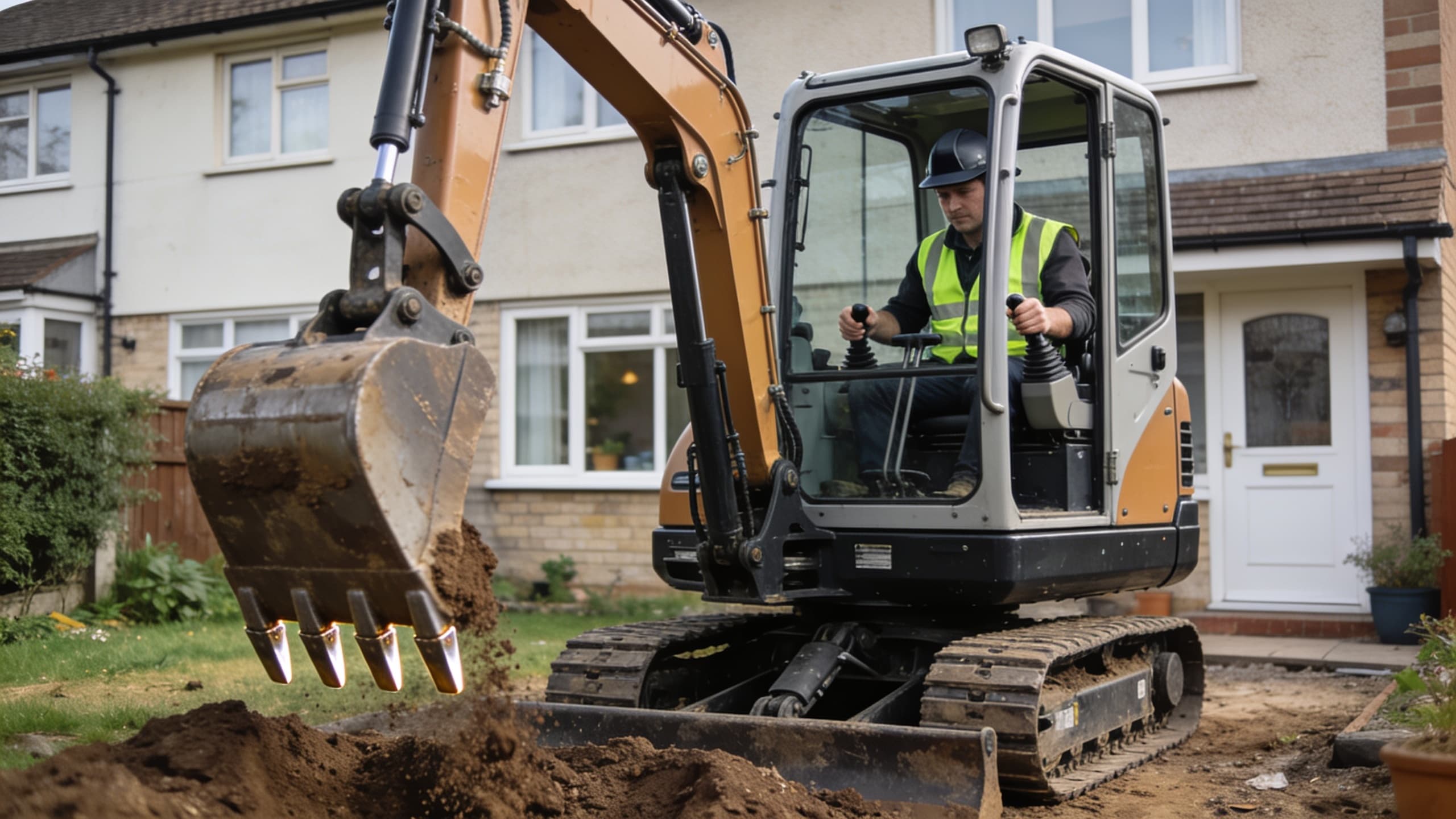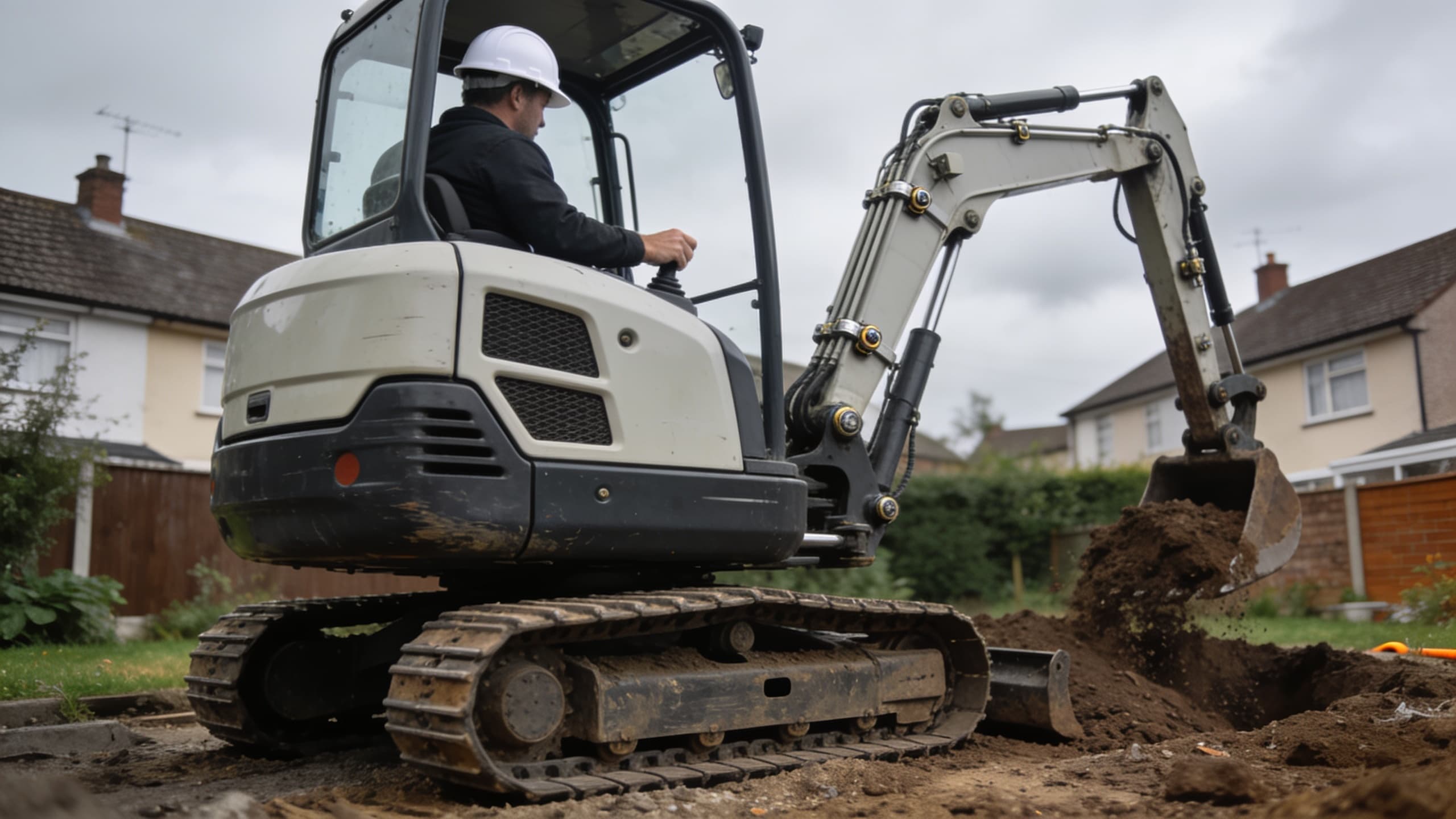
Hiring a mini digger suits short-term projects and saves capital outlay, whilst buying makes financial sense for regular, long-term work. The choice depends on project frequency, storage space, maintenance capability and cash flow.
When hiring a mini digger makes sense
Hiring a mini digger is the practical choice for most one-off jobs, home improvements and small construction projects. The main advantage is that no capital investment is required upfront. Hire companies deliver and collect the machine, so there is no storage problem on a residential property or small business site.
Hire periods are flexible - companies offer daily, weekly and monthly rates. For a single garden renovation, basement dig-out or landscaping job, paying for hire over a few days or weeks is far cheaper than purchasing a machine that will then sit unused. Hire companies maintain and insure their equipment, so the hirer is not responsible for repairs, servicing or breakdown costs.
Hiring also removes the complexity of registration, insurance and compliance. The hire company ensures the machine meets current safety and emission standards. For someone without experience operating plant, hiring typically includes basic induction and support from the provider.
When buying a mini digger is cost-effective
Buying a mini digger becomes financially sensible if the machine will be used regularly over one or more years. Contractors, groundworks firms, tree surgeons and property developers who work on multiple sites often find that purchase costs are recovered within 12 to 18 months through reduced hire spending.
Ownership brings control. The operator knows the machine's exact service history, can maintain it to their own standards and has it available whenever needed without booking delays. For businesses running on tight schedules, this reliability is valuable.
However, ownership brings responsibilities. The owner must arrange insurance, pay for servicing and repairs, and ensure the machine complies with current regulations. Storage must be secure and suitable - many residential properties do not have the space or planning permission to keep plant equipment on site.
Rules and regulations that affect your choice
Mini diggers under 3.5 tonnes may be operated on public roads if properly registered and insured as plant, though this is rare. Most machines are transported by lorry between sites. If towing a mini digger on a trailer, the towing vehicle and trailer setup must comply with regulations enforced by the DVSA and the rules in the Highway Code. The person doing the towing must hold the correct driving licence category for the combined weight.
On construction sites, the machine operator must be trained and competent. Site supervisors and HSE guidance require that operators understand safe working procedures, particularly around underground utilities, confined spaces and working near other people or structures.
If the digger is used for demolition, excavation of contaminated land or waste removal, the Environment Agency or SEPA (depending on location) may require environmental permits or waste licences. Local councils also regulate where spoil can be taken - skips or licensed waste sites must be used for soil and rubble, not fly-tipping.
Practical checklist: hire versus buy
Use this checklist to decide which option suits the project:
- How many separate jobs will the digger be used for in the next 12 months? (One or two = hire; five or more = consider buying)
- Is secure, suitable storage available on site or at a base? (No = hire)
- Will someone on the team maintain and service the machine? (No = hire)
- Is the digger needed for continuous weeks of work, or on and off? (Continuous = buying is more efficient)
- What is the total hire cost for all planned jobs? (Get quotes from hire companies and compare to purchase price from dealers)
- Can the business absorb an unexpected breakdown and repair bill? (No = hire shifts the risk)
- Is there yard or workshop space with mains power and water for cleaning? (No = hire simplifies logistics)
Finding the right solution locally
Hire costs vary significantly by location, machine size, and hire period length. Quotes should be confirmed directly with local plant hire companies, as rates differ between depots and are subject to availability. Similarly, purchase prices depend on machine age, hours run, brand and local market conditions.
GetBrent.co.uk lists plant hire providers across the UK regions. Users can search plant hire companies in their area and get quotes for specific dates and durations. For those in Greater London and the Home Counties, mini digger hire is widely available through local providers who can deliver and collect at short notice.
The decision between hiring and buying ultimately rests on project frequency, cash flow, storage capacity and the operator's experience. For most homeowners and small businesses, hiring remains the lower-risk, more flexible option. For established contractors and regular users, ownership may deliver better value over time - but only if the machine is kept fully utilised and properly maintained.