Ground conditions are fundamental to plant safety. Poor ground can cause expensive equipment damage, site accidents and project delays. Every operator and site manager needs to understand how soil type, moisture content and load-bearing capacity affect the machinery they hire and how they use it.
Why Ground Conditions Matter for Plant Safety
Plant and equipment are designed to operate on surfaces that can support their weight and handle the forces they exert during work. When ground conditions fall short, the consequences are real and often serious. A digger on soft ground may sink unevenly, throwing the machine out of level and straining hydraulic systems. Tracked equipment on wet clay can slip or bog down. Cranes and elevated work platforms become unstable if the ground beneath their outriggers is uneven or compacted unevenly. The HSE expects site managers and operators to identify and manage these risks before equipment is positioned.
Ground failure is not only a safety issue—it damages machinery, wastes time and creates liability. Many hire companies will not accept damage claims if the ground was unsuitable and the hirer failed to prepare it properly.
Assessing Ground Before You Hire
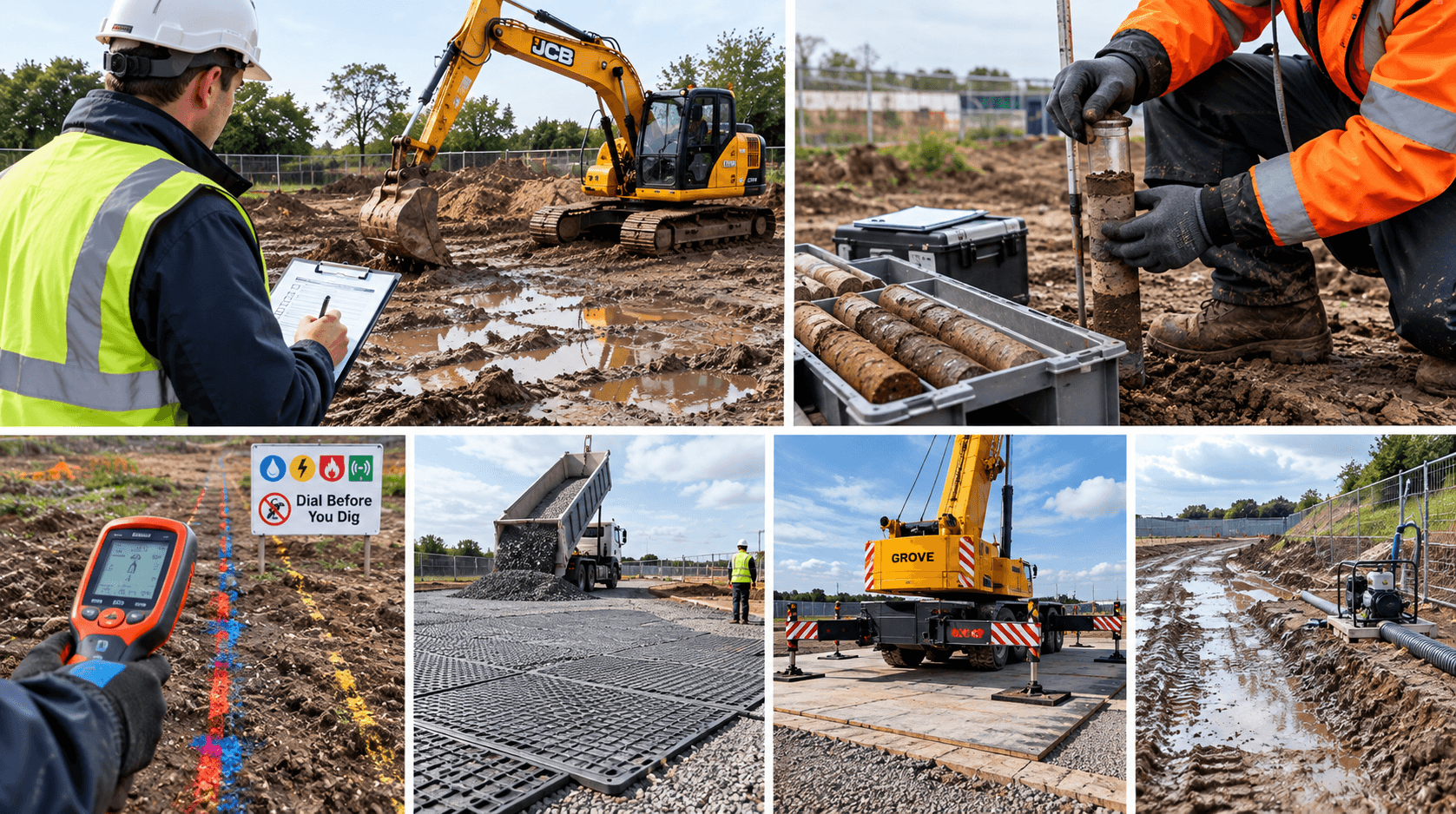
Before confirming a plant hire booking, spend time examining the area where the equipment will operate. Walk the ground in wet and dry conditions if possible. Look for soft patches, standing water, vegetation that suggests poor drainage, and areas that have been recently filled or disturbed. Check for underground utilities—water pipes, electricity cables, gas lines and telecoms ducts—by calling Dial Before You Dig or consulting records with the site owner or local council.
For major projects or unfamiliar sites, commission a simple ground investigation. A soil engineer can carry out trial pits or boreholes to identify soil type, bearing capacity and water table depth. This is particularly important before positioning large cranes, platforms for working at height, or equipment on land that slopes or borders watercourses.
Ground Preparation Checklist
- Walk and map the site; identify soft areas, slopes and drainage problems
- Mark the location of underground services
- Remove surface water, vegetation and loose debris
- Compact weak ground or lay a temporary hard surface (crushed stone, recycled asphalt or plastic matting)
- Ensure level setup areas for equipment with outriggers or counterweights
- Provide a suitable egress route so the equipment can enter and leave safely
- Check weather forecasts; wet weather can degrade prepared ground rapidly
Load-Bearing Capacity and Equipment Positioning
Every piece of plant has a maximum ground bearing pressure—the weight it exerts per square metre. Soft ground, clay and saturated soil have low bearing capacity. Compact sand and gravel have higher capacity. Concrete and tarmac can carry the most, but both can crack if the ground beneath shifts.
Spreader plates or ground mats distribute the weight of plant over a larger area and reduce ground pressure. This is standard practice when positioning cranes, mobile elevated work platforms, or tracked machines on poor ground. If ground conditions are borderline, hire companies often require evidence (such as a soil report or engineer's approval) that the site is safe, or they may refuse to deliver equipment at all.
For hire of plant and equipment across the UK, operators should expect the hire company to ask about ground conditions. Be honest and detailed in your answer. If you are unsure, photographs of the site help the hire company's assessor give sound advice.
Water, Drainage and Ground Stability
Groundwater and surface water are the most common causes of ground failure on building and construction sites. Standing water means poor drainage and weak, unstable soil. Wet ground loses bearing capacity rapidly and offers poor traction. Tracked plant can become bogged; wheeled vehicles may sink or slip.
Before hiring heavy equipment, ensure surface water is managed. Install temporary drainage if needed—land drains or sump pumps can be hired alongside the plant. The Environment Agency and local council have rules about water discharge; confirm you have permission before pumping water into watercourses or the public highway.
In areas with high groundwater, or on sites near rivers and streams, water table depth is critical. A soil report will show this. If the water table is close to the surface, much larger areas of ground may fail in wet weather, and some equipment may be unsuitable for the site regardless of surface preparation.
Weather and Seasonal Effects
Ground conditions change with weather. Summer drought can harden clay, improving bearing capacity temporarily. Heavy rain softens ground and raises water tables. Frost can destabilise prepared ground. Plan plant hire and site work with seasonal ground conditions in mind. Winter projects in clay areas are high-risk; late spring and early autumn are safer for plant-intensive work.
Before bad weather, relocate plant to higher ground or prepared hardstanding if possible. Monitor forecasts and brief the hire company's operator if weather is expected to worsen.
Getting Professional Help
If the site is complex, sloping, near water or on an unfamiliar soil type, involve a structural or geotechnical engineer before committing to plant hire. They can advise on ground preparation and confirm whether specific equipment is suitable. This cost is often small compared to the cost of equipment damage, accidents or project delay.
The HSE expects competent persons and site managers to assess site risks, including ground stability. Documentation of your ground assessment—photos, soil reports, preparation records—protects you if an incident occurs.
Finding reliable, knowledgeable plant hire companies is essential to safe site management. GetBrent.co.uk connects you with vetted equipment and plant hire providers across the UK. Use the directory to compare local options, read reviews and contact hire companies with detailed information about your site and ground conditions so they can recommend the right equipment and support.