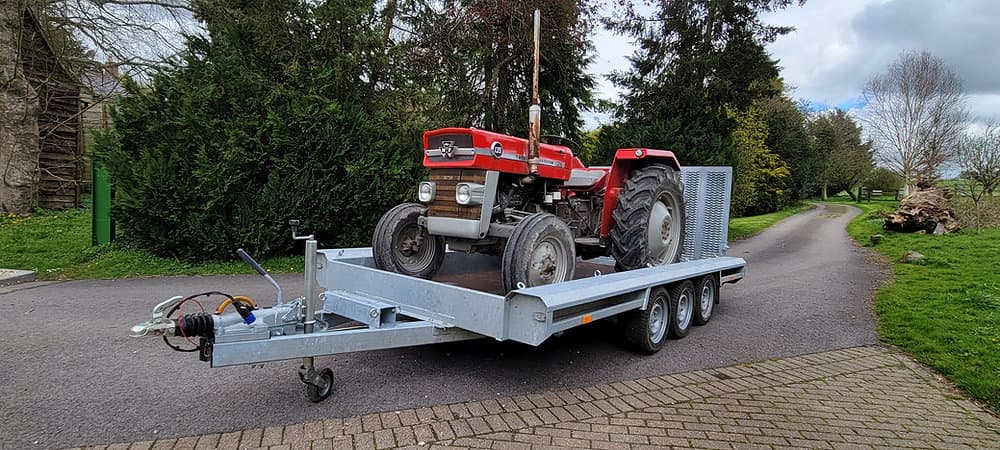
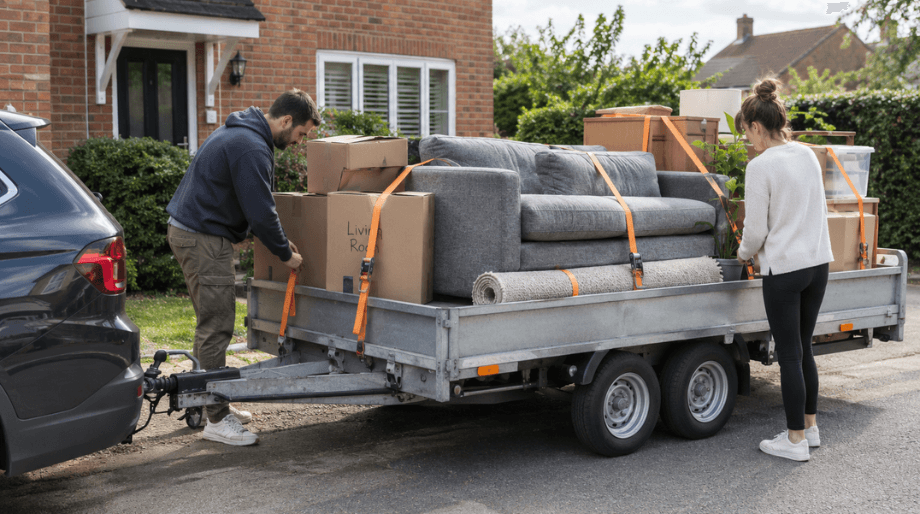
Loading a flatbed trailer safely requires careful planning, proper equipment and understanding of the regulations that govern vehicle loads on UK roads. Whether hiring a flatbed for a house move, construction materials or garden waste, following established safety procedures protects your cargo, your vehicle and other road users.
Understand the Legal Requirements
The UK has strict regulations governing how trailers must be loaded. The Vehicle and Operator Services Agency (VOSA) and the Driver and Vehicle Standards Agency (DVSA) enforce these rules, with penalties for non-compliance ranging from fines to vehicle prohibition.
Under the Road Vehicles (Construction and Use) Regulations 1986, every load must be secured so it cannot fall or shift during transit. The total weight of the loaded trailer must not exceed its Maximum Authorised Mass (MAM), specified on the trailer's plate. Exceeding this limit is illegal and invalidates insurance coverage.
The Highway Code stipulates that loads must not overhang the trailer by more than a certain distance without warning signs, and any overhang must be clearly marked. Loads wider than the trailer must not exceed 2.9 metres total width on UK roads.
Calculate and Distribute Weight Correctly
Uneven weight distribution is one of the most common causes of trailer accidents and instability. Before loading, establish the trailer's Maximum Authorised Mass and subtract its tare weight (the trailer's own weight) to determine your safe carrying capacity.
Place heavier items towards the centre of the trailer and as low as possible. This lowers the centre of gravity and improves stability during cornering and braking. Distribute weight evenly side to side to prevent the trailer leaning or swaying. Avoid concentrating all weight at one end, as this causes nose-down or tail-down conditions that affect towing vehicle handling.
If towing with a car rather than a van or truck, remember that some trailers require a stabilising load in the towing vehicle itself. Check your trailer's documentation and your car's manual for specific weight distribution guidance.
Use Appropriate Securing Equipment
Merely placing items on a flatbed is insufficient. All cargo must be actively secured using suitable equipment. Common options include:
- Ratchet straps rated to at least 1.5 times the load weight
- Rope or chain of appropriate breaking strain
- Cargo nets for bulky but light items
- Wheel chocks for vehicles being transported
- Corner protectors to prevent straps damaging goods
Inspect all securing equipment before use. Damaged, frayed or weakened straps must be discarded. Never use makeshift ties such as ordinary rope or damaged straps. The securing method must prevent the load moving in any direction, including vertical movement if the trailer brakes suddenly.
Tie down points should be evenly spaced around the load. A general rule is that heavy items require multiple securing points - at minimum, straps across the top and around the sides. Tighten all fastenings firmly, then check them again before moving off, as settling can occur during the initial journey.
Practical Loading Checklist
- Check the trailer's MAM against its tare weight and your intended load
- Inspect all ratchet straps, ropes and tie-down points for damage
- Plan your load arrangement, placing heavier items centrally and low
- Load systematically, checking weight distribution as you go
- Secure each item before moving to the next
- Inspect all securing straps and connections one final time
- Check overhang distances and add warning markers if needed
- Test the trailer's stability by gently rocking it before departure
- Drive at reduced speed on your first journey and recheck fastenings at your first stop
Additional Safety Considerations
Ensure the trailer's brakes, lights and coupling are functioning correctly before loading. An overloaded or poorly secured trailer places excessive strain on these components.
Weather conditions affect stability. Loads with high wind resistance should be secured more firmly, and items susceptible to movement such as loose grain or gravel require additional containment measures.
If transporting dangerous goods or hazardous materials, additional regulations apply. Check whether your load requires signage under DVSA guidelines and whether a specialist trailer is required.
Consider visibility when loading. Ensure your load does not obstruct rear lights, number plates or reflectors. Add warning triangles or lights if required by load size and trailer configuration.
Finding the right trailer for your load, properly maintained and certified, is equally important as loading it correctly. GetBrent.co.uk connects you with reputable trailer and equipment hire companies across the UK, offering a wide range of flatbed trailers suitable for various loads and budgets. Use the directory to compare local options and book a trailer that meets your specific requirements with confidence.