The legal minimum tyre tread depth in the UK is 1.6 millimetres across the central three-quarters of the tyre width. This is a non-negotiable safety standard enforced by law, and any tyre that falls below this level must not be used on a public road.
Why Tyre Tread Depth Matters
Tread depth is essential because it provides the grip between your tyre and the road surface. As a tyre wears, the grooves become shallower, and the rubber hardens, reducing its ability to channel water away and maintain contact with the road. In wet conditions, tyres with insufficient tread depth are far more likely to hydroplane, where the tyre loses contact with the road surface entirely.
The difference between adequate and inadequate tread depth can mean the difference between stopping safely and skidding into an obstacle or another vehicle. For anyone operating a van, trailer or plant equipment on public roads - or hiring such vehicles from others - understanding and maintaining tread depth is a core part of roadworthiness.
The Legal Standard and DVSA Guidance
The 1.6 millimetre minimum is set in law and enforced by the DVSA (Driver and Vehicle Standards Agency). This depth must be present across the central three-quarters of the tyre's width, around the entire circumference. A tyre that meets this minimum is still technically legal, but many safety experts recommend replacing tyres at 3 millimetres, particularly for vehicles used in wet conditions or by professional operators.
The Highway Code and the DVSA's vehicle maintenance guidance make clear that drivers and operators are responsible for ensuring their tyres are in a safe and legal condition before using any vehicle on public roads. This responsibility applies equally whether you own the vehicle or have hired it. If you hire a van, trailer or item of plant equipment, it is reasonable to expect that tyres will be in legal condition, but you should always carry out a visual check as part of your pre-use inspection.
How to Measure Tyre Tread Depth
There are several reliable methods to check tread depth without specialist equipment:
- The 20 pence coin test: Insert a 20 pence piece into the tread groove with the coin's outer edge first. If you can see the top outer band of the coin, the tread is below the legal limit.
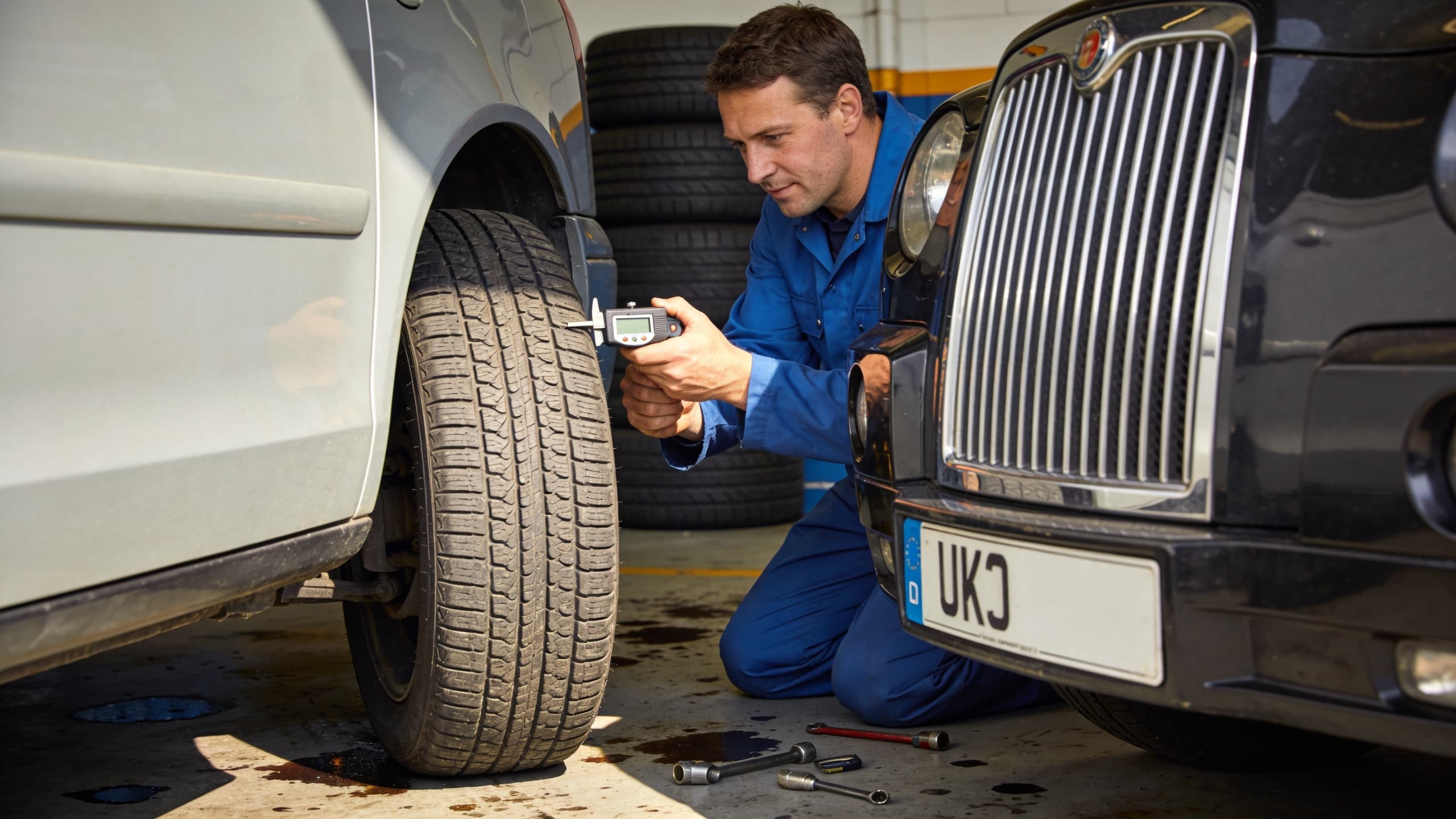
- A tread depth gauge: A simple mechanical or digital gauge can be purchased inexpensively and gives a precise reading in millimetres.
- Visual inspection: Many tyres have tread wear indicator bars - raised ribs of rubber that run across the grooves. When the tread wears down to these bars, the tyre has reached the legal limit.
Check multiple points around each tyre, not just one spot, as wear is often uneven. Uneven wear can indicate alignment, pressure or suspension issues that should be addressed.
Enforcement and Consequences
The DVSA and local police enforce tyre tread depth requirements during roadside vehicle checks and in response to accidents. If your vehicle is found to have tyres below the legal minimum, you face a fixed penalty notice and penalty points on your driving record. The consequences are more serious if the defective tyre is deemed to have contributed to an accident or if you are stopped a second time.
For anyone hiring vehicles or equipment from GetBrent or other hire companies, operating an unroadworthy vehicle with illegal tyres places the hirer at personal liability. Insurance may not cover claims arising from known defects, and prosecution is possible.
Practical Checklist Before Use
- Visually inspect all four tyres and the spare (if accessible) for visible damage, bulges or foreign objects embedded in the tread.
- Use the 20 pence coin test on at least three points per tyre - outer edge, centre and inner edge.
- Check that the tyre pressure matches the vehicle's specification (usually found on a label inside the driver's door or in the handbook).
- If any tyre is at or below 1.6 millimetres, or if you have any doubt about its condition, do not use the vehicle. Contact the hire company or the vehicle owner immediately.
- If you operate the vehicle professionally or regularly, record your tyre checks in a maintenance log.
Tyre condition is a cornerstone of vehicle safety and legal compliance. Whether you own a van, hire a trailer, or operate plant equipment, ensuring tread depth is legal and adequate is a responsibility that benefits everyone using the road. When hiring equipment or vehicles, confirm with the hire company that tyres have been recently checked and are well above the minimum. If you need vehicle and plant repair services or local tyre specialists, GetBrent connects you with experienced local providers across the UK who can carry out professional inspections and replacements to keep your equipment roadworthy and safe.