Both storage unit hire and shipping container hire solve the same core problem - finding a secure place for belongings or business stock - but they work very differently in practice. Choosing between them depends on several factors: how long you need storage, where you intend to site a container, what goods you are storing, and what legal protections you want in place. This guide sets out the main differences so you can make an informed decision.
What Each Option Actually Is
A self storage unit is a lockable room or locker within a managed facility. The operator runs the site, maintains security, and your licence to use the space is governed by a formal contract. Storage options across the UK range from small lockers suitable for a few boxes through to large rooms that can hold the contents of a family home.
A shipping container is a steel box - typically 20 ft or 40 ft in length - that can be placed on land, on a driveway, or at a managed yard. You usually take full responsibility for it once it is on site, and it is used as a single, undivided space. Containers can be hired or purchased outright, and some companies will position one at a location you specify.
Planning Rules for Shipping Containers
This is the area where the most confusion arises, and it is important to understand the rules before committing to a container on your own land.
The governing legislation is the Town and Country Planning Act 1990, together with the Town and Country Planning (General Permitted Development) Order (GPDO). UK council regulations for shipping containers are primarily governed by the Town and Country Planning Act 1990 and permitted development rights under the GPDO. Temporary use under 28 days is generally unregulated. Permanent siting, conversion to habitable use, or use in a restricted area almost always requires planning permission from your local planning authority.
The 28-day rule. Under Schedule 2 of the Town and Country Planning (General Permitted Development) Order, temporary structures can generally be placed on land for up to 28 days in a calendar year without needing planning permission. This is sometimes called "permitted development" for temporary use. The container must not be within the curtilage of a building and must not change the use of the land. The 28 days are cumulative and do not reset.
Longer-term siting. Once a container exceeds that 28-day period, or if it is being used permanently, the question of planning permission usually needs to be resolved with your local planning authority. "Permanent" does not just mean forever - even a container left in place for a few months can be considered a permanent structure in planning terms.
Use matters as well as duration. Shipping containers on private land may not need planning permission if they are purely for storage. However, according to the Town and Country Planning Act 1990, if a container is being used as a building, planning permission is usually required as it is considered development.
Location affects the outcome. Temporary does not mean unrestricted. Planning rules in the UK are devolved, meaning they vary between England, Scotland, Wales and Northern Ireland, and local authorities have discretion in how they apply them. Always confirm with your local planning authority before siting a container for more than a short period.
Building regulations are a separate matter. Building regulations are triggered when a container is converted for habitable or commercial use. These cover structural integrity, insulation, fire safety, ventilation, drainage and electrical installations. Building regulations are separate from planning - you may need both.
Self storage units held within an established facility carry none of these planning considerations for the customer. The facility operator has already dealt with all planning and building compliance.
Consumer Protections and Your Contract
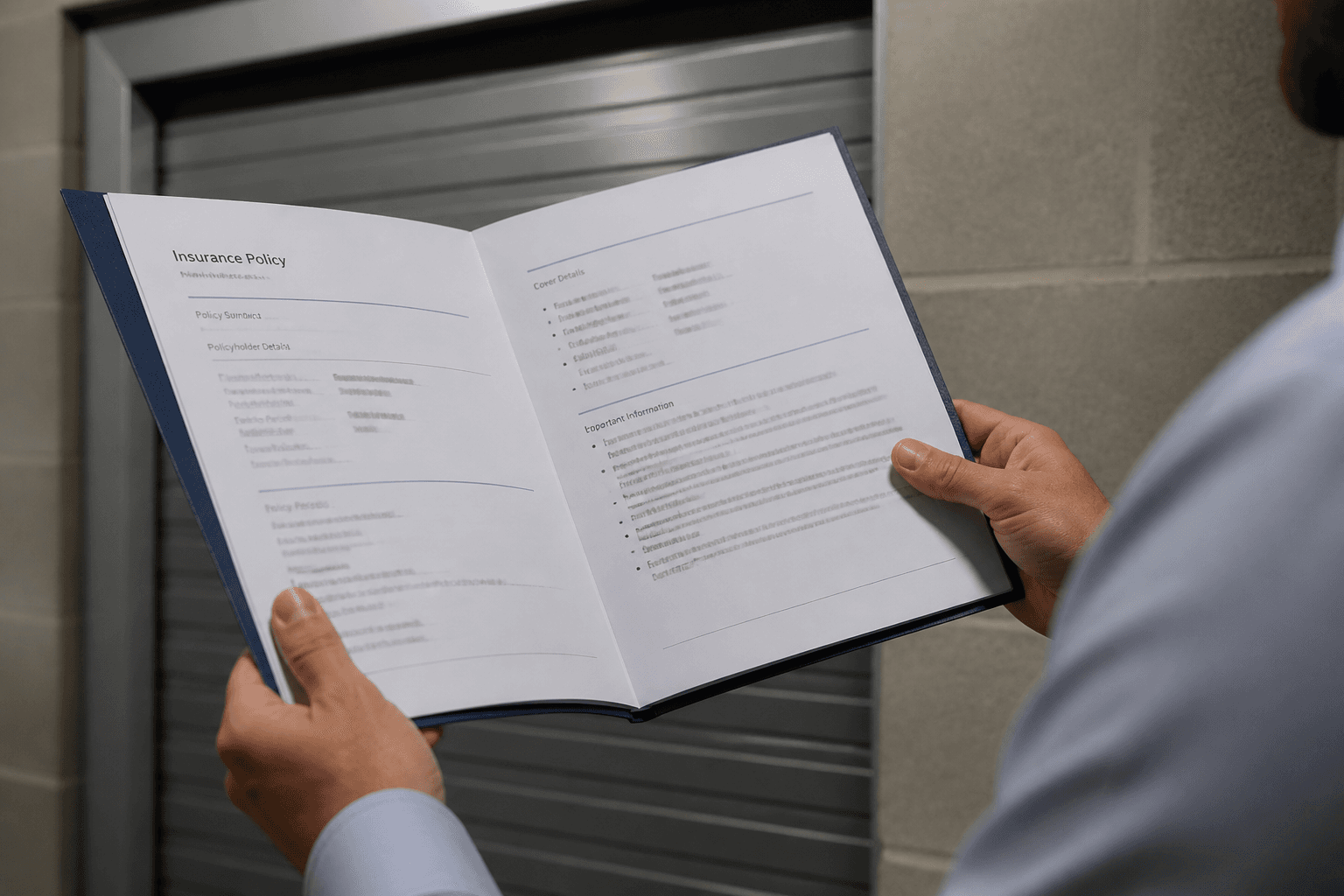
Self storage in the UK sits within a clear consumer protection framework. The Consumer Rights Act 2015 mandates fair and transparent contracts with challengeable unfair terms. Services must be performed with reasonable care and skill, whilst customers retain cancellation rights within reasonable timeframes. These protections apply specifically to storage contracts and provide legal recourse for disputes.
Since 6 April 2025, self storage operators selling to consumers also fall under the Digital Markets, Competition and Consumers Act 2024. The price shown must be the total, including every fee, tax or charge the customer will necessarily incur, and
The Self Storage Association (SSA UK) is the principal trade association representing both self storage operators and industry supplier members' interests in the UK. Part of the SSA UK's mission is to set the standard for the industry and to promote best practice. To achieve this, operator members are required to meet its Membership Standard to qualify for full membership. Choosing an SSA UK member operator gives customers confidence that minimum standards of security, contracts and insurance have been met.
Shipping container hire agreements are commercial contracts rather than regulated storage licences. Read the terms carefully, particularly around liability for goods inside the container, what happens if the container is damaged, and how notice to return it is given.
What You Can and Cannot Store
Both options carry restrictions on prohibited goods, and these restrictions exist for good reasons regardless of whether a facility is a managed unit or a hired container.
- Hazardous and flammable materials - petrol, paint thinners, solvents, fireworks and industrial chemicals are prohibited in self storage facilities. Some items pose fire hazards, explosion risks or can cause environmental damage - for example, petrol or paint thinner.
- Perishable goods - items that can spoil, rot or attract unwanted pests, including perishable food items, plants or soil, and wet appliances, are prohibited. Wet items can cause mould and mildew, and perishable food items attract rodents, bugs and bacteria.
- Illegal goods - storing illegal or stolen goods is not just risky - it is illegal. Stolen property and illegal goods could lead to police involvement, unit seizure and criminal prosecution.
If you are unsure whether a specific item is permitted, check directly with the operator or hire company before you load. The same categories of prohibited goods generally apply whether you are using a self storage facility or a hired container.
Practical Checklist: Which Option Suits Your Situation?
Use the questions below to narrow down the right choice for your circumstances.
- How long do you need storage? A self storage unit can be rented on a rolling basis and is simple to end. A container is better suited to medium or longer-term needs, provided any required planning permission is in place.
- Do you need frequent access? Most self storage facilities offer daily access during set hours and some operate round the clock. A container sited on your own property gives you access whenever you choose.
- Where will the container go? If it is going on land you control for more than 28 days, check with your local planning authority under the Town and Country Planning Act 1990 before it is delivered. If it is going to a managed container yard, the operator will have resolved the planning position.
- How much space do you need? Containers come in standard ISO sizes and offer a large, undivided space - useful for building materials, vehicles or large equipment. Self storage rooms can be sized to match your exact needs, so you pay only for what you use.
- What about insurance? Check what your existing home or business insurance covers. SSA UK members are required to carry warehousekeeper liability insurance for goods that are stored - to cover for example negligence on behalf of the operator. With a container on private land, cover for the goods inside is your own responsibility.
- What drives the cost? For self storage, the main cost drivers are floor area, building location and contract length. For a container, key factors are container size, delivery distance, whether you buy or hire, how long it stays on site, and any ground preparation needed. Confirm the actual figure with the company directly.
If you need container storage in the Thames Estuary area, listings for container storage in London, container storage in Rainham and container storage in Tilbury cover some of the most active depot locations in the South East.
Making Your Decision
Self storage units are the lower-friction choice: consumer protections are clear, no planning steps are needed, and access arrangements are predictable. They suit house moves, decluttering, business stock and document archiving where flexibility and a manageable footprint matter.
Shipping containers make practical sense when you need a large, single open space, when you want the container on your own site, or when you are managing a project such as a building renovation where on-site access matters more than anything else. The planning position must be confirmed before the container arrives, not after.
For either option, GetBrent makes it straightforward to find and compare local hire companies and storage providers. Search the marketplace to see which operators cover your area, check their listings for availability, and contact them directly to confirm current rates and availability.