Packing a storage unit efficiently is not just about fitting more in - it is about being able to retrieve what you need without dismantling half the unit first. A poorly arranged storage space becomes useless storage space, especially if the items you need most are buried under boxes and furniture.
Create an Access Aisle Down the Middle
The single most important principle is to leave a clear path through the centre of the unit. This aisle, typically between 60 and 90 centimetres wide, should run from the door to the back wall with no obstacles. Every time you need to collect something, you will use this route. If it is blocked, you will have to move items to get past, wasting time and risking damage to stored goods.
Think of the aisle as a spine. Everything else is organised to either side of it. This prevents the common trap of stacking items so tightly that the back half of the unit becomes inaccessible after the first few weeks.
Place Frequently Used Items at the Front and at Eye Level
Items you expect to need during the rental period should be stored where you can reach them without climbing, crouching, or moving other things. Eye level, on either side of the access aisle, is the prime real estate of any storage unit. Boxes of documents, seasonal decorations you might swap out, or tools you use occasionally all belong here.
Do not put heavy furniture or rarely needed items in these positions. Reserve them for things you will actually retrieve.
Stack Heavier Items on the Bottom and Work Upward
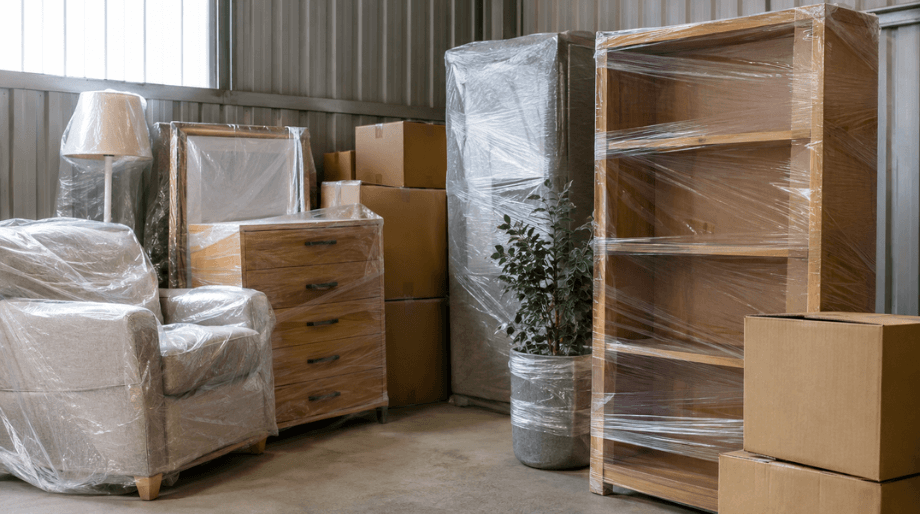
Gravity makes this rule mandatory for safety and stability. Boxes of books, tools, machinery, and heavy equipment must go on the floor or on sturdy shelving units rated for the weight. Lighter items go on top - textiles, foam, lightweight kitchenware, and empty boxes.
Stacking boxes haphazardly invites collapse. Use items of similar size and weight together, stack them in neat columns, and interlock them slightly (like bricks) rather than balancing one on top of another. If you are storing delicate items or anything that could be damaged by pressure, keep it off the bottom and away from corners where weight accumulates.
Store Less-Used Items at the Back and Top
Anything you do not expect to retrieve - archived paperwork, off-season decorations for years you will not be in the unit, or inherited items awaiting a decision - goes to the back, up high, or both. These items effectively become permanent residents of the unit. Place them where they will not need to move and will not block access to more important goods.
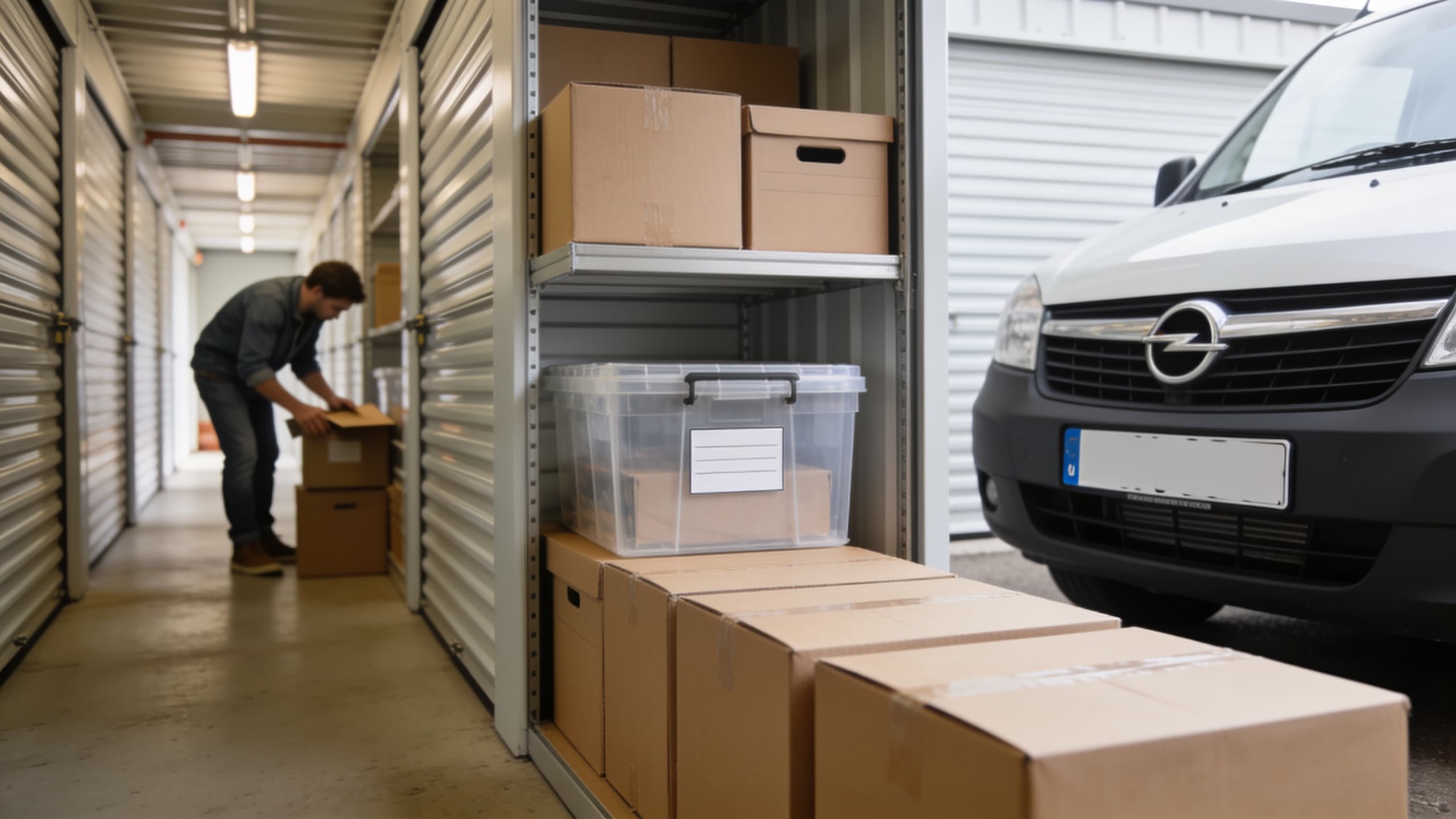
Shelving units are invaluable here. A tall, sturdy shelving system allows you to use vertical space safely and keeps items off the floor, reducing moisture risk and maximising the footprint. The HSE provides guidance on safe storage height and stacking where workplace storage is concerned; whilst domestic and business storage units are not directly regulated in the same way, the same logic applies - do not stack items so high that they become unstable or impossible to reach safely.
Keep a Written Inventory and Label Everything
The best-packed storage unit is only useful if you remember what is in it and where. Before you seal the door, create a simple list of what has been stored and which section or level it is on. Take photographs of each side of the unit and of shelving contents. Label boxes clearly with their contents and, if space allows, with a simple code linking them to your inventory.
This takes 20 minutes but saves hours of searching and prevents duplicate purchases of items you forgot you owned.
Packing checklist:
- Measure the storage unit and plan your layout before moving anything in
- Leave a central access aisle at least 60cm wide, running the full depth of the unit
- Place heavier items on the floor in a stable stack
- Put frequently needed items at eye level near the front
- Store delicate or valuable items where they will not be crushed
- Use shelving or racking to maximise vertical space safely
- Keep less-used items at the back and top
- Photograph the contents before closing the door
- Create and keep an inventory with a location code for each box or item
Finding the right storage unit for your needs is the first step. GetBrent.co.uk lists local hire companies and storage providers across the UK, making it straightforward to compare options in your area and book a unit suited to your requirements. Whether you need storage solutions or facilities in London, Essex or elsewhere, use the directory to find a reputable provider nearby.