A garden clearance removes green waste, soil, timber, old furniture and other outdoor material in a single visit, and reputable firms sort it at a licensed facility so that most of it is composted or recycled rather than sent to landfill. Before you book anyone, UK law places a duty on you as a householder to check that the company is a registered waste carrier - and failing to do so can leave you liable if the waste ends up fly-tipped.
What a garden clearance actually covers
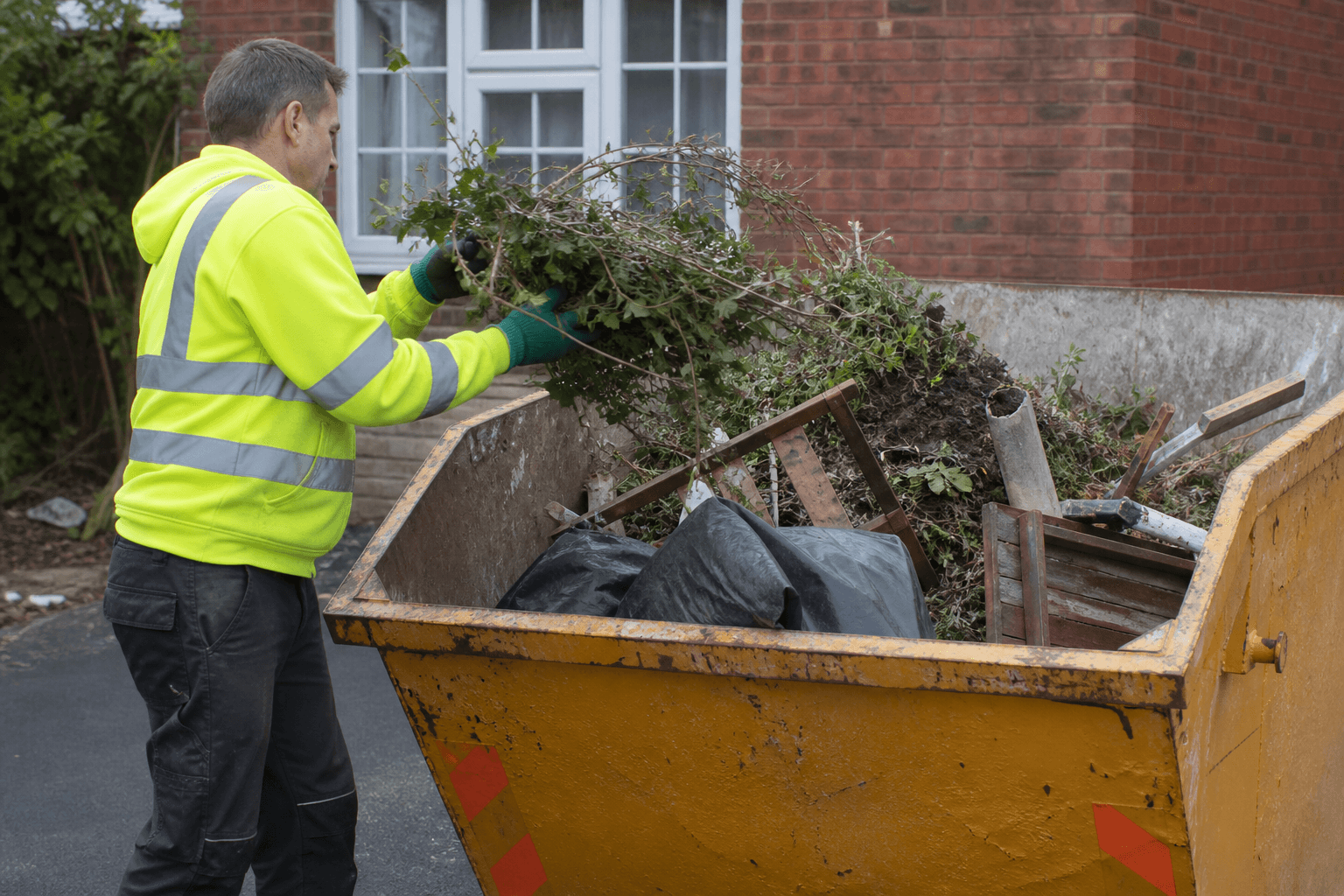
Garden clearance is broader than most people expect. A typical job can include:
- Grass cuttings, leaves, weeds and dead plants
- Hedge and shrub trimmings, brambles and overgrowth
- Branches and small tree limbs
- Turf and soil
- Old fencing, decking and timber (non-treated)
- Garden furniture, broken pots and planters
- Sheds and outbuildings broken down on site
However, a garden clearance is not the same as a green waste bin collection. Treated or painted timber, rubble, paving slabs, liquids, food waste and hazardous materials are separate waste streams and need to be declared separately at the quoting stage. Mixing them into the load without saying so can result in the job being refused, additional charges, or the waste being disposed of incorrectly.
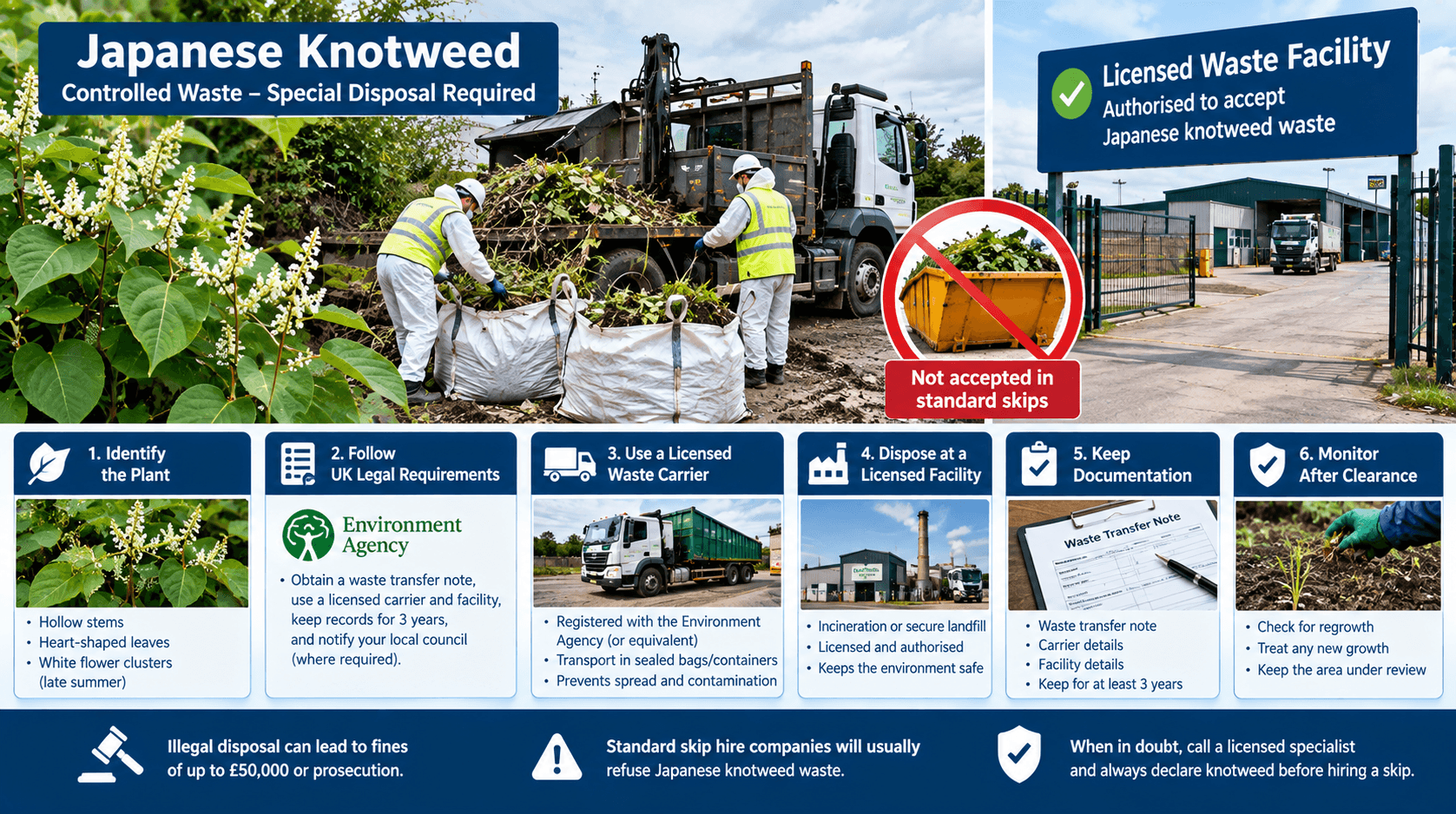
Two materials need particular care. Japanese knotweed is classified as controlled waste under the Environmental Protection Act 1990 and cannot be composted or disposed of in a standard skip - it must be handled by a specialist. Giant hogweed carries similar restrictions. If either is present, tell the firm before they arrive. The existing GetBrent article on clearance and disposal services covers both in more detail.
Where the waste goes after collection
A licensed firm takes the load to a permitted waste transfer station or licensed facility. Once there, the material is separated: soft green waste - grass, leaves, cuttings - goes to a composting facility where it is processed into soil conditioner. Timber is chipped or sent for recycling. Metals are separated and sold for scrap. The aim is to divert as much as possible away from landfill.
This separation is why declaring mixed loads matters. A bag of leaves contaminated with soil, plastic pots or ceramic shards may not be accepted by a composting facility, which delays processing and can add cost to the job.
This does not remove the need to arrange your own disposal for a large one-off clearance, but it does mean cleaner separation is increasingly the standard expectation.
Your legal duty of care as a householder
This is the part most people overlook. The Waste Regulations 2005 make householders legally responsible for ensuring their household rubbish is only passed on to an authorised person for disposal. That applies to garden waste just as much as household rubbish.
Any business transporting waste must be registered as a waste carrier with the Environment Agency. If you hand your waste to an unlicensed operator who then fly-tips it, and the waste is traced back to your address, you may face a fine of up to £5,000 in a Magistrates Court.
When hiring someone to take away garden or household waste, the company should hold an upper tier registration - not lower tier, which only covers a business carrying its own waste. Upper tier registration numbers begin with CBDU. You can check the Environment Agency's public register of waste carriers, brokers and dealers online, or call the Environment Agency on 03708 506 506 for an instant check.
If you are looking for vetted local firms, the clearance and disposal services in London listings on GetBrent are a practical starting point.
Five checks to make before you book
- Confirm upper tier waste carrier registration. Search the Environment Agency public register by company name or registration number before you agree to anything.
- Describe the full load. List soil, timber, treated wood, pots and any invasive plants at the quoting stage. Hidden mixed loads can lead to a revised charge or a refused collection.
- Ask where the waste goes. A reputable firm can name the facility. If they cannot, treat that as a warning sign.
- Pay by card, bank transfer or cheque - not cash. A traceable payment protects you if the waste is later found to have been fly-tipped.
- Request a waste transfer note. This document confirms the waste was handed to a registered carrier and describes what was taken. Keep it for at least two years as proof you met your duty of care.
Note your collector's vehicle registration number as well. East Suffolk Council and other local authorities advise this explicitly: if waste is found dumped illegally, the vehicle details are key to tracing responsibility away from you.
Council collections and household recycling centres
Many councils offer a separate garden waste bin collection, often requiring subscription and an annual charge - check with your local authority for the terms in your area. These services generally accept soft green waste only: grass, small cuttings and leaves. Timber, large branches, soil and turf are rarely accepted kerbside, so a council bin is not a substitute for a full clearance.
Household recycling centres (tips) are open to residents free of charge for domestic garden waste. However, some restrict vans, trailers or sign-written vehicles, and if the load includes timber, rubble or fencing you may need to separate it before you arrive or risk being turned away. Always check your local site's rules before loading the car.
For smaller routine maintenance - grass cuttings, leaves, spent bedding plants - home composting costs nothing and produces usable soil conditioner within a few months. It cannot handle treated timber, large branches, roots, soil or chemically treated material, so it covers only the easier fraction of a full clearance.
Find local garden clearance firms on GetBrent
GetBrent brings together local clearance and disposal firms so you can compare them and contact them directly. Whether you need a full garden clearance in Mitcham, a clearance in Wembley or anywhere else in the UK, search the listings, confirm each firm's waste carrier registration with the Environment Agency, and ask for a written quote and a waste transfer note before the job begins.