During a house clearance, your belongings are sorted into separate streams: items still in good condition are directed towards donation, resale or reuse; recyclable materials go to licensed recycling facilities; and waste that cannot be reused or recycled is sent to a permitted disposal site. Understanding this process - and your legal responsibilities as a householder - helps you choose the right firm and avoid an expensive mistake.
How Items Are Sorted on the Day
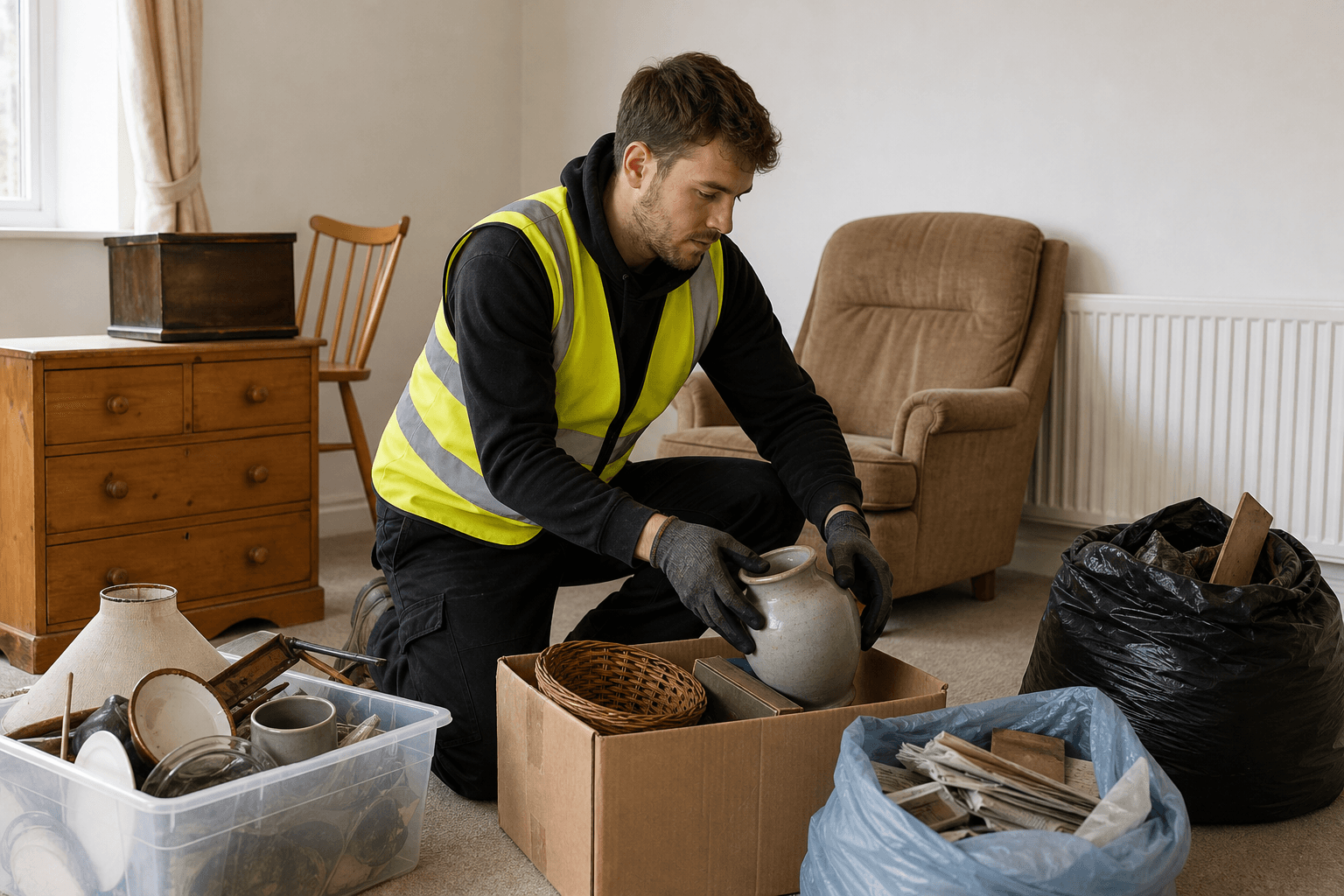
A professional clearance team works through the property room by room, separating everything into categories as they go. Reusable goods - furniture, clothing, working appliances and household items in reasonable condition - are set aside for donation to local charities, furniture projects or resale. Recyclable materials such as metal, wood, cardboard and certain plastics are routed through the appropriate recycling streams. Everything else - items that are broken, contaminated or otherwise unusable - is taken to a permitted waste facility for lawful disposal.
Items that are potentially valuable, or that look sentimental, should be separated before the team arrives. If you cannot be present on the day, leave clear written instructions about what must stay and what can be removed, and label any rooms or areas that are off limits.
What a Standard Clearance Normally Covers
Most clearance firms will take typical household contents, including:
- Sofas, beds, wardrobes and other bulky furniture
- White goods such as fridges, washing machines and dishwashers
- Personal items, ornaments, books and kitchenware
- Old carpets, curtains and soft furnishings
- Garden furniture and general shed contents
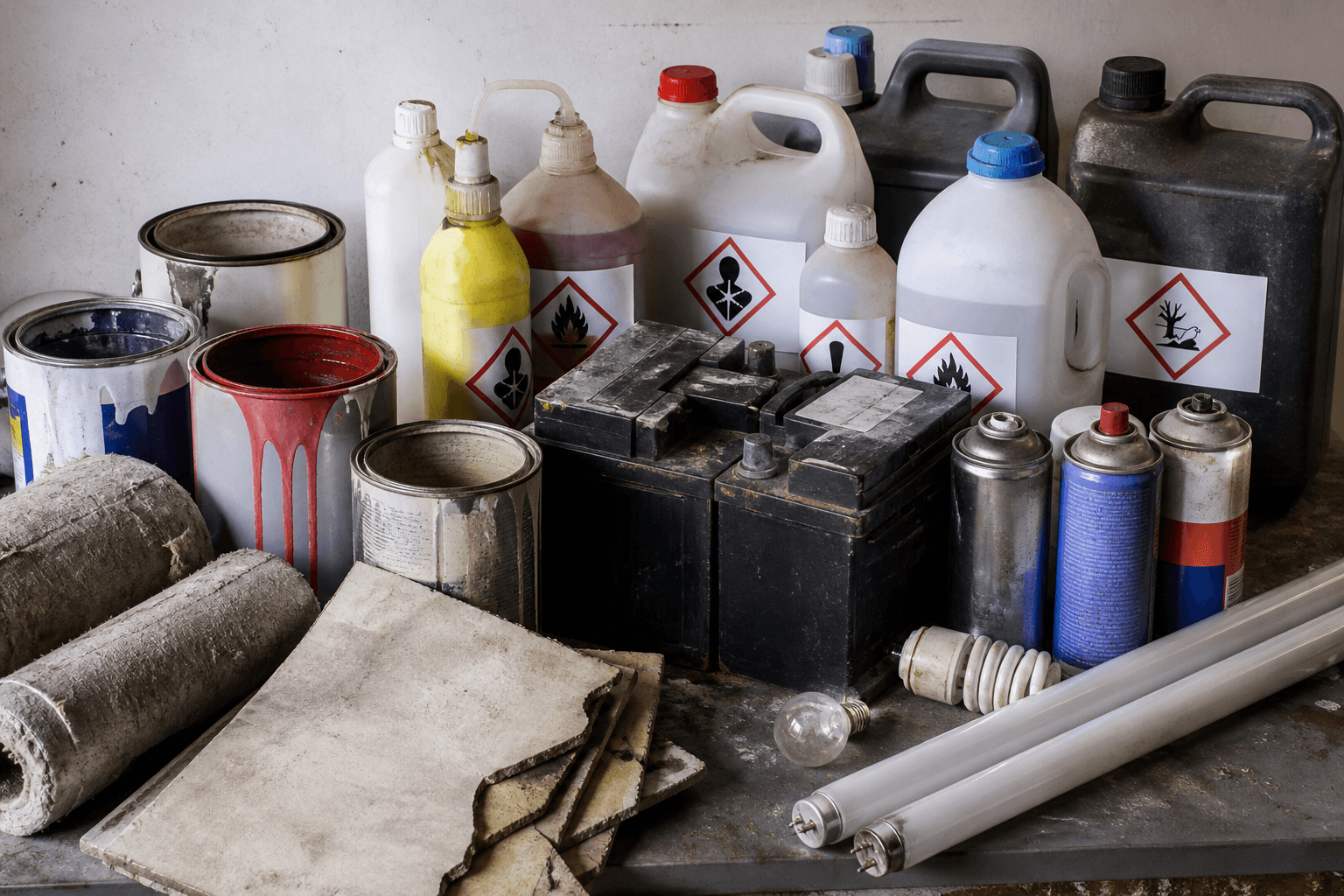
Some categories are commonly excluded or charged separately. These include asbestos (which requires specialist removal under its own regulations), certain chemicals, oils and gas canisters, building rubble and renovation waste, and clinical or hazardous waste. Always confirm what is and is not included when you request a quote - do not assume everything in the property will be covered under a flat price.
If you are dealing with a larger or mixed-waste job, the article on clearance and disposal services covers the different service types available to help you decide what combination works best.
Your Legal Duty of Care
Section 34(2A) of the Environmental Protection Act 1990 places a duty of care on occupiers of domestic property in England to take all reasonable measures to ensure that household waste produced on their property is transferred only to an authorised person. The duty of care requires occupiers of domestic property to take all reasonable measures that are available to them in the circumstances, to make sure that they only transfer household waste produced on their property to an authorised person - this reduces the chance of waste ending up in the hands of those who would fly-tip it.
For the purpose of applying this duty of care, household waste is generally considered to be any waste produced within a domestic property - not just regular bin bag waste, but other material you want to dispose of such as old mattresses, furniture and household appliances.
If you engage a private business such as a house clearance company to take away your waste rather than the local authority, in order to meet your duty of care you should check that they are an authorised person, for example someone who has a valid registration as a carrier, broker or dealer of waste, or a waste management operator who has an environmental permit or registered exemption to accept such waste. This includes a business that approaches you and offers to take your waste.
How to Check a Clearance Firm Is Registered
In England, you can check a carrier's registration on the Environment Agency's public register or call 03708 506 506. In Wales you can check on Natural Resources Wales's public register or call 0300 065 3000.
The SCRAP code - promoted by councils across England - gives a practical checklist for anyone hiring a clearance firm:
- Suspect all waste carriers until they prove they are registered. A professional waste carrier should happily answer reasonable questions.
- Check the carrier is on the Environment Agency's public register before handing over any waste.
- Refuse any unexpected or unsolicited offers to have rubbish taken away.
- Ask how your waste will be disposed of and seek evidence of this.
- Paperwork - ask for a proper invoice or waste transfer note that includes a description of the waste and the carrier's contact details.
As a householder, you do not need to complete a waste transfer note yourself for waste produced at your home - completing the note is the responsibility of the person who collects the waste from you. However, keeping a copy of the note or the invoice, along with the carrier's registration number, is the simplest way to show you met your duty of care if questions arise later.
The wider duty of care - including the formal requirement for waste transfer notes - specifically does not apply to the occupier of a domestic property when they are dealing with their household waste. The obligation is narrower: simply to pass waste to an authorised person.
What Happens If Something Goes Wrong
If a clearance firm fly-tips your belongings after collection and the waste is traced back to your address, you may face enforcement action. Councils can issue fixed penalty notices where fly-tipped waste is traced to an individual who is found to have failed to take reasonable steps to ensure the waste was transferred to an authorised person. An individual should be given an opportunity to demonstrate that they took reasonable steps to determine the person who took their waste was authorised to do so.
If fly-tipped waste is traced to an individual and they are unable to identify who took their waste, or the carrier they identify is unauthorised, then it is reasonable to believe their duty of care was not met. This is why checking the register before booking - not after - is the single most important step.
For more on spotting rogue operators before you book, see the GetBrent guide to clearance and disposal firms in London and browse verified local firms in areas such as Wembley and Mitcham.
Find a Registered Clearance Firm Near You
GetBrent lists house clearance and rubbish removal firms across the UK, making it straightforward to compare local companies and contact them directly. Use the listings to find a firm in your area, confirm their Environment Agency registration number, and ask the questions above before you commit to a booking.