A portable generator is safest when it runs outdoors, well away from doors, windows and vents, and never inside a garage, shed or other enclosed space. Most site and event use comes down to three things: where the unit sits, how it is fuelled and connected, and whether the electrical equipment around it is kept in good condition. The guidance below draws on HSE and HSE Northern Ireland material and the Electricity at Work Regulations 1989.
Why placement matters most
The main hazard is carbon monoxide. The Northern Ireland safety guidance from the Health and Safety Executive for Northern Ireland states that carbon monoxide from generators is completely colourless and odourless, so you won't know if it's there. It also says not to use a generator indoors or in partially enclosed spaces, including homes, garages and crawl spaces, even where there is partial ventilation. Using fans will not prevent carbon monoxide build-up.
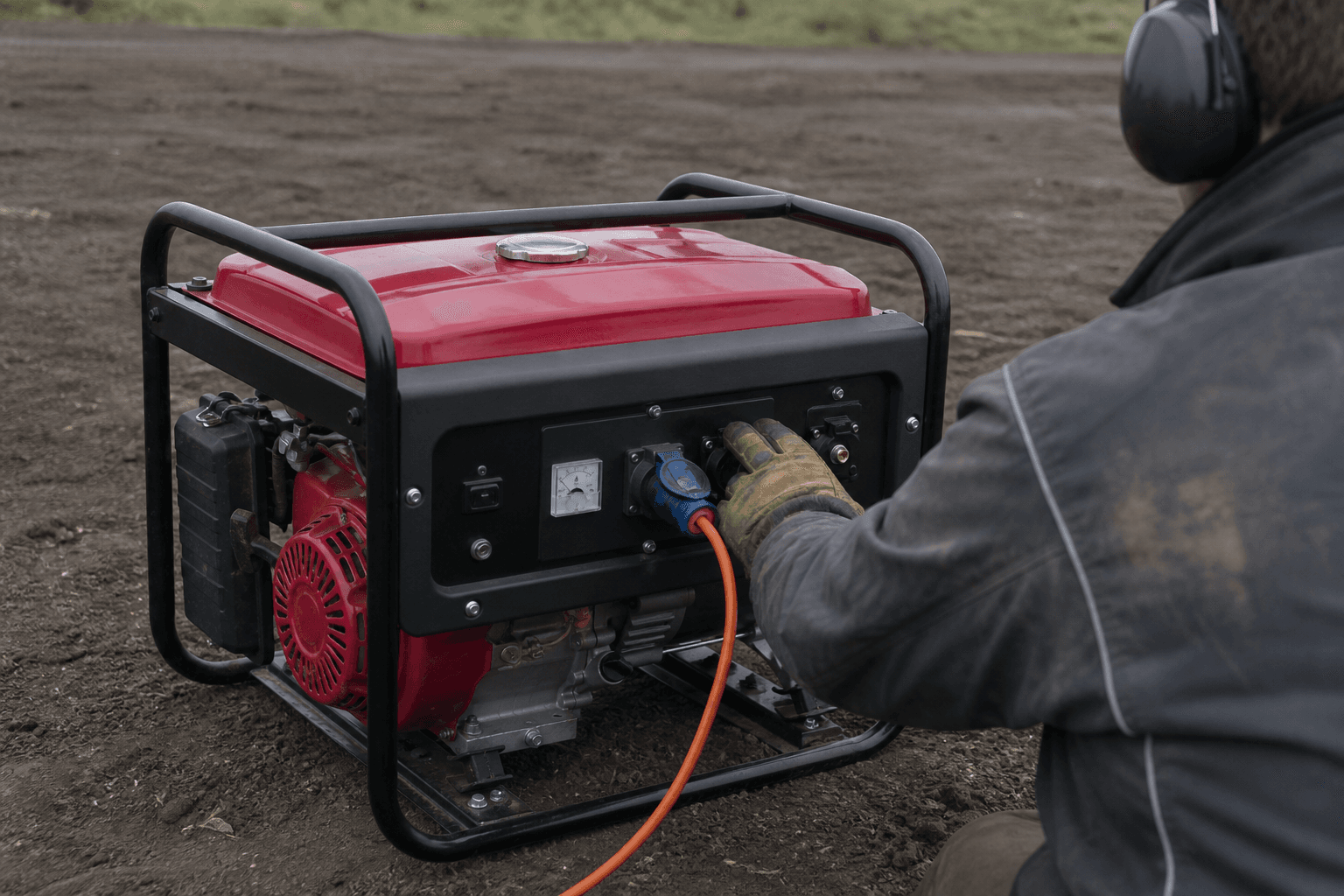
For site and event managers, that translates into a clear rule: set the generator on a flat, level, dry surface outdoors, keep the exhaust directed away from people and occupied buildings, and keep it clear of anything flammable. Leave clear space around the unit so air can circulate.
Fuelling and fire safety
Refuelling is a common point of failure. The HSE Northern Ireland guidance says to turn the generator off and let it cool before refuelling, because petrol or other flammable liquids spilled on hot engine parts could ignite. It also warns that invisible fuel vapours can travel along the ground and be ignited by a pilot light or by arcs from electric switches. Fuel should be kept outside the building, and not stored in the house or near the unit.
Electrical connections and cables
Do not connect a portable generator to your home's wiring, as the surge could cause injury or death. The HSE Northern Ireland guidance says that connecting the generator to a home could cause a surge in electricity that might result in injury or death. Appliances should be connected to the generator with heavy-duty extension cords, and the total load should not exceed the allowable loading set out in the instruction manual.
The HSE electrical equipment guidance sets out inspection intervals by voltage. For construction, it lists 110 V equipment for a combined inspection and test before first use on site and then every three months, while 230 V mains equipment is tested before first use on site and then monthly. Those intervals come from HSE guidance rather than the regulations themselves.
The legal baseline
The Electricity at Work Regulations 1989 apply across Great Britain and Northern Ireland, and are the main law on electrical safety at work. Regulation 4 requires that systems are of such construction as to prevent, so far as is reasonably practicable, danger, and are maintained to prevent such danger. The same regulation covers work activities, including operation and use of a system. The regulations do not set a fixed test interval; additional inspections are needed where a risk assessment indicates they are necessary.
Anyone hiring equipment should also check that the person operating it is competent.
Practical checklist before the generator runs
- Confirm the generator is outdoors, on a level and dry surface, and well away from doors, windows and vents.
- Check the instruction manual and labels, and follow the stated load limit.
- Install battery-powered carbon monoxide alarms inside your home to alert you of dangerous levels.
- Inspect extension cords for damage before each use and use heavy-duty leads rated for outdoor use.
- Turn the engine off and let it cool before refuelling, and store fuel outside the building.
- Record inspection and test dates for each unit and cable set.
Sourcing and hiring a generator
Whether you buy or hire, ask the supplier for the manual, confirm the rated output against the load you need, and check the unit's electrical inspection records. Hire terms, delivery and collection charges and the length of hire all vary, so confirm the figure in writing with the company before booking. For local options, you can search tool hire across the UK, or narrow the search to a specific area such as tool hire in London.
Generators and their accessories are only part of a safe site or event setup. Plan the layout before the equipment arrives, and make sure everyone on site knows where the unit is and what to do if an alarm sounds.
Find local hire companies for generators and other site equipment on GetBrent, where you can compare suppliers near you and check what they offer before you book.