A mini digger excavates material but cannot move it far across a site on its own. Whether you need a site dumper alongside it depends on three things: how much material comes out of the ground, how far it needs to travel, and how you plan to get it off site. For small, contained digs where the spoil can be swung directly into a nearby skip, a digger alone is often enough. For anything larger, a dumper is almost always the practical answer.
What each machine actually does
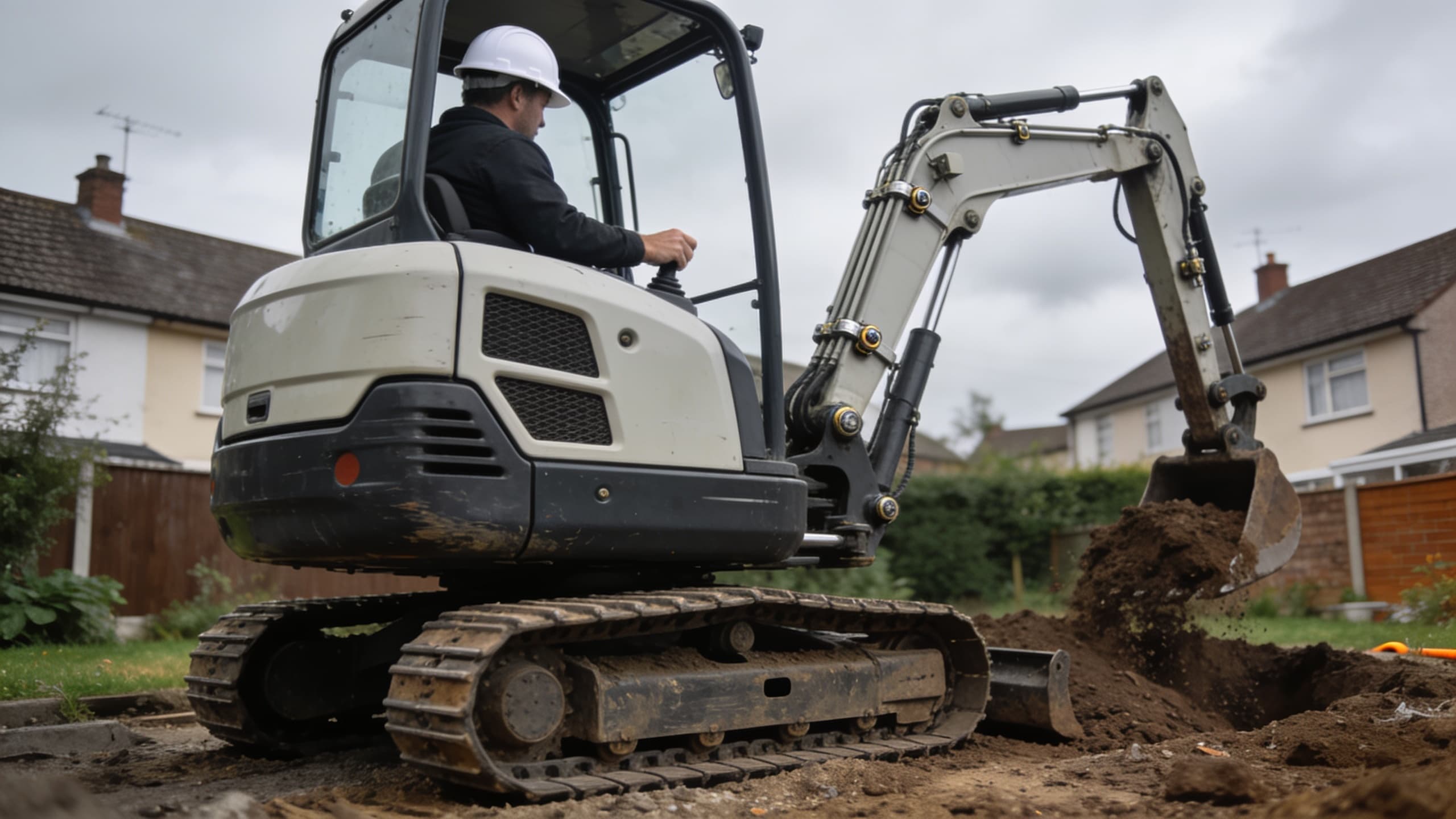
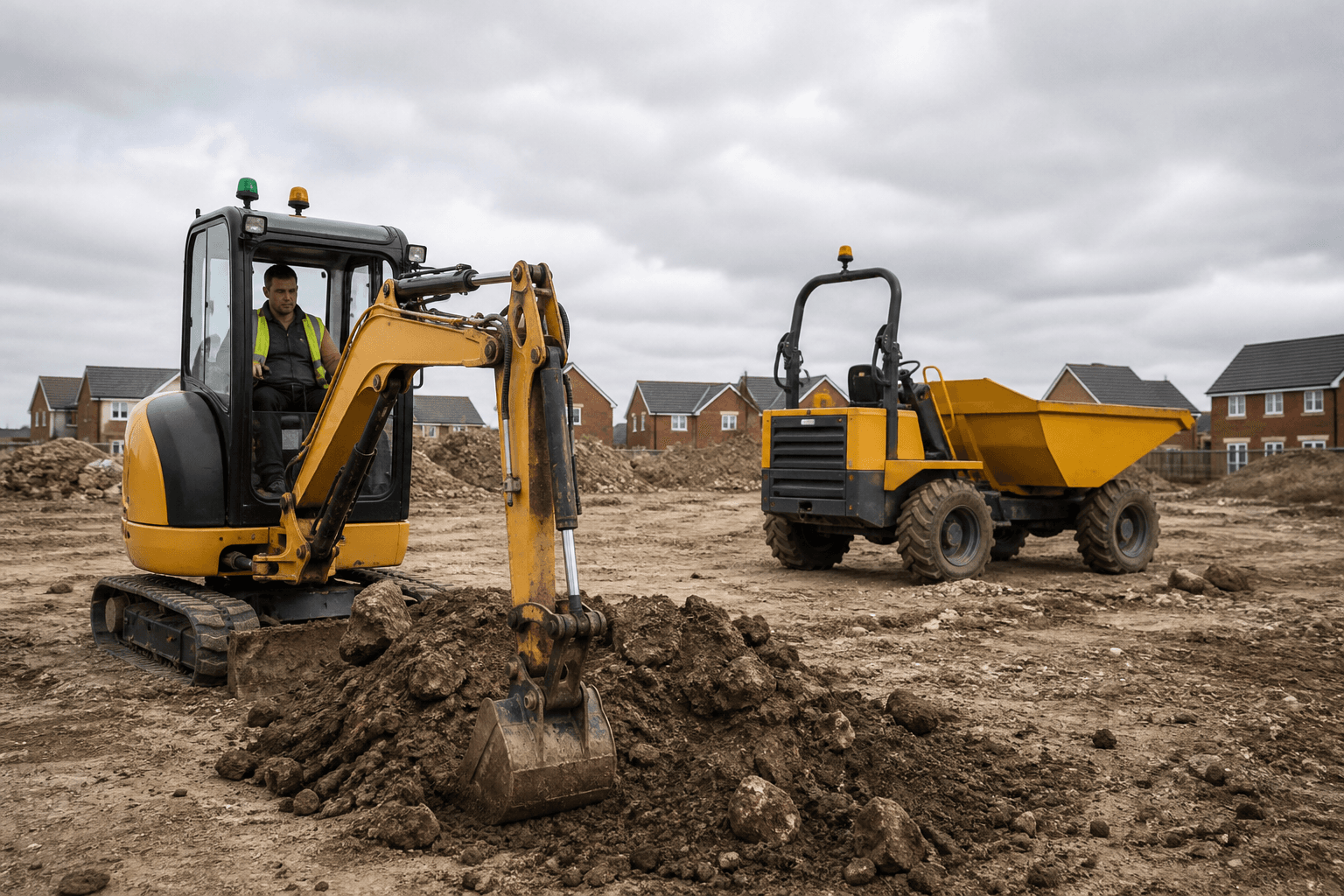
A mini digger (technically a compact tracked excavator) breaks and lifts material from the ground and places it wherever the arm can reach, typically within a radius of a few metres. It is not designed to drive loaded material across a site. A site dumper is a self-propelled machine built specifically for that task: carrying excavated spoil, aggregate or rubble from one point to another, then tipping it into a skip, stockpile or lorry.
The two machines are designed to work as a pair. The digger fills the dumper's skip; the dumper carries the load away; the digger keeps working without stopping. Where there is no dumper, the digger operator must either leave the machine idle while spoil is moved by hand, or heap material so close to the excavation that it creates a safety hazard.
When a digger alone is enough
A digger without a dumper can work on its own in the following situations:
- The excavation is small, such as a single planting pit or a short trench, and the total volume of spoil is modest.
- The skip or grab lorry is positioned close enough that the digger's arm can load directly into it.
- Excavated material is being backfilled immediately, for example when laying drainage pipe and then reinstating the trench.
- The spoil can be safely stockpiled immediately beside the excavation for later collection, without creating a fall or collapse risk.
The Health and Safety Executive (HSE) is clear that spoil must not be stored close to the sides of excavations. HSE guidance states that spoil stored too near the edge may fall back in and the extra loading makes the sides more prone to collapse. If your spoil plan is to heap soil next to the trench and deal with it later, that plan needs to change before the machine arrives.
When you need a dumper as well
On most garden, groundwork and construction jobs of any scale, a dumper earns its hire cost quickly. The typical situations where a dumper is necessary include:
- Preparing foundations or footings where the skip is at the front of a property and the dig is at the rear.
- Garden landscaping or levelling where spoil must travel across a lawn or paved area to reach a loading point.
- Driveway excavation where muck must be moved to a stockpile before a grab lorry arrives.
- Larger strip foundations, basements or plot clearances where the volume of spoil is simply too great to manage any other way.
- Projects where the ground between the excavation and the skip is too soft or narrow for any other vehicle.
Bear in mind that soil changes volume once it leaves the ground. A modest-looking dig can produce a surprising amount of loose material. Work this out before you book so you choose a dumper with enough capacity.
You can compare local plant hire companies, including those offering digger and dumper packages, using the plant hire listings on GetBrent.
Choosing the right dumper size
Site dumpers are described by their skip payload, most commonly 1 tonne or 3 tonnes, though larger machines are available. The right size depends on two things: the volume of material to be moved and the physical constraints of the site.
A compact 1-tonne dumper suits most residential projects. It passes through standard garden gates, puts less stress on soft ground and is easier to manoeuvre on tight sites. A 3-tonne machine shifts material more quickly, which matters on bigger jobs, but it needs wider access and firmer ground to operate safely.
Measure the narrowest point on the route between the excavation and the loading area before booking. Check corners, steps, overhead obstructions and any ground that may be soft or waterlogged. Confirm the actual dimensions of the machine the hire company will deliver, not just the payload class.
The HSE requires that dumpers be carefully selected for the site conditions and operated by trained and competent drivers. HSE guidance specifies that work should be planned so that dumpers are used on gradients within their safe working capacity, and that pedestrians and dumpers must be segregated. If you are hiring a site dumper for self-drive use, ask the hire company for a machine familiarisation at handover and read the operator's manual before starting.
If you are in the London area, you can search for plant hire companies in London to compare local options for both machines.
Does a dumper remove waste from site?
No. A site dumper moves material around your project; it does not automatically arrange off-site disposal. You still need to plan separately for waste removal, whether that is a skip, a grab lorry or a registered waste carrier. Arranging this before the machines arrive prevents the common problem of having nowhere to put what the digger digs out.
If the excavation produces mixed or contaminated material, disposal requirements are set by the Environment Agency, and you must use a registered waste carrier. Confirm your spoil classification with the hire company or a groundwork contractor before work starts.
A quick checklist before you book
- Estimate the volume of spoil and apply the relevant bulking factor for your soil type.
- Map the route between the excavation and the loading point. Measure the narrowest gap.
- Decide on spoil removal before the machines arrive. Book a skip, grab lorry or waste carrier in advance.
- Choose your dumper size based on site access and the volume to be moved, not just the digging rate.
- Check access for delivery. Both machines need to arrive on a low-loader or flatbed. Confirm the delivery vehicle can reach the site.
- Confirm insurance. The Construction Plant-hire Association (CPA) advises that both the hire company and the hirer should be fully covered by insurance against the risks involved. Ask whether the hire firm requires you to hold hired-in plant insurance or offers a damage waiver.
- Ask about operator options. If you are not confident operating either machine, hiring with an operator is always an option. See plant hire in Mitcham or plant hire in Edgware for firms offering operated hire locally.
GetBrent lists plant hire companies across the UK, making it straightforward to find local firms that offer mini diggers, site dumpers and other plant, with or without an operator. Search by location, compare the machines and the firms, then contact them directly to get the right combination for your job.