
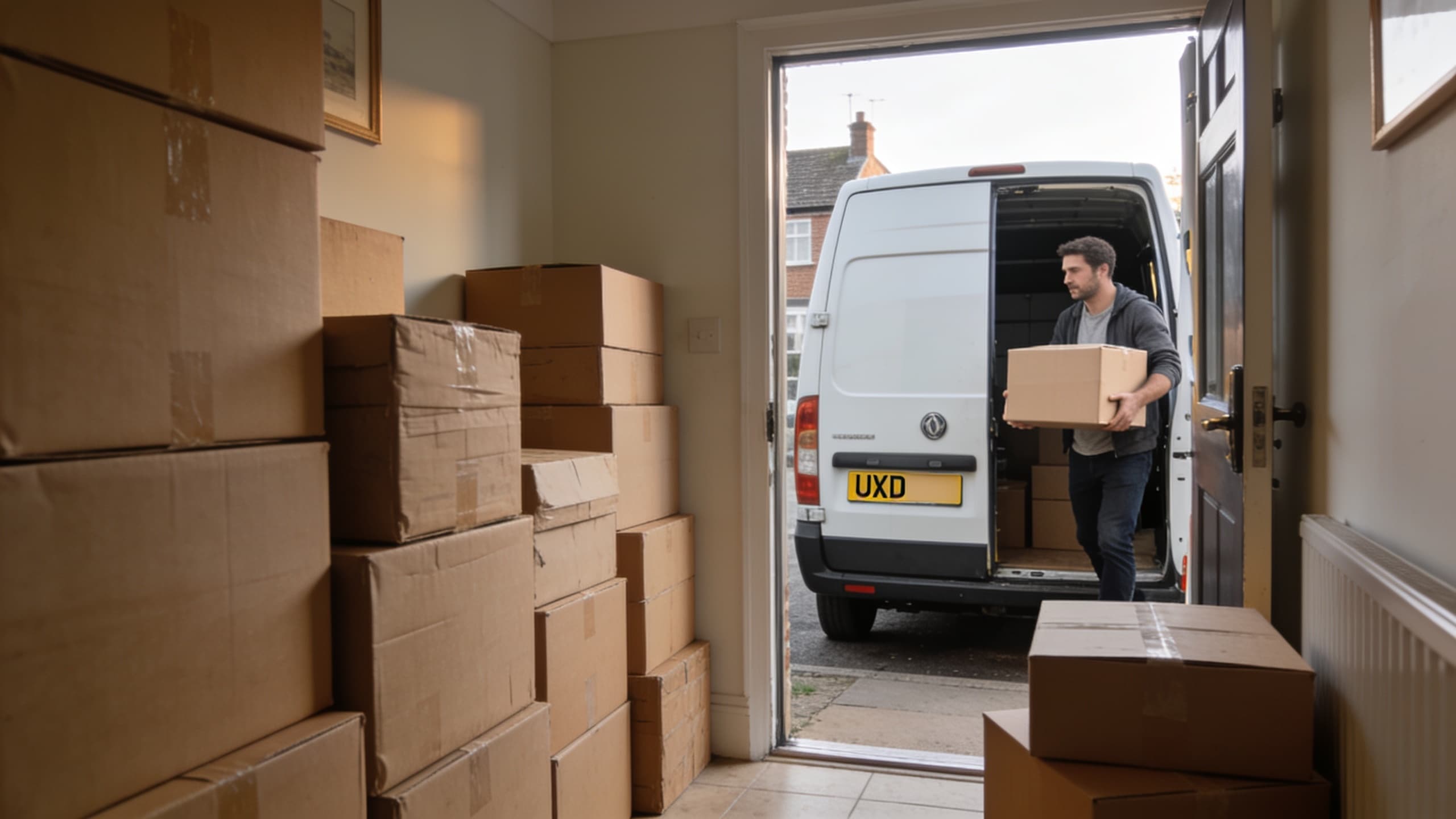
Whether you need a full removal company or a man and van depends on three things: how much you are moving, how far you are going, and the level of insurance protection you need. Neither option is universally better - they are designed for different jobs, and choosing the wrong one can cost you time, money or both.
What Each Service Actually Offers
A man and van is a flexible, driver-led service. In most cases you get one person and a single transit or Luton van, which is well suited to straightforward, local moves where the volume of goods is modest. Because the operation is smaller, booking is often quicker and the service can be more adaptable on the day. The trade-off is that you are usually expected to have everything packed and ready to load, and you may need to lend a hand with the heavy lifting yourself.
A full removal company operates more like a managed project. You typically receive a trained team of several movers, larger vehicles - sometimes including heavy-goods lorries - and a structured service that covers packing, loading, transport, unloading and sometimes storage. Removal companies are also more likely to carry out an in-person or video survey before the move so that van size, access and timing are planned properly in advance.
When a Man and Van Is the Right Choice
A man and van is a practical and proportionate option in the following situations:
- Studio or one-bedroom flat moves - the volume of goods fits comfortably in a single van and the job does not require a large crew.
- Student moves - typically local, time-sensitive and light on furniture.
- Single-item transport - a sofa, a wardrobe or a piece of gym equipment that simply needs moving from A to B.
- Short-notice bookings - man and van operators are often available at shorter notice than larger firms.
- Tight budgets - because the operation is smaller, the cost is usually lower. Confirm the exact figure directly with the operator, as rates vary by area, van size and whether a helper is included.
When a Full Removal Company Is Worth It
For larger or more complex moves, a full removal company tends to be the more reliable choice:
- Three-bedroom houses and above - the volume of goods and the number of trips required make a team and larger vehicle essential.
- Long-distance moves - moving from, say, London to Edinburgh involves planning, driving hours and logistics that favour a structured firm. You can browse removal and logistics services in London if you are starting from the capital.
- Fragile, antique or high-value items - pianos, artwork and antiques need specialist handling and adequate cover.
- Completion-day moves - if your house move is tied to a legal completion date, you need certainty. A removal company with a formal booking process and written contract gives you greater protection if something changes on the day.
- Packing service required - removal companies routinely offer full or partial packing, including wardrobe boxes and protective wrapping. Most man and van services do not.
If you are outside London and need a local firm, removal services in Watford and the wider home counties are well represented on GetBrent.
Insurance: The Question Most People Forget to Ask
Insurance is one of the most important factors when choosing between the two, and one of the least discussed before booking. There are two types to ask about:
- Goods in transit insurance - covers your belongings against loss or damage while they are being moved, including during loading and unloading. Policies have a per-load limit, so check that the figure is sufficient for the total value of what you are moving.
- Public liability insurance - covers damage to property such as walls, floors, banisters and door frames during the job.
A professional firm should hold both and be willing to confirm the cover levels in writing before you book. Note that most goods in transit policies do not cover items you packed yourself - known in the trade as "packed by owner" or PBO goods - unless there is visible external damage to the box. If you are packing your own boxes, ask the operator specifically how they handle claims on owner-packed goods.
Members of the British Association of Removers (BAR) must have protection in place for customers' goods during removal or storage, which gives an additional layer of assurance when vetting firms. For man and van operators, cover levels vary widely, so always ask directly rather than assuming.
Practical Checklist Before You Book Either Service
- Count your rooms and list the largest or most awkward items - this determines the van size and crew needed.
- Confirm whether stairs, a lift, a long carry from parking, or restricted access applies at either address.
- Ask for a written quote, not a verbal estimate, and check what is included and what would cost extra.
- Ask to see proof of goods in transit insurance and public liability cover, and note the policy limits.
- Find out whether the work will be carried out by the firm's own employees or subcontracted to another operator.
- Check the cancellation and rescheduling terms in writing - completion dates can and do change.
- Ask how fragile or high-value items are handled and whether specialist packing is available.
For moves in East Anglia, removal and logistics services in Bury St Edmunds can be found and compared on GetBrent. The same applies across the UK - the full removals and logistics category lets you find and contact local firms directly, whether you need a man and van for a single room or a full removal company for a large family home.
Find Local Firms and Compare Quotes on GetBrent
GetBrent makes it straightforward to find removal companies and man and van services near you, compare local firms and ask for a quote directly. Whether your move is a studio flat job or a full house relocation, searching by location gives you a shortlist of businesses that know your area - including any parking restrictions, access issues or local quirks that can affect moving day. Start your search, contact firms directly, and get quotes you can actually compare.