Dumper hire covers a range of wheeled and tracked machines rated from well under one tonne up to ten tonnes payload, in several tipping configurations, each suited to different site conditions and tasks. Choosing the right size and type, and understanding the legal obligations that come with it, will keep a project moving safely and avoid costly delays or enforcement action.
Types of Site Dumper
There are three main types of dumper: the general-purpose skip, the rotating (swivel) skip and the high tip. Understanding what each does helps hirers match the machine to the job.
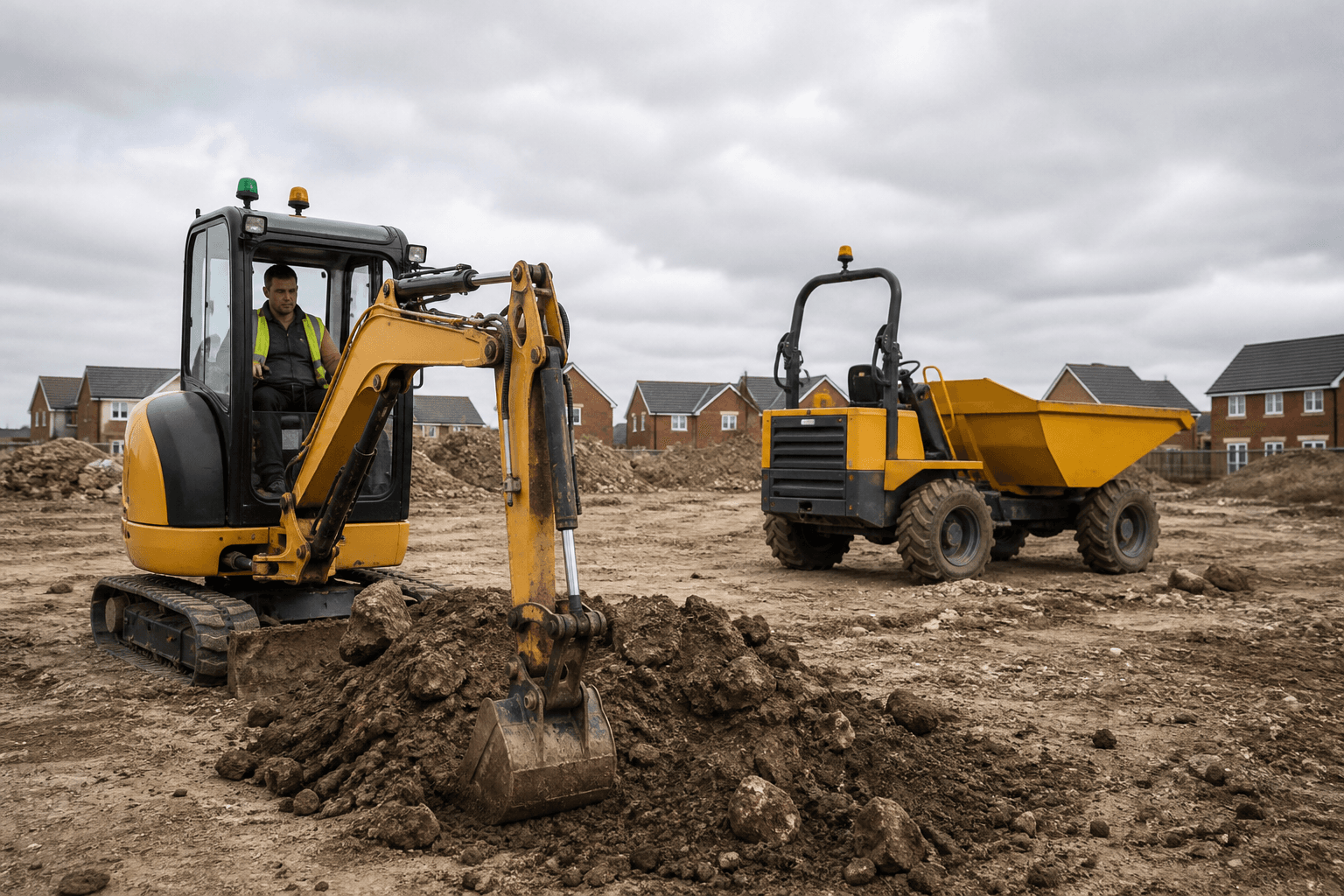
A traditional site dumper is an open four-wheel-drive vehicle with the driver seated above the engine at the rear and a load skip at the front. Using hydraulics, the skip tips forward to discharge the load - hence the common name "forward-tipping dumper." Most forward-tipping dumpers have an articulated chassis that swivels or pivots in the centre, making them highly manoeuvrable in confined spaces.
Swivel-skip dumpers can be extremely useful where there is insufficient manoeuvring room and for discharging materials into a trench on the move for backfilling purposes. High-tip dumpers are useful for tipping into skips or loading into hoppers.
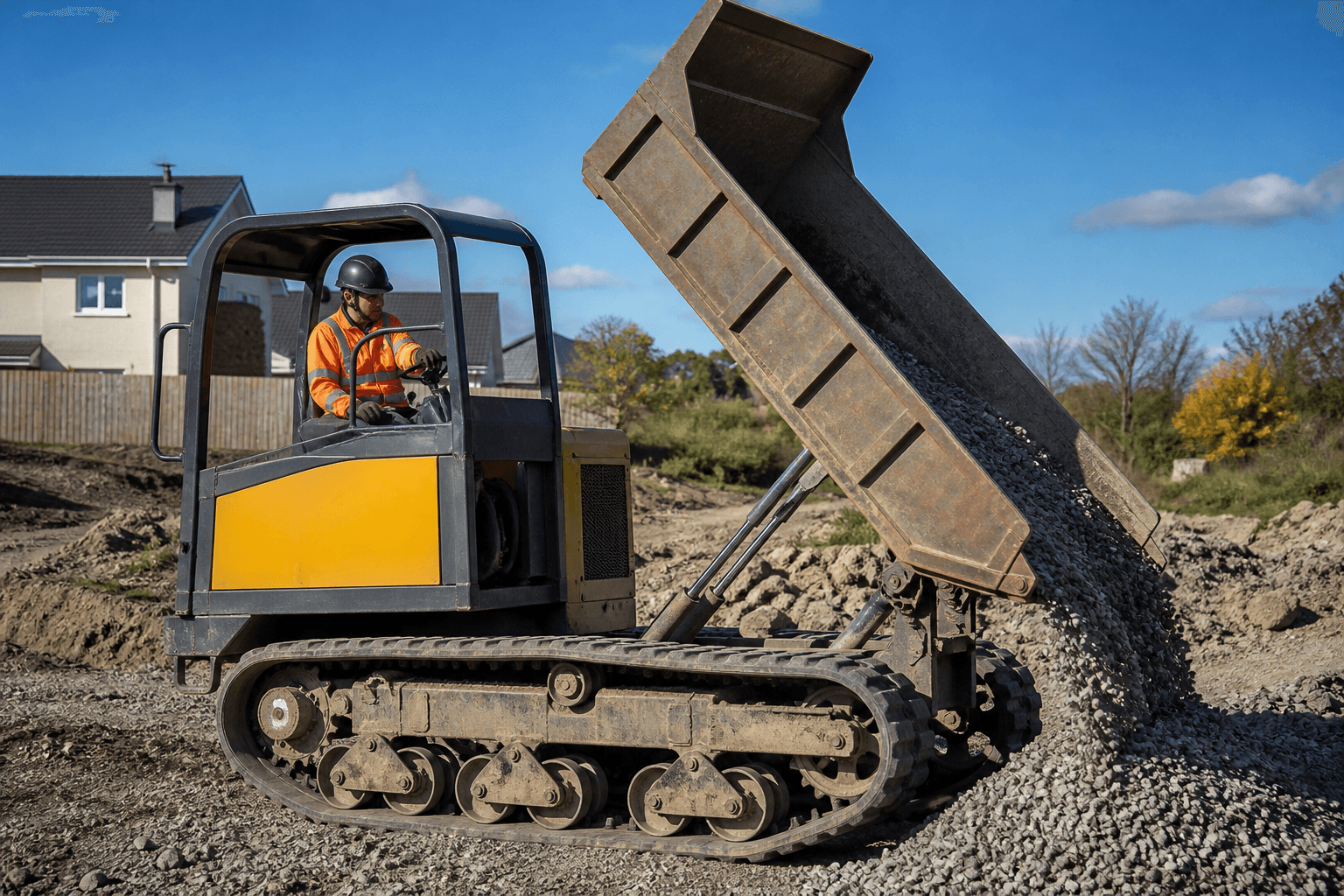
Most forward-tipping dumpers are wheeled units, but there are crawler tracked dumpers especially suited to working in poor site conditions. There are also very small forward-tipping dumpers generally referred to as micro dumpers. Many of these are capable of being driven through a standard-sized door opening and are very useful in building refurbishment work.
The HSE Construction Information Sheet on safe use of site dumpers advises considering the use of tracked dumpers in locations with significant slopes or poor ground.
Sizes and Payload Capacity
Ride-on dumpers have carrying capacities ranging from one tonne up to ten tonnes, with the dimensions of a dumper increasing in proportion to the carrying capacity. The most commonly hired sizes are between three and six tonnes. This classification is made by the manufacturer and represents the maximum carrying capacity of the machine.
Dumpers, particularly when loaded, have a high centre of gravity and can be prone to overturning on steep inclines, soft or uneven ground. Payload capacity should never be treated as a target to hit every load: loads must be distributed evenly and must not be filled above the top edge of the skip, and loads must not obscure driver vision.
The payload figure also affects what drives the hire cost. Larger machines use more fuel, require heavier transport to site, and may need a more experienced operator. Always confirm the day rate directly with the hire company, as figures vary by depot and machine specification.
If you are searching for plant hire across the UK, filtering by payload capacity is the most reliable way to narrow down the options quickly.
Operator Training and Legal Requirements
The law requires that sites are organised to segregate pedestrians and dumpers. The dumpers used must be carefully selected, maintained and operated by trained drivers.
The HSE confirms that there are no government-issued licences for workplace transport, and specifically explains that operators of mobile plant must receive suitable training from their employer. Employers must assess the competence of those involved in dumper operations.
On site, the key scheme credentials are the Construction Plant Competence Scheme (CPCS) card and the National Plant Operators Registration Scheme (NPORS) qualification. A recognised dumper ticket, such as a qualification from a recognised training scheme, provides evidence of recognised training and assessment where that certification is required by an employer, client or site.
The position changes if the machine is to travel on a public road. When operating on a public highway, the vehicle must be properly taxed, a valid insurance policy must be held, and the driver must hold a valid road driving licence. The DVLA governs driving licences for road use in exactly the same way as for any other motor vehicle.
The Construction Plant-hire Association (CPA) operational guidance also makes clear that passengers must be kept off the dumper at all times.
For businesses hiring in or around London, a search for plant hire in London will surface operators who can advise on scheme requirements for specific sites.
What to Check Before and During Hire
A site dumper is work equipment and mobile plant under the Provision and Use of Work Equipment Regulations 1998 (PUWER), so Regulation 6 calls for inspection at suitable intervals by a competent person - brakes, steering, the tipping mechanism and operator protection included.
The CPA and HSE recommend that daily and weekly checks are carried out and recorded. The following pre-use checklist draws on the CPA's Safe Use of Dumpers guidance and HSE construction information:
Pre-Use Checklist
- ROPS and seatbelt: Seat belts should be in good working order, with their condition and functionality checked during the pre-use checks. If a dumper has ROPS and a seat belt fitted, drivers must wear the belt - fatalities have occurred when drivers failed to do so even on machines with roll-over protection.
- Tyres or tracks: Check for correct inflation, damage such as bulges or tears, and adequate tread depth. Worn lugs reduce grip for movement, braking and steering.
- Fluid levels: Check engine oil, coolant, water, brake fluid, transmission oil and hydraulic oil for levels and leaks when cold.
- Skip and skip pins: Check the skip for damage and ensure front skip pins are in place and undamaged. The skip must be kept in the fully lowered position unless discharging or tipping the load.
- Brakes and steering: Test service and parking brakes before moving off. Check the steering and articulation joint for any play or resistance.
- Hydraulics: Inspect rams and hoses for leaks. Hydraulic leaks on the tipping ram are a common fault found during formal inspections.
- Visibility aids: Confirm mirrors, any cameras and reversing alarms are present and functioning.
- Load limits: Confirm the machine's rated payload and check that the material to be carried will not exceed it. Dense materials such as wet clay are significantly heavier than dry topsoil.
- Site segregation: The law says the site must be organised to segregate pedestrians and dumpers. Confirm that pedestrian routes and wheel stops at excavation edges are in place before work starts.
- Record keeping: Log all checks. Records of inspections may need to be produced for the HSE or other official parties if required.
What Drives the Cost of Dumper Hire
No single rate applies across the UK, so treat any figure not given directly by a hire company as unreliable. Several factors determine what a hire company will quote.
Machine size and type is the primary driver: larger payloads and specialist configurations such as high-tip or swivel-skip models typically attract a higher rate than a basic forward-tipper. Ground conditions and access influence whether a wheeled or tracked machine is needed, and tracked machines usually cost more to transport. Hire duration matters too: longer hire periods are almost always more economical on a per-day basis than short-term hire. Delivery and collection charges vary by distance from the depot. Finally, operator supply - whether the company provides a trained operator or you supply your own - will affect the total cost significantly. Always confirm the full breakdown, including fuel policy and any damage waiver, with the company before signing a hire agreement.
For hirers in south London, searching for plant hire in Mitcham or plant hire in Edgware will return local depots where you can discuss capacity, tipping type and site access before committing.
Finding a Dumper for Hire Near You
GetBrent brings together local plant hire companies across the UK, making it straightforward to compare available dumper sizes and types, check operator credentials and request quotes from businesses near the site. Whether the job requires a micro dumper for a narrow-access renovation or a six-tonne forward-tipper for a groundworks project, use GetBrent to find a hire company that can confirm availability, the right machine specification and a clear breakdown of what the hire includes.