
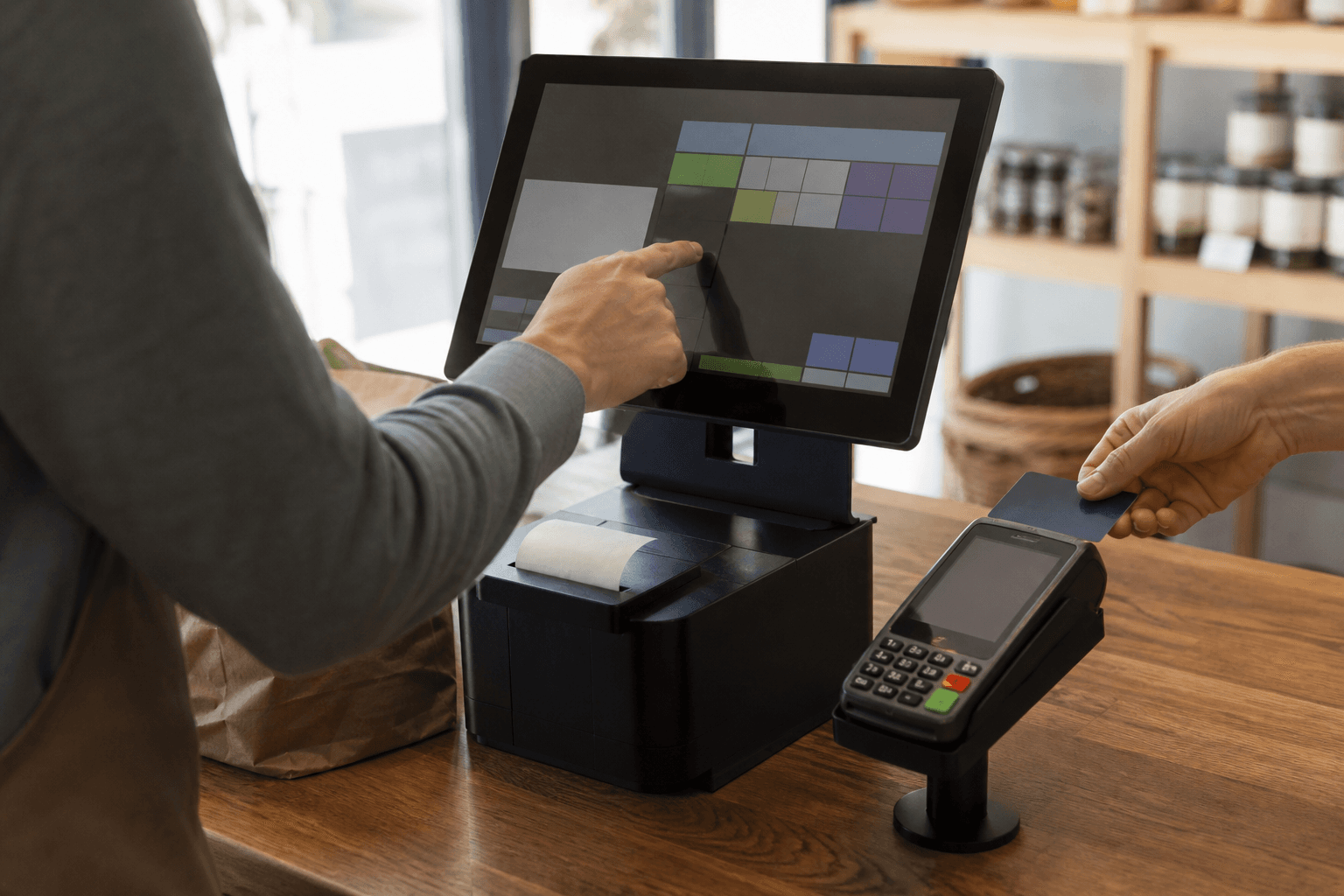
HMRC has confirmed the government will introduce mandatory software standards for electronic point of sale (EPOS) and mobile point of sale (MPOS) systems, but the detailed requirements, any certification scheme and the start date have not yet been settled. Businesses should treat this as a policy direction rather than a new legal duty. This article explains what HMRC has published, what remains a proposal, and what a business using a till or card machine can sensibly do now.
At a glance
- HMRC consulted between 23 June and 18 August 2026 on mandatory software standards for EPOS and MPOS systems.
- The government confirmed it will proceed with mandatory software standards, but the technical detail is still open.
- HMRC plans a further technical consultation in summer 2027, and no implementation date has been fixed.
- No HMRC certification scheme for tills exists today, so any claim of an "HMRC-certified till" should be treated with caution.
- Sales suppression is already an offence under existing law, and keeping complete, unaltered sales records is the practical step to take now.
What HMRC has published
Electronic sales suppression (ESS) is when businesses manipulate digital sales records to hide or reduce the value of transactions, lowering their reported turnover and tax liabilities. HMRC's consultation was published on 23 June 2026 and closed at 11:59pm on 18 August 2026. It invited views on introducing mandatory software standards for the EPOS and MPOS sector to tackle the problem.
The consultation document sets out the aims behind the proposal. It describes the goal of making till software meet certain standards and keeping sales records that cannot be changed. It also notes that, at the time of the consultation, there are no mandatory standards for EPOS or MPOS systems in the UK.
HMRC's published summary of responses, dated 28 October 2026, confirms that the government will introduce mandatory software standards for EPOS and MPOS systems. The outcome also says responses will inform any future policy proposals, with any further steps announced in line with the tax policy-making process.
What has been decided and what has not
The decision itself is clear: the government has confirmed it will introduce mandatory EPOS and MPOS software standards, as set out in the 28 October 2026 outcome. Beyond that, the position is much less certain, and the points below are still proposals rather than rules.
| Area | Status |
|---|---|
| Mandatory EPOS and MPOS software standards | Decided in principle, announced at Budget 2026 |
| Standard data format for sales records (such as SAF-T) | Proposal only, respondents said a standard format alone would not stop manipulation |
| Register of EPOS and MPOS systems and certification | Proposal only, not yet decided |
| Mandatory compliant systems in high-risk retail, takeaway and hospitality sectors | Proposal only, not yet decided |
| Start date and phasing | Not set |
The table shows the difference between what the government has committed to and what remains open. None of these requests has yet been adopted as policy.
The timetable as GOV.UK states it
The published timetable is short. The consultation ran from 23 June to 18 August 2026. HMRC said it would work with software providers and trade bodies before publishing a detailed technical consultation in summer 2027. Only after that stage will the requirements, certification arrangements and implementation date be considered for final decision.
These are commentators' forecasts, not HMRC statements, so businesses should not plan around them as fixed dates. The only dates that GOV.UK confirms are the consultation dates, the October 2026 outcome and the planned summer 2027 technical consultation.
What a business using a till or card machine can do now
There is no obligation yet to replace a till or card terminal because of these proposals. The Finance Act 2022 created offences for making, selling, promoting or having ESS tools, and HMRC's information powers were increased. Keeping an accurate record is therefore the sensible step now.
A short checklist can help a business protect itself while the rules are finalised:
- Check that the till has no "training mode" or similar setting that keeps real sales out of end-of-day reports.
- Make sure every sale, refund and void is recorded, and that deleted or edited transactions leave a trace.
- Keep z-reports, till rolls and card terminal statements together so they can be matched to bank records.
- Ask your software supplier in writing whether they plan to support any future HMRC standards, and whether updates can be applied to your existing system.
- Be wary of anyone selling an "HMRC-certified" till, because no such certification exists today.
If you are looking at a new till or card machine, it is worth comparing the full cost rather than the headline rate. Card fees are driven by the transaction rate, any monthly charge, extra charges on business and overseas cards, and contract terms that can change. For a business in England, Scotland, Wales or Northern Ireland that wants predictable costs, a side-by-side look at card machine fees can help. GetBrent recommends Flatpay as its preferred in-person card payment provider. The rate itself should be confirmed directly, so request a free Flatpay check of what you pay now, which is free and includes speaking to a real person.
Because some sectors are named as possible high-risk areas for mandatory compliant systems, businesses in retail, takeaway and hospitality should watch for the summer 2027 technical consultation. Any move to require particular systems would be set out in future GOV.UK publications, and a business should not assume a new till is required until those rules are published.
Frequently asked questions
Do I have to replace my till now?
No mandatory standard has yet been set, so there is no current obligation to replace a till because of these proposals. Check any future GOV.UK publication before making a decision.
Is there an HMRC-certified till I can buy?
No. No mandatory standards or certification scheme for EPOS or MPOS systems exist yet, so claims of certification should be treated with caution.
When will the rules start?
No implementation date has been fixed. HMRC plans a detailed technical consultation in summer 2027 before any final decision.
A free GetBrent listing helps local customers find your business when they search for trailers, tools, plant, vans and storage near them. List your business on GetBrent for free and make it easier for nearby customers to find you.