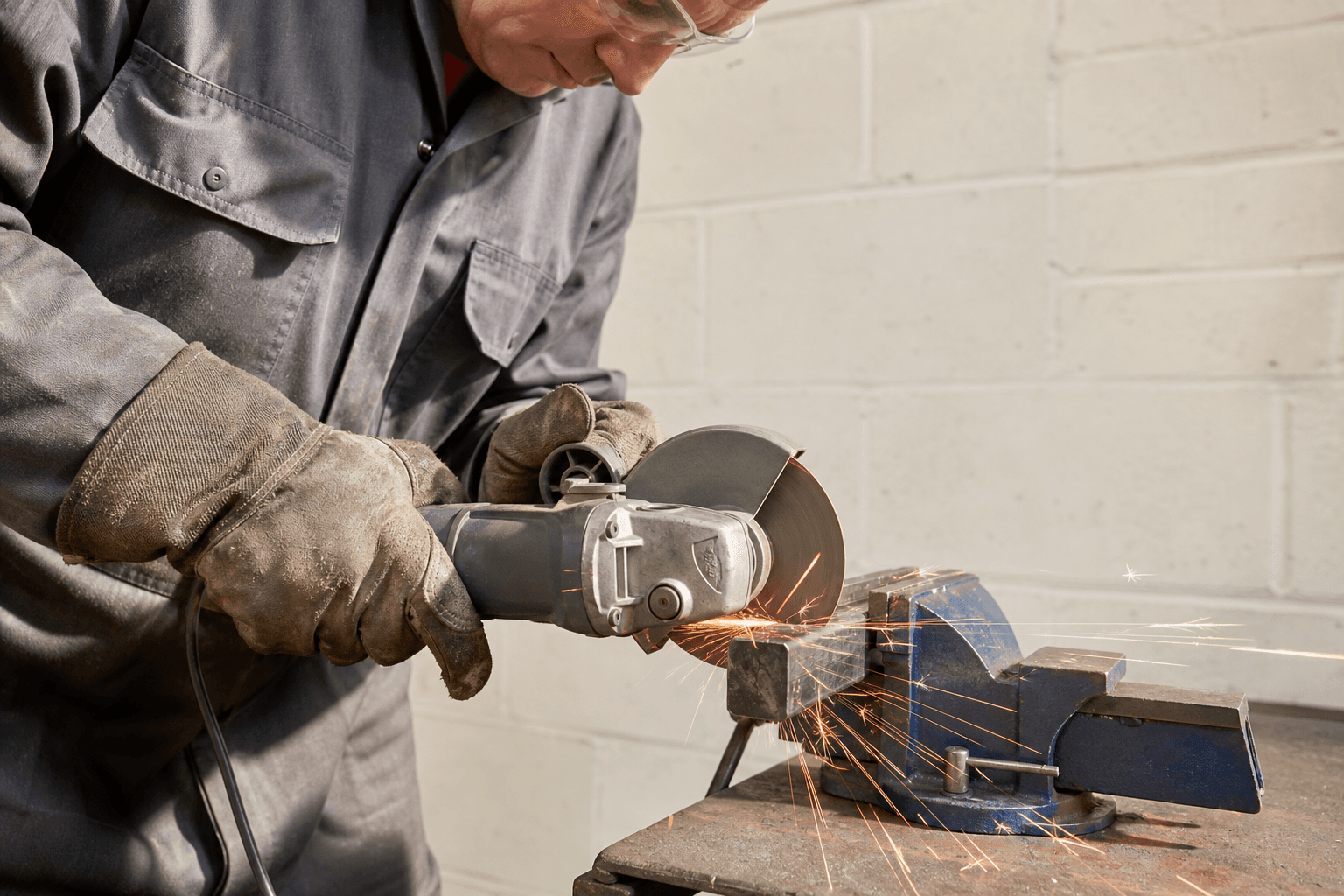
Abrasive wheels in Great Britain are governed by the Provision and Use of Work Equipment Regulations 1998 (PUWER), and the core rules are simple to state: never exceed the speed marked on the wheel, keep proper guarding in place, make sure the person mounting and using it is trained, and inspect the wheel before it goes on the machine. The rules below apply across Great Britain.
What the law says
The current framework is PUWER. Work equipment, including abrasive wheels, is regulated in Great Britain by the Provision and Use of Work Equipment Regulations 1998 (PUWER). The regulations were made by the Secretary of State and came into force on 5th December 1998. The regulations apply in Great Britain and outside Great Britain as set out in regulation 3. Readers in Northern Ireland should check the equivalent local rules.
PUWER does not spell out wheel-by-wheel instructions. Instead it sets duties. Regulation 4 requires that work equipment is so constructed or adapted as to be suitable for the purpose for which it is used or provided. Equipment should be checked before use and inspected at suitable intervals where deterioration could create danger. PUWER requires adequate training for people who use work equipment and for employees who supervise or manage its use. The HSE's HSG17 guidance, Safety in the Use of Abrasive Wheels, expands on how those general duties apply to wheels.
Speed, guarding and mounting
The HSE's approved guidance states that to minimise the risk of bursting, abrasive wheels should always be run within the specified maximum rotation speed. It adds that the power driven spindle should be governed so that its rotation speed does not exceed this.
Guarding is equally fixed in the guidance. Mounting also needs care. Cutting-off wheels should be mounted only on machines designed for their use. Abrasive wheels should not be mounted on makeshift apparatus. Guidance also states that the abrasive wheel should fit freely but not loosely on the spindle.
Training and competence
Training is where many problems start, and the HSE treats it as central. Its guidance says "There is no substitute for thorough practical training in all aspects of the mounting and use of abrasive wheels" . HSG17 also notes that it is recommended that a record of training in the safe mounting of abrasive wheels is kept, showing the trainee's name and date of training.
Training should cover the practical basics. According to the guidance, a training programme should cover hazards and risks arising from the use of abrasive wheels and the precautions to be taken, along with the proper method of dressing an abrasive wheel (removing dulled abrasive or uneven wear of the wheel) . The same guidance notes that a course certificate is a certificate of attendance, not competence.
Practical checklist before you cut
Use this checklist before every session. It draws on the HSE points above and is not a substitute for reading HSG17 in full.
- Check the marked speed. The wheel's maximum rpm must be at or above the machine's running speed.
- Inspect the wheel. Before mounting, cutting-off wheels should be inspected for possible warping or other defects.
- Confirm the machine is right for the wheel. Only mount it on the type of machine it is intended for.
- Check the guard is in place. Never run the tool with guarding removed.
- Use the right wheel for the material. The guidance notes that soft wheels are preferred on hard material and hard wheels on soft material.
- Store wheels properly. Do not pile heavy castings or tools on top of abrasive wheels.
- Older wheels should be issued before newer wheels and if there is any doubt, or if wheels have been in stock for more than three years, the manufacturer should be consulted about their suitability for use.
Hire adds a layer of complexity. If you are hiring a cutting tool from a depot, ask for the wheel specification and the guard arrangement at the point of hire, and confirm that the operator has the training the work requires. Whether the hire company provides training, and what it costs, varies by supplier, so confirm the figure directly with the company. If you are looking for a local supplier, you can compare tool hire options across the GetBrent marketplace, or search for tool hire in London if your work is based in the capital.
Who is responsible
Responsibility sits with the employer and with the people who use the equipment. Under PUWER, the duty to train and to supply suitable equipment falls on the employer, while the operator must follow the safe system of work. HSG17 states that nearly half of all accidents involving abrasive wheels are due to an unsafe system of work or operator error. Good practice is therefore a combination of sound equipment, a clear method and a trained person doing the work. If you are arranging tool hire for a site, you may also find tool hire in Harrow or tool hire in Enfield useful when comparing local depots.
Abrasive wheels are routine kit on most sites, but they are also among the more dangerous tools people handle. Checking the speed, guard, mounting and training before you start takes minutes and removes the most common causes of failure. Find local hire companies that can supply the right equipment on GetBrent, and confirm specific rates and terms with each company before you book.