Most people moving house can use a standard box trailer towed by a car, provided the trailer's maximum authorised mass (MAM) stays within the limits set for their licence and their vehicle. Under the rules GOV.UK sets out for Great Britain, a car licence obtained from 1 January 1997 lets you tow a trailer up to 3,500kg MAM, but the towing vehicle's own limits still apply. This guide covers the legal limits, the paperwork, and the checks that matter before you hire or buy.
Check your licence and your towing vehicle first
Your entitlement depends on your licence and when you passed your test. You can tow trailers up to a certain weight with your car driving licence. The weight you're allowed to tow depends on when you got your licence. GOV.UK states that if you got your licence before 1 January 1997, you can tow a trailer that weighs up to 3,500kg MAM. For licences issued from 19 January 2013, the official guidance is that a trailer over 750kg MAM as long as the combined MAM of the trailer and towing vehicle is no more than 3,500kg .
Your licence entitlement determines the maximum combined weight you can tow. Separately, the towing vehicle's own limits matter. Most cars have a maximum weight they can tow, which is set out in the owner's manual.
Check the size limits too. On GOV.UK,
Understand the Highway Code and braking rules
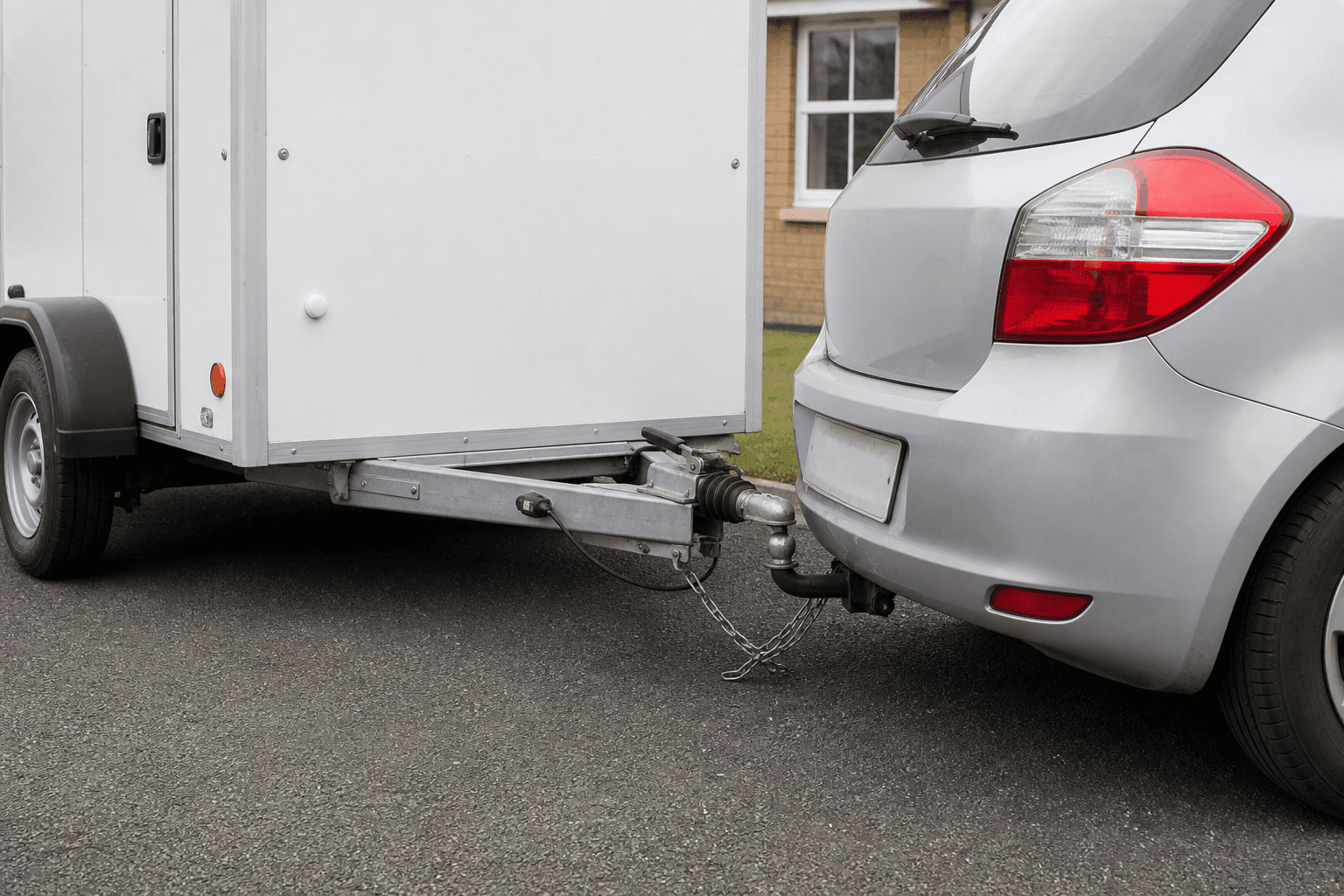
The Highway Code sets out what a legal tow looks like in practice. Under its towing rules, This includes checking that all tyres are legal, the trailer braking system is in full working order and all trailer lights are working correctly . The Code also says that your trailer MUST be fitted with a secondary coupling device, such as a safety chain .
Braking depends on weight. A trailer can run without its own brakes only in narrow circumstances, and a heavier box trailer almost always needs them. For a house move, where a loaded trailer can easily exceed 750kg, assume you need a braked trailer and confirm that the hire company or seller has provided one.
Recommended practice is also worth following. Note that this is guidance rather than a legal requirement.
Registration: when a trailer needs a plate
Trailer registration with DVLA is only compulsory in certain cases, and most house-move trailers fall outside them. DVLA's guidance states that registration is mandatory for commercial use trailers travelling internationally with a gross weight over 750kg, and for non-commercial trailers over 3,500kg. Registration is also mandatory for non-commercial use trailers that travel internationally and have a gross weight over 3,500kg. In other words, for a domestic move within the UK, the DVLA trailer registration requirement does not normally apply. Registration is not compulsory for trailers used solely for domestic journeys.
If you are taking a trailer abroad, check the GOV.UK pages on taking a trailer to Europe before you travel, as the rules are different.
Practical checklist before you tow
- Confirm the trailer's MAM and check it sits within your car's towing limit and your licence entitlement.
- Check your car's gross train weight on the VIN plate, as GOV.UK says the figure must not be exceeded.
- Inspect the tyres, brakes and lights before leaving, as the Highway Code requires.
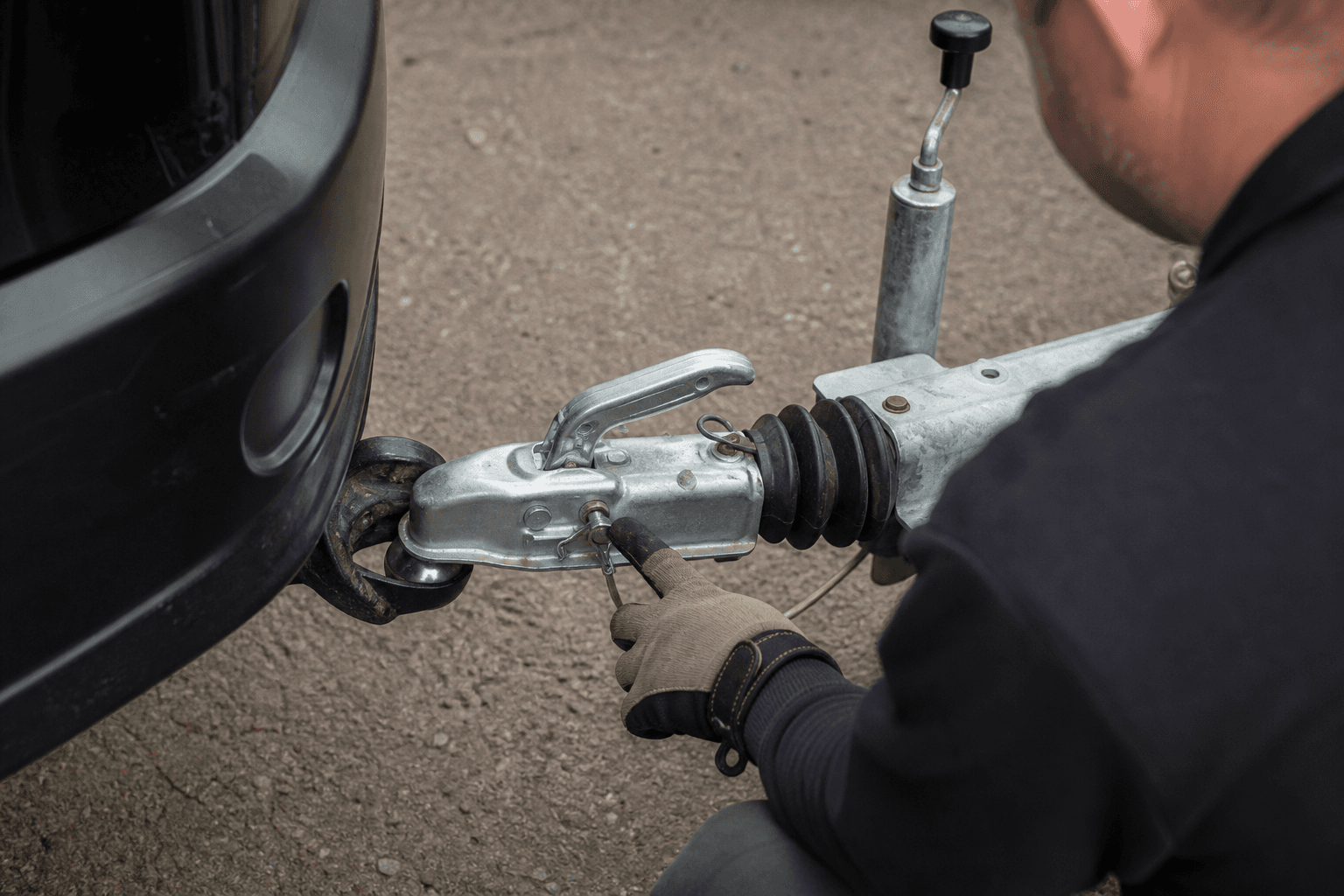
- Fit the secondary coupling device (safety chain) and load the trailer so that the weight is balanced.
- Ask the hire company or seller to confirm the trailer's weight, braking and registration status in writing.
Cost is another practical consideration, but the figure itself varies. Hire charges depend on the length of hire, the trailer size, the depot and the season, and delivery or collection can add to the total. Councils and hire firms set their own charges, so confirm the figure directly with the company or council before you book.
Northern Ireland and other nations
The towing rules above are drawn from GOV.UK guidance covering Great Britain. Northern Ireland has its own rules. The nidirect.gov.uk guidance on towing confirms that drivers who pass a test for Category B+E (Car and Trailer combination) on or after the above date, will be restricted to towing a trailer not heavier than 3,500kg , and that the position also depends on licence date. If you live in Northern Ireland, check the nidirect pages rather than relying on the GOV.UK summary.
When you are ready to hire, trailer hire across the UK is a good place to compare what is available, and local options such as trailer hire in London can help if you are moving within the capital. Trailer hire in Maidstone and trailer hire in Daventry are also listed for those moving in those areas.
GetBrent is a UK marketplace where you can find local trailer hire companies, removals firms and van services in one place. Use it to compare nearby providers, check their trailer specifications against your car and licence, and confirm pricing and availability with each firm before you book your move.