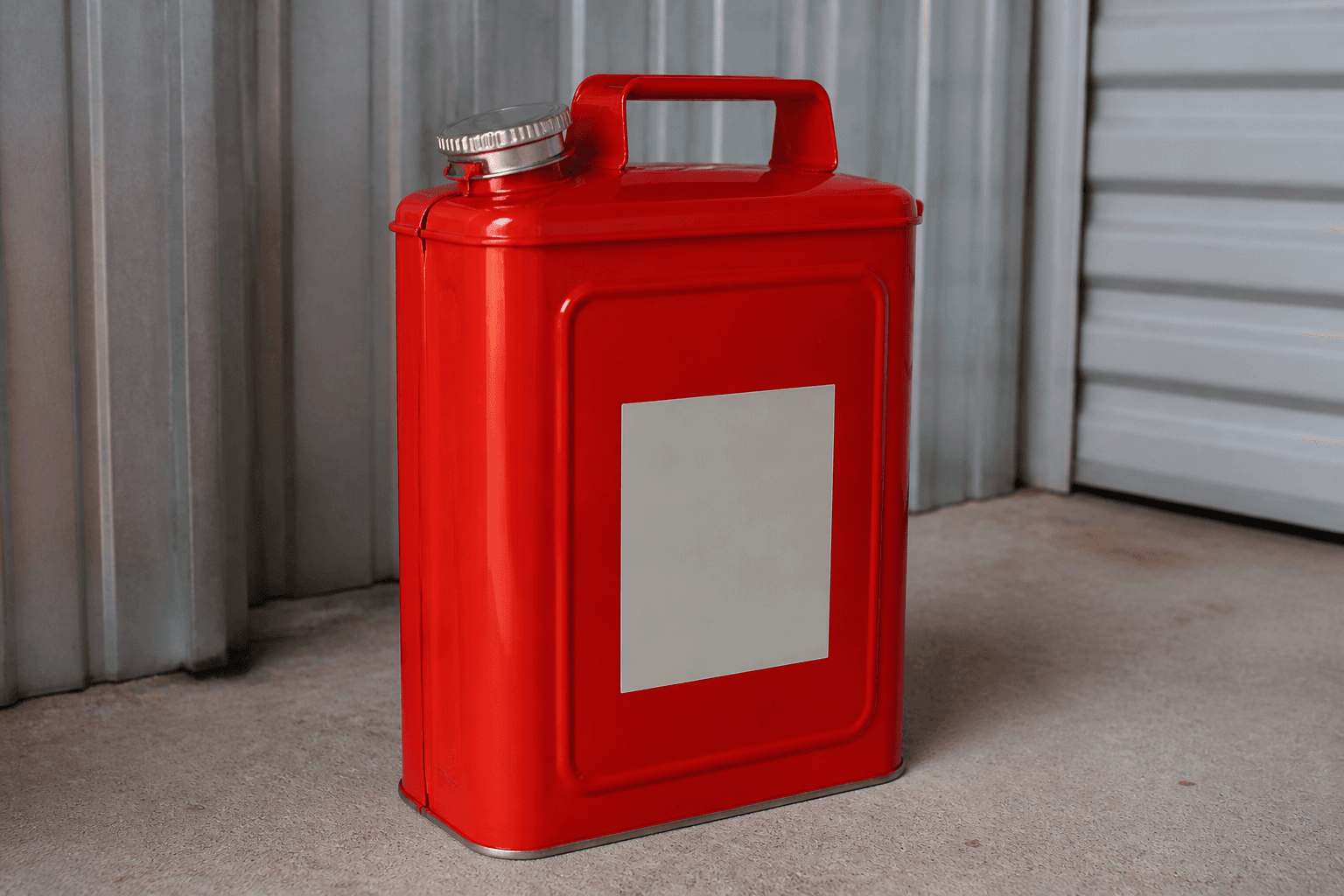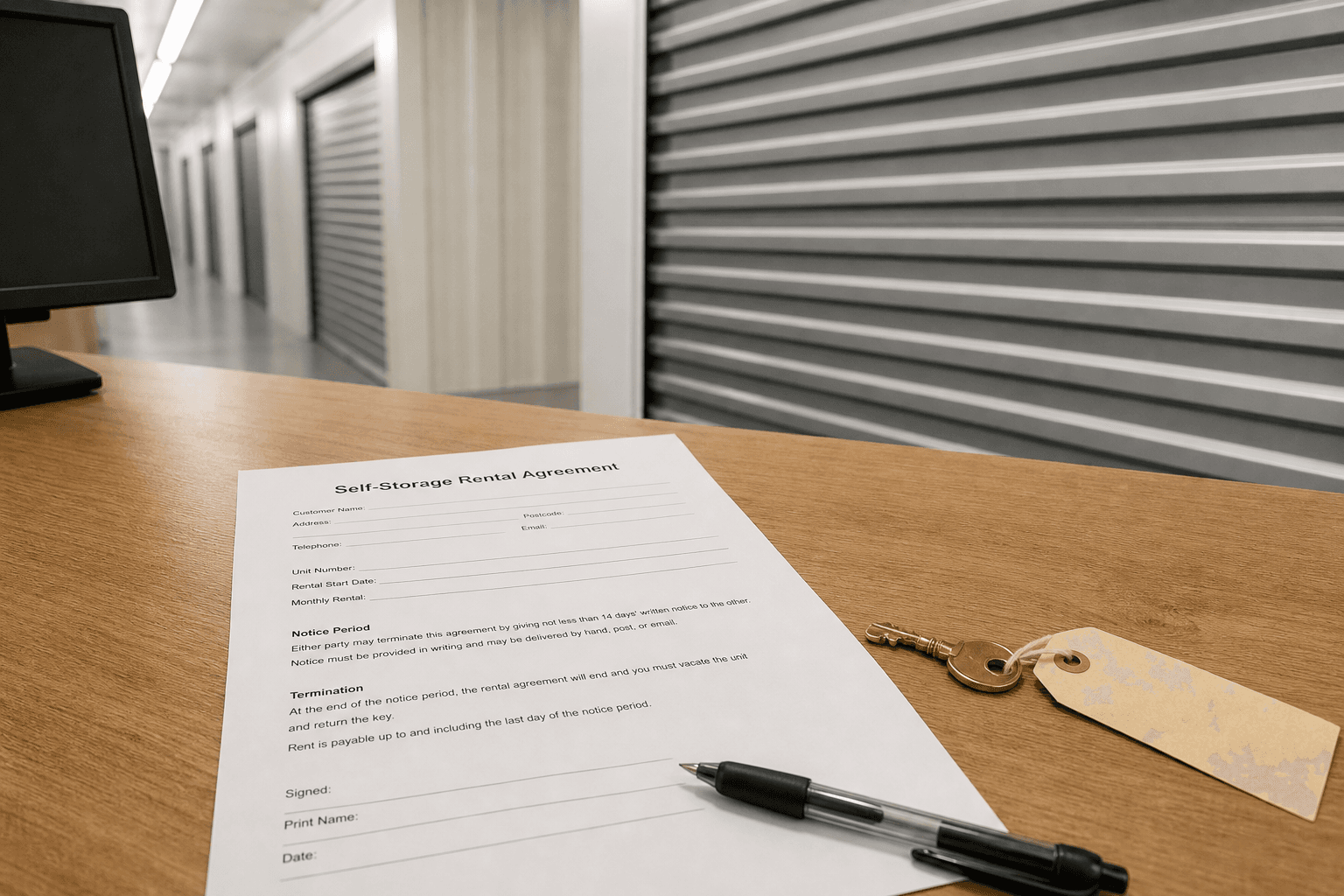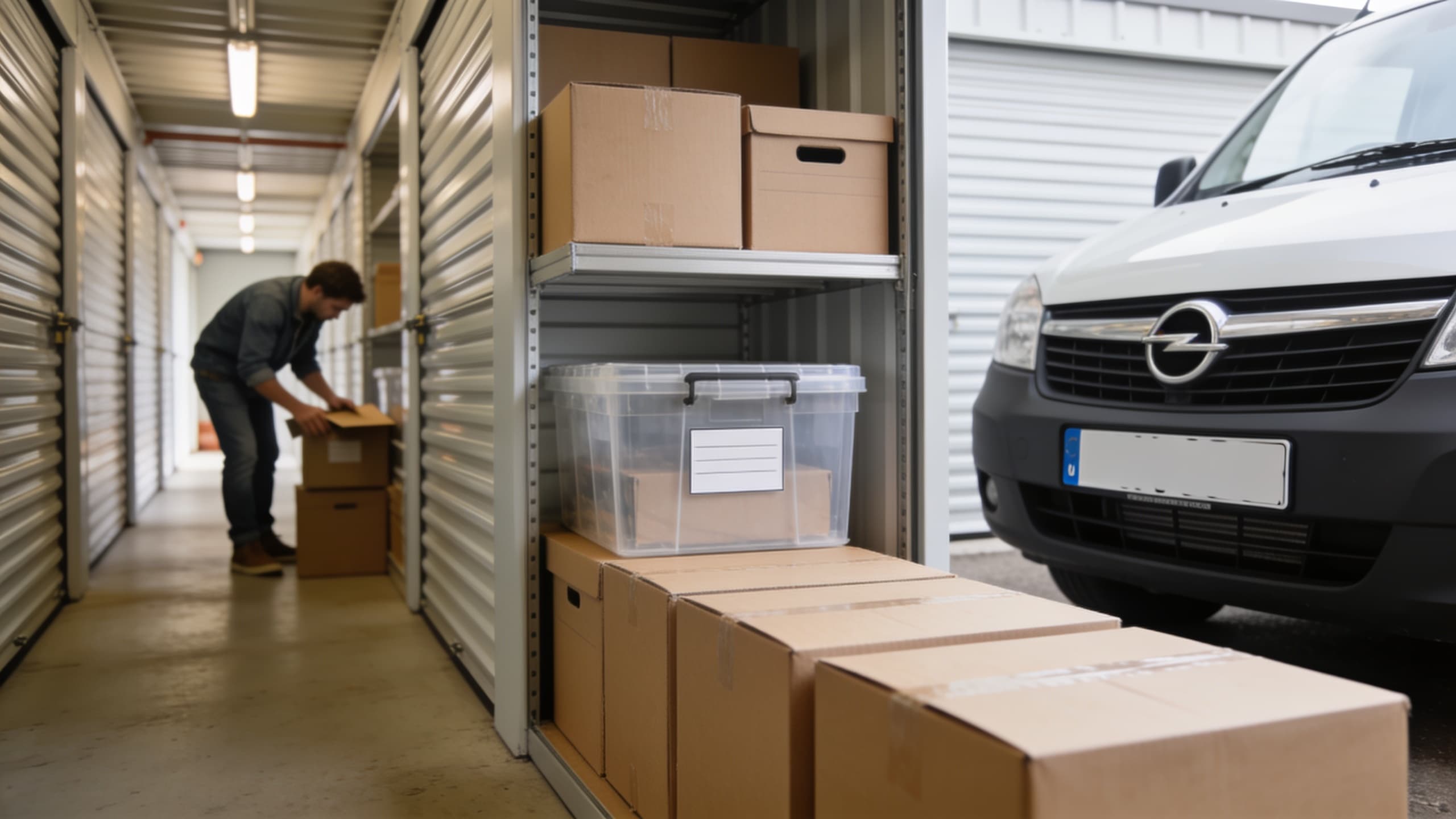
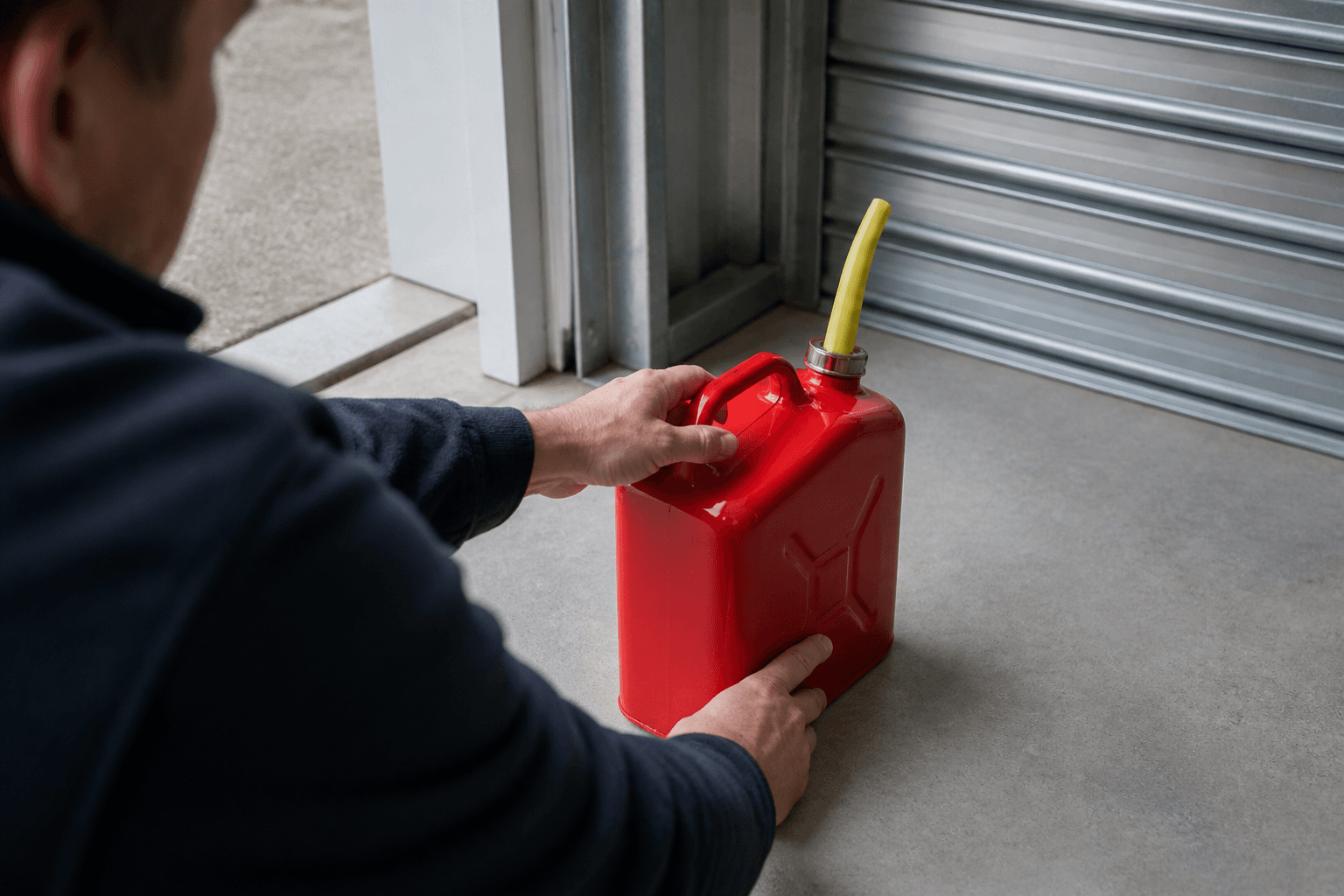
Storing petrol in a self storage unit may not be permitted, because petrol is highly flammable, so you should check the rules with the storage operator. Private individuals can keep a limited amount at home or on other non-workplace premises under the Petroleum (Consolidation) Regulations 2014, which the Health and Safety Executive (HSE) explains on its website. This article covers the domestic limits, the container rules, and what they mean if you are choosing a storage unit.
Why storage units usually refuse petrol
Storage operators may set their own rules on what can go into a unit, and petrol is commonly restricted. One storage provider states that do not store highly flammable or hazardous items like petrol, gas, oil, paint, compressed gases and cleaning solvents in self storage. These combustible items pose a serious risk to the facility as well as any other items you store with them in your storage unit. Because these are operator rules rather than a single statute, you should confirm the position with the specific site before you arrive with a fuel can.
How much petrol you can keep at home
The HSE sets the baseline for private storage. The Health and Safety Executive states that individuals are limited to storing 30 litres of petrol without a licence. The total is measured as up to 30 litres of petrol can be stored at home or in a non-workplace premises, as long as it its stored in suitable containers, and anything over that needs notifying to the local authority. Fuel in the tank of a vehicle is not counted in that figure.
The HSE's container rules are specific. Its guidance states that you can keep up to 30 litres of petrol at home without telling your local Petroleum Enforcement Authority, in suitable portable containers: plastic containers of up to 10 litres, metal containers of up to 20 litres, one demountable fuel tank of up to 30 litres, or a mix of these totalling no more than 30 litres.
The conditions for storing more than 30 litres
If you need more, the rules become stricter. Storing more than 30 litres means contacting your local Petroleum Enforcement Authority. Bucks Fire and Rescue advises that if you wish to store more petrol than this, you are able to store up to 275 litres in suitable containers providing you follow the legal requirement to notify the local Petroleum Enforcement Authority (PEA) in writing.
Practical checklist before you store fuel
- Check the HSE limit for your situation: 30 litres for private storage without notification.
- Use a container designed for petrol, marked with the words PETROL and HIGHLY FLAMMABLE, as the HSE requires for portable petrol storage containers.
- Do not fill containers to the brim, because fuel expands and vapour can build up in hot weather.
- Do not keep petrol in living accommodation or in the house.
- Ask the storage site in writing whether any fuel is permitted before you book a unit.
Storing a vehicle that uses petrol
Many people asking about petrol are storing a car, motorbike or van for the season. A vehicle taken off the road is not the same as storing fuel, but the two questions often come together. The DVLA position is set out on GOV.UK: you need to make a SORN (Statutory Off Road Notification) when you take a vehicle 'off the road' and you want to stop taxing and insuring it. Your vehicle is off the road if you do not keep or use it on a public road, for example if it's in a garage, on a drive or on private land. A vehicle kept off the road must not be used on a public road, except to attend a pre-booked MOT or testing appointment.
Before you move a vehicle with fuel in the tank, empty or drain any spare cans and confirm the rules with the storage site. If you are unsure whether a particular item is allowed, the storage operator is the right first contact. You can find local options through self storage near you, or compare providers in a specific area such as storage in London.
Finding a storage firm that will accept your items, and confirming their rules before you arrive, saves time and avoids a refused load. Compare firms on GetBrent.co.uk to find local hire companies and storage providers, and contact them directly to check exactly what they will accept.