
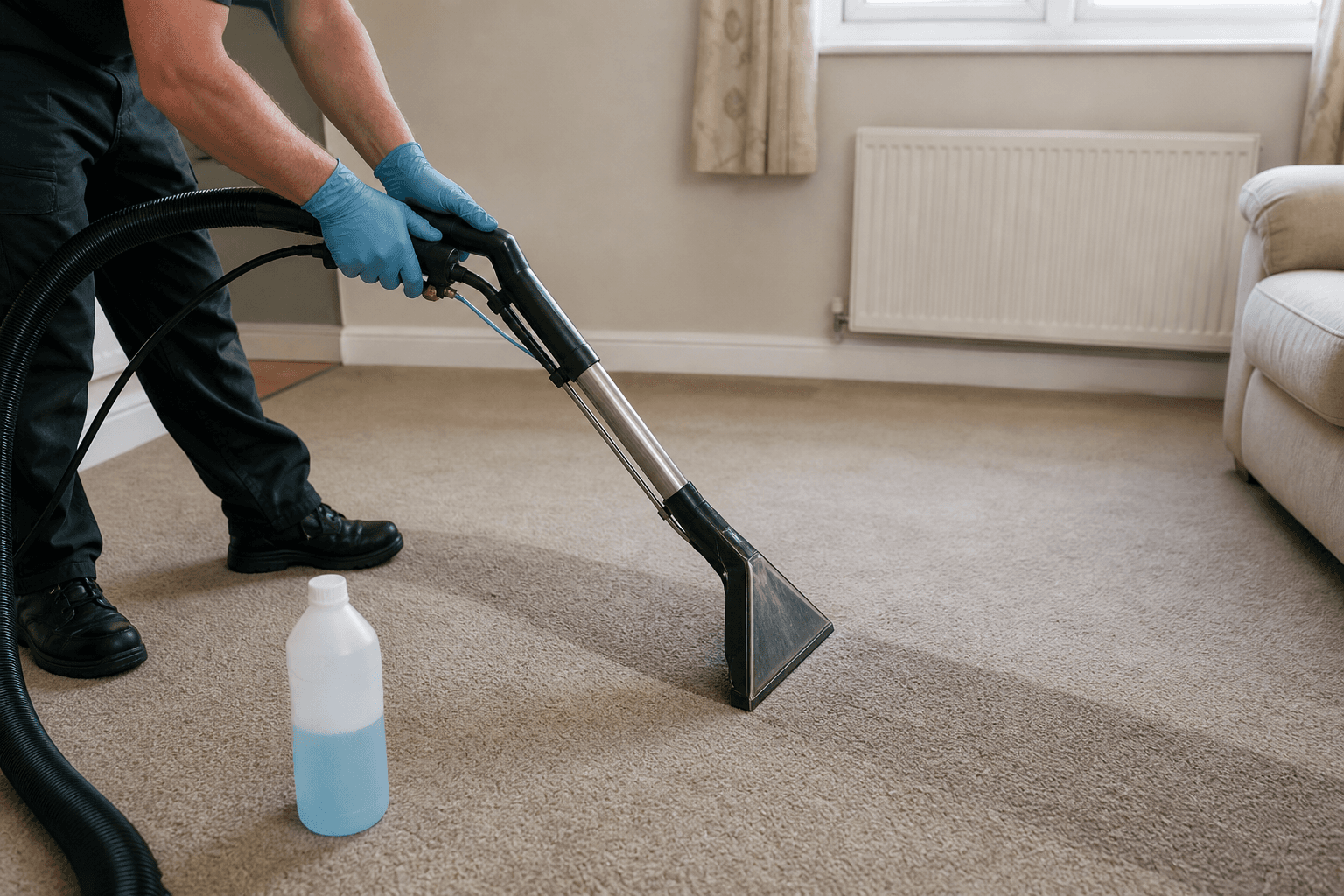
At a glance
- A hired carpet cleaning machine suits routine cleaning of tough, synthetic carpets, but it takes your time and needs careful drying.
- A professional usually gives deeper results, handles wool and delicate carpets with more care, and often dries carpets faster.
- Set-in pet urine and old stains are often better left to a professional, who can judge what a carpet can take.
Most people with a carpet that needs a deep clean have two choices: hire a machine and do the job yourself, or pay a professional cleaner to come to the house. The right answer depends on the carpet, the stain, how much time you have and what the result needs to be. For routine cleaning of a sturdy carpet, a hired machine is often enough. For wool, delicate fibres, old pet accidents or a carpet that matters to a tenancy deposit, a professional is usually the safer choice.
Cost in money and time
The cost of hiring a machine depends on how long you keep it, the depot you use, and the cleaning solution you buy. Professional cleaning is usually priced by the number of rooms or the floor area, and the cleaner may add charges for heavy soiling or pre-treatment. Confirm the figure with the hire shop or cleaner before you book, because rates vary by company and by area.
Time is the bigger difference for most people. A hired machine means you collect it, fill the tank, pre-treat the marks, move furniture, clean every room, empty the dirty water and return the machine. A professional does most of that work while you wait elsewhere, although you still need to clear the floor and keep children and pets away while the carpet dries.
| Factor | Hired machine (DIY) | Professional cleaner |
|---|---|---|
| Cost driver | Hire period, depot, cleaning solution | Number of rooms or floor area, heavy soiling, pre-treatment |
| Your time | Most of a day or longer, including returns | Usually a few hours on site, then drying |
| Results on general soiling | Good on sturdy synthetic carpet with regular cleaning | Usually deeper, more even results |
| Drying | Can be slow if the carpet is over-wet | Often faster with stronger extraction |
| Wool and delicate carpets | Higher risk of shrinkage, colour loss or distortion | Better suited, if the cleaner has experience with wool |
Drying, wool and delicate carpets
Drying is where many home cleaning jobs go wrong. A carpet left too wet can develop a musty smell, and the backing can stay damp long enough to cause problems under the pile. Open windows, run fans and keep doors shut to stop the room sealing in moisture. If a carpet still feels wet after a day, it is worth asking a professional to check it.
Wool and other natural fibres need more care than synthetic carpets. Too much water, too much heat or harsh chemicals can cause shrinkage, colour change or a change in texture. For wool, antique rugs, or carpets with a fringe or a fitted underlay, a professional is clearly the better choice.
Pets, stains and when a professional is clearly better
Fresh spills and light dirt are usually manageable at home. Pet urine that has soaked into the underlay, old stains, and smells that return after cleaning are harder. A professional can use stronger, carpet-safe treatments and can judge whether a stain can be lifted at all. Do not keep scrubbing a stain with household bleach or strong chemicals, as this can cause permanent damage.
A professional is also the better choice when the carpet is valuable, when a landlord may check its condition, or when you have no time to manage the drying. Check that any cleaner you use has a clear price and a written description of the work before you agree to it.
Renting: deposits and who pays
Keep photos, your check-in inventory and receipts for any cleaning you do.
Electrical safety when using a hired machine
Carpet cleaning machines are mains-powered, so check the cable, plug and casing before you use one. The Health and Safety Executive says that it is often beneficial to use a Residual Current Device (RCD) between the electrical supply and the equipment. it is often beneficial to use a Residual Current Device (RCD) between the electrical supply and the equipment. Check the electrical cable is not damaged and has not been repaired with insulating tape or an unsuitable connector. Do not use a machine with a damaged cable, and keep the cable away from water.
Practical checklist before you hire a machine
- Test the carpet in a hidden corner first and let it dry fully.
- Use only the amount of solution the hire shop recommends, and rinse the tank as instructed.
- Run the machine in straight passes and avoid soaking one spot.
- Open windows, switch on fans and leave the room ventilated until the carpet is dry.
- Return the machine clean, and photograph the carpet before and after.
Frequently asked questions
Can I clean a carpet myself if I rent?
Yes, you can clean carpets yourself, but the result still has to meet the standard the carpets were in when you moved in. Keep receipts and photographs in case your landlord questions the condition at the end of the tenancy.
Is a hired carpet cleaning machine safe to use?
It is safe if the cable, plug and casing are undamaged and you use it with an RCD where possible. Do not use it in wet conditions beyond what the machine is designed for.
When should I always pay a professional?
Pay a professional for wool or delicate carpets, old pet stains, or any carpet that needs to look right for a deposit check. A professional is also the better choice if you cannot manage the drying time.
If you are not sure which option suits your carpet, it is worth getting a professional opinion before you hire a machine, particularly for wool or stubborn pet stains. You can find a trusted local carpet cleaner, a tool hire shop that rents carpet cleaning machines, or a tradesperson for any repair on GetBrent. Compare the written quote, check what the price includes, and ask how long the carpet will take to dry before you agree to the work.