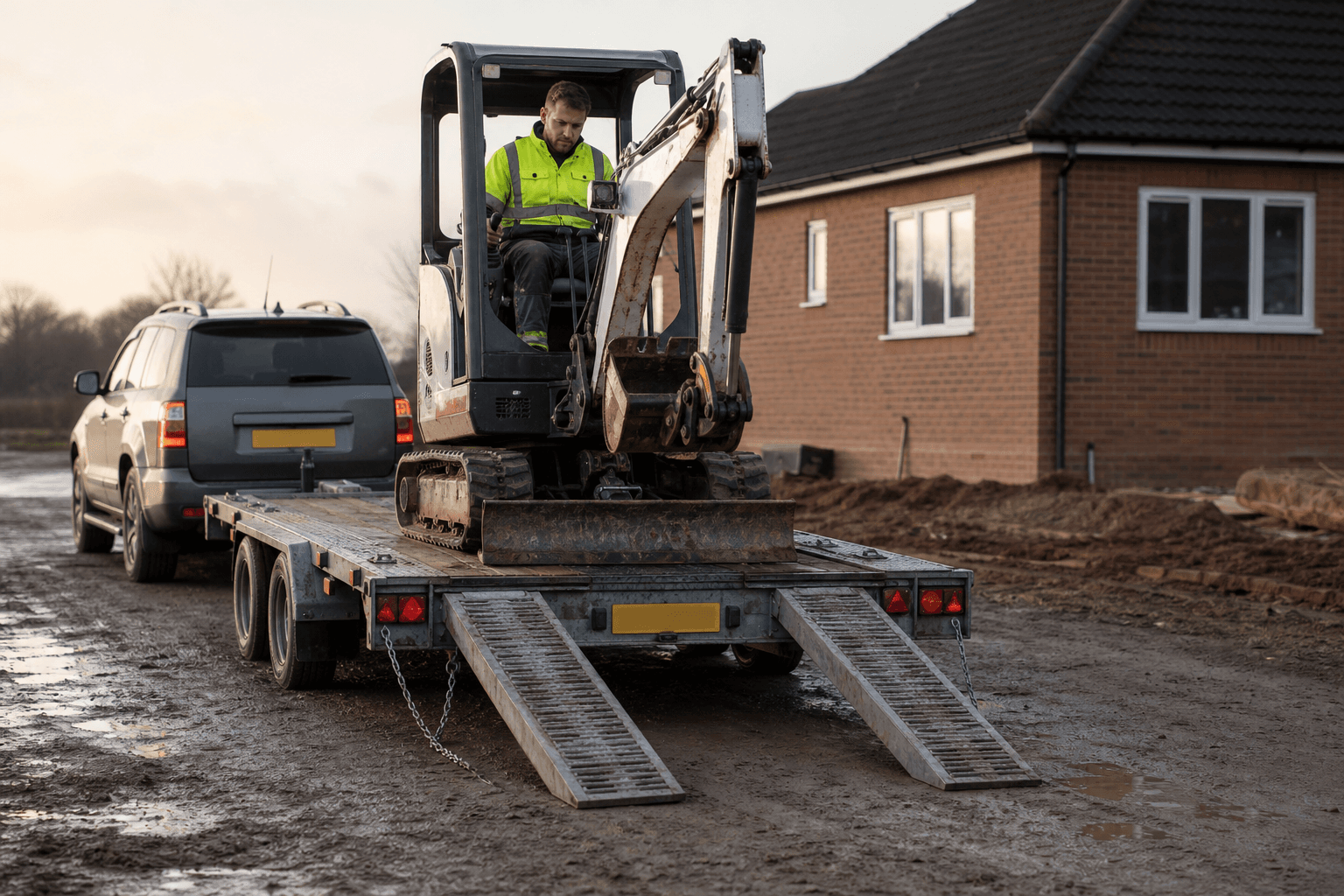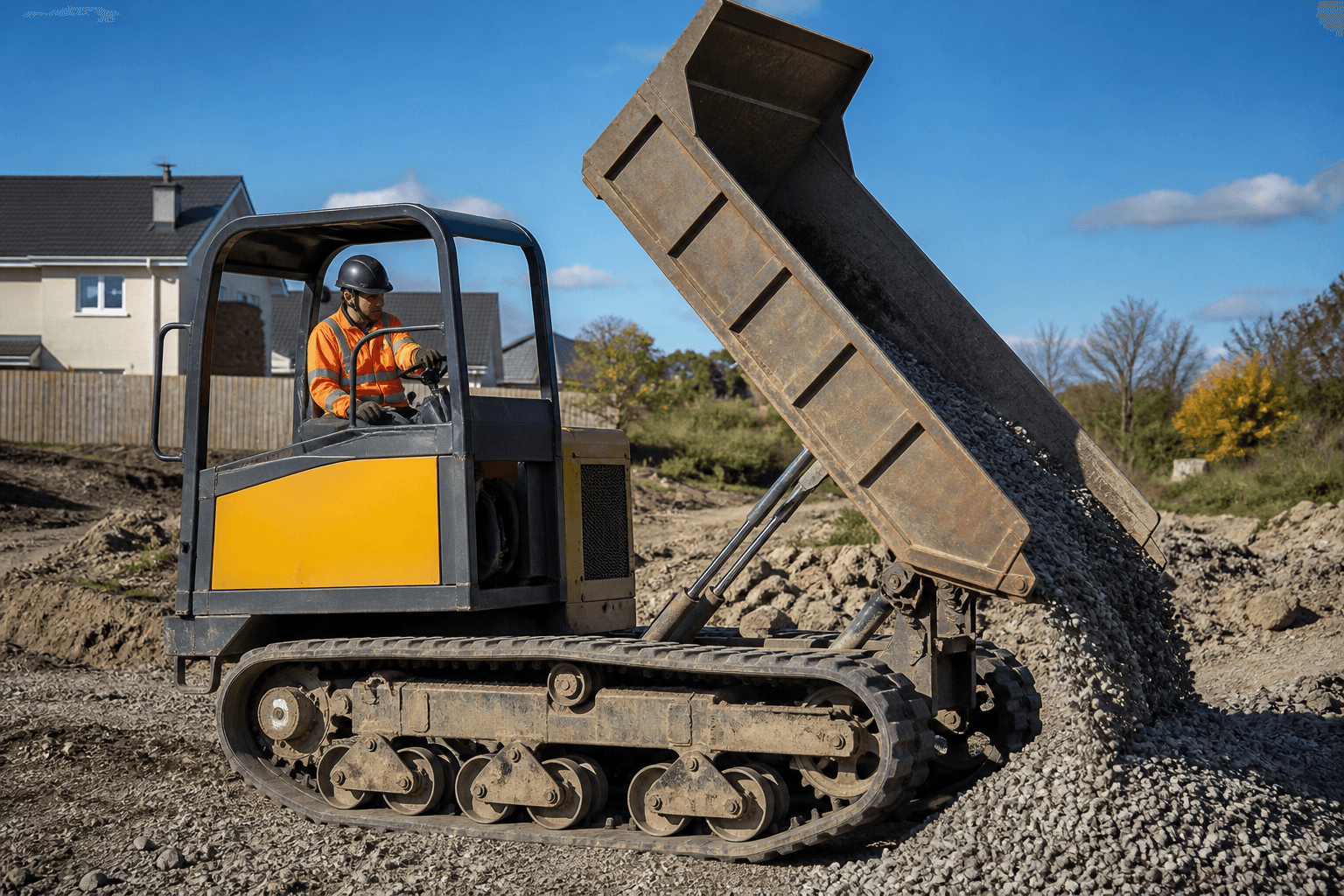
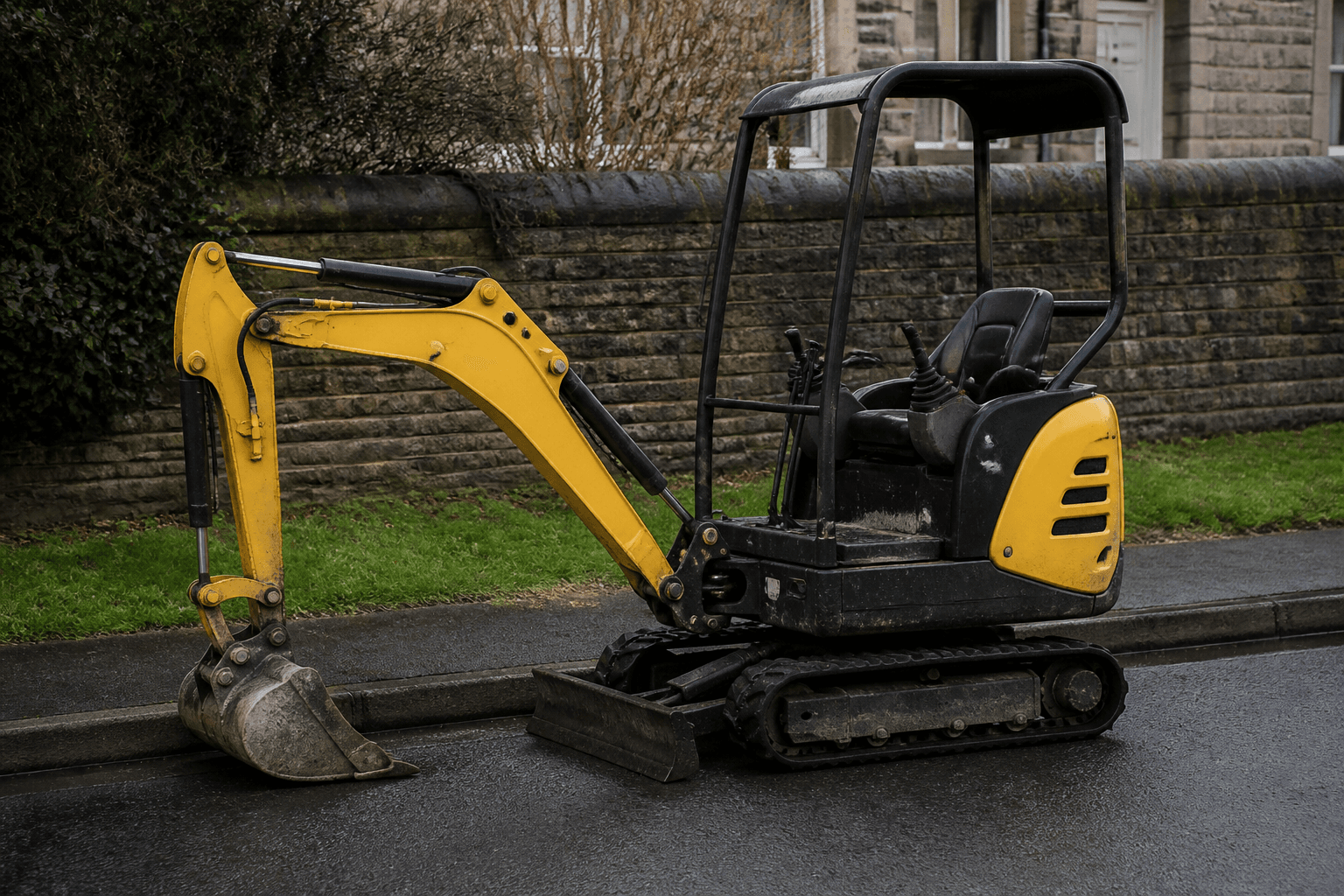
You need a licence from the local council to leave a mini digger or other plant on a public road, pavement or verge. The requirement sits in section 171 of the Highways Act 1980, which allows a person to temporarily deposit materials or other things in a street only with the consent of the highway authority. Merton Council lists plant alongside bricks and bags of sand as building materials.
What the Highways Act says about plant on the road
Section 171 covers building materials, rubbish or other things placed in a street, and temporary excavations as well. Councils apply it to machinery too. Merton Council states that you must have a licence before you can store building materials on any part of a public road, pavement or highway, and that building materials include bricks, bags of sand, portable toilets, containers and plant.
How long a licence lasts and where plant can sit
The permitted period depends on the council. The standard licence is valid for 24 hours in Coventry, while the standard length of a commercial building materials licence in the London Borough of Merton is 28 days. Location matters as well. Building materials cannot be stored on a Red Route location or on double yellow lines.
Coventry makes the same point, encouraging the placing of materials on private land to avoid the need for a highway licence and reduce public risk. If a machine can work from inside the site, that is usually the simplest route.
Conditions you must meet on the highway
Licence conditions are mainly about public safety. Section 171 requires anyone who places materials in a street to fence the obstruction and, during the hours of darkness, to light it properly. Adequate signs, lighting, and guarding must be in place, especially during hours of darkness. Coventry also expects the area to be left in order, since the highway must remain clean and tidy, and the site cleared after removal.
Insurance is part of the process too. The contractor must provide proof of public liability insurance as this is required to cover potential damage or injury. If you are hiring a machine, ask the hire firm what cover it holds and who will be named on the licence application.
Checklist before you book delivery
- Check whether the machine can work from private land, since councils expect this first.
- Ask your local council which licence applies to plant on the highway, and get the conditions in writing.
- Confirm the licence start and end dates, and arrange collection before the licence expires.
- Plan fencing, signs and lighting for the hours of darkness.
- Confirm who holds public liability insurance and who is applying for the licence.
- Ask about the charge. The amount you will pay depends on the licence type and where the materials are placed. Confirm the figure with the council or the hire company before you book, as this guide does not publish fees.
This article covers placing plant on the highway. Moving a machine along a public road raises separate vehicle rules, which are not covered here. If you are still choosing a supplier, browse plant hire firms and plant dealers, or narrow the search with plant hire in London or plant hire in Mitcham.
GetBrent helps you find local plant hire companies and plant dealers for mini diggers, dumpers, rollers and telehandlers, with or without an operator. Compare the firms and the machines, then contact them direct and ask who will handle the highway licence before you confirm delivery.