Sizing a generator for a site or event is a safety decision as much as a capacity one. Before any kVA figure is considered, the organiser has to satisfy the duties that apply to electrical equipment and to generator exhaust. This article covers the England and Great Britain position based on HSE and local authority guidance, and it does not give cost figures, which you should confirm with the hire company or council.
Start with the legal duties
The starting point for any event is the duty placed on the organiser. HSE states that event organisers, contractors and others using electrical equipment must do all that is reasonably practicable to ensure that electrical installations and equipment at an event are properly selected, installed and maintained so as not to cause death or injury. That duty applies whether the generator is hired in or owned by the organiser, so the selection of the unit is part of the legal obligation rather than an afterthought.
Guidance from local authorities reflects the same position for temporary supplies. Local authority conditions require electrical installations to be tested by a competent person before the public is admitted.
Know which standards apply
Two British Standards govern most generator-supplied event work. BS 7671 is the wiring standard, and BS 7909 is the specific one for events. Islington's conditions for outdoor events state that electrical installations shall comply with BS 7671 and BS 7909, and that generators and their distribution positions shall be provided with earth electrodes.
Guidance from Richmond upon Thames explains that BS 7909 requires events to design their systems in accordance with the Wiring Regulations and to appoint someone electrically competent to oversee the electrical system.
Manage carbon monoxide and placement
Carbon monoxide is the most serious hazard from a petrol or diesel generator on site. HSE's construction guidance warns that carbon monoxide can kill. Where petrol generators are used, the HSE control measure is locating petrol generators etc outside in well ventilated spaces so that fumes disperse and cannot gather or drift into building openings.
The placement rule applies even when a generator is sheltered. HSE guidance says generators should be located outside in well ventilated spaces so that fumes cannot gather or drift into building openings. Keep the generator guarded against unauthorised interference and away from public areas.
Check the practical set-up before you hire
A simple checklist helps the organiser and the hire company agree the job before delivery:
- Confirm the total connected load with the person responsible for the electrical design, and ask the hire company to confirm the unit's rated output.
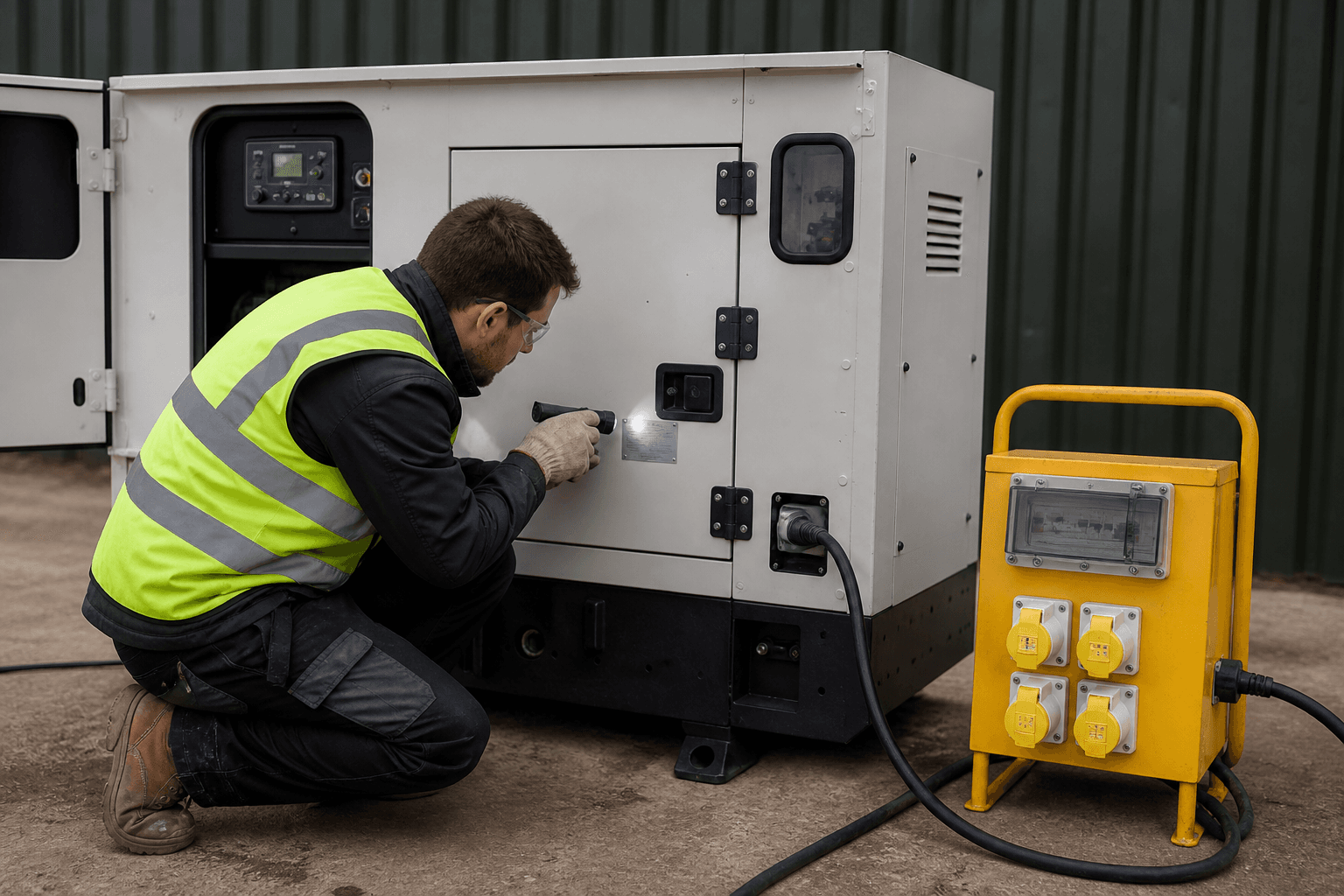
- Confirm the generator will be sited outdoors, in a ventilated position, and not within any enclosed or partially enclosed space.
- Confirm that a competent person will inspect and test the temporary installation before the public arrives, and that the results are recorded.
- Confirm who will refuel the unit, when, and how the generator will be shut down and allowed to cool first.
- Confirm cable routes, avoiding vehicle traffic, and ensure cables are run alongside fence lines where possible.
- Confirm that all portable equipment plugged into the generator has been maintained and tested.
HSE's event guidance also asks organisers to plan for routing of temporary overhead or underground cables and for control and restriction of access to electrical installations by unauthorised people , so fence off the generator and distribution points.
Cost drivers and where to confirm figures
Hire charges depend on the unit's rating, how long it is needed, delivery distance, fuel arrangements, cabling and any testing or attendance the hire company provides. Because these vary by depot and by job, no figure is given here. Confirm the cost directly with the hire company, and check with the local council if the event needs a licence or permission that includes electrical conditions.
If you are looking for suppliers, you can compare tool hire options across the GetBrent marketplace and narrow your search by area, for example tool hire in London or tool hire in Harrow. Ask each supplier for their generator specification, their delivery arrangements and whether they can support the testing and set-up that your event needs.
Find local hire companies that offer generators and related equipment on GetBrent. Compare listings, check the details they provide, and ask for written confirmation of specification, placement and testing before you commit to a booking.