This guide covers what the HSE and GOV.UK say about working safely with excavators and moving them by road, and the factors that shape realistic daily output.
What sets a mini digger's daily output
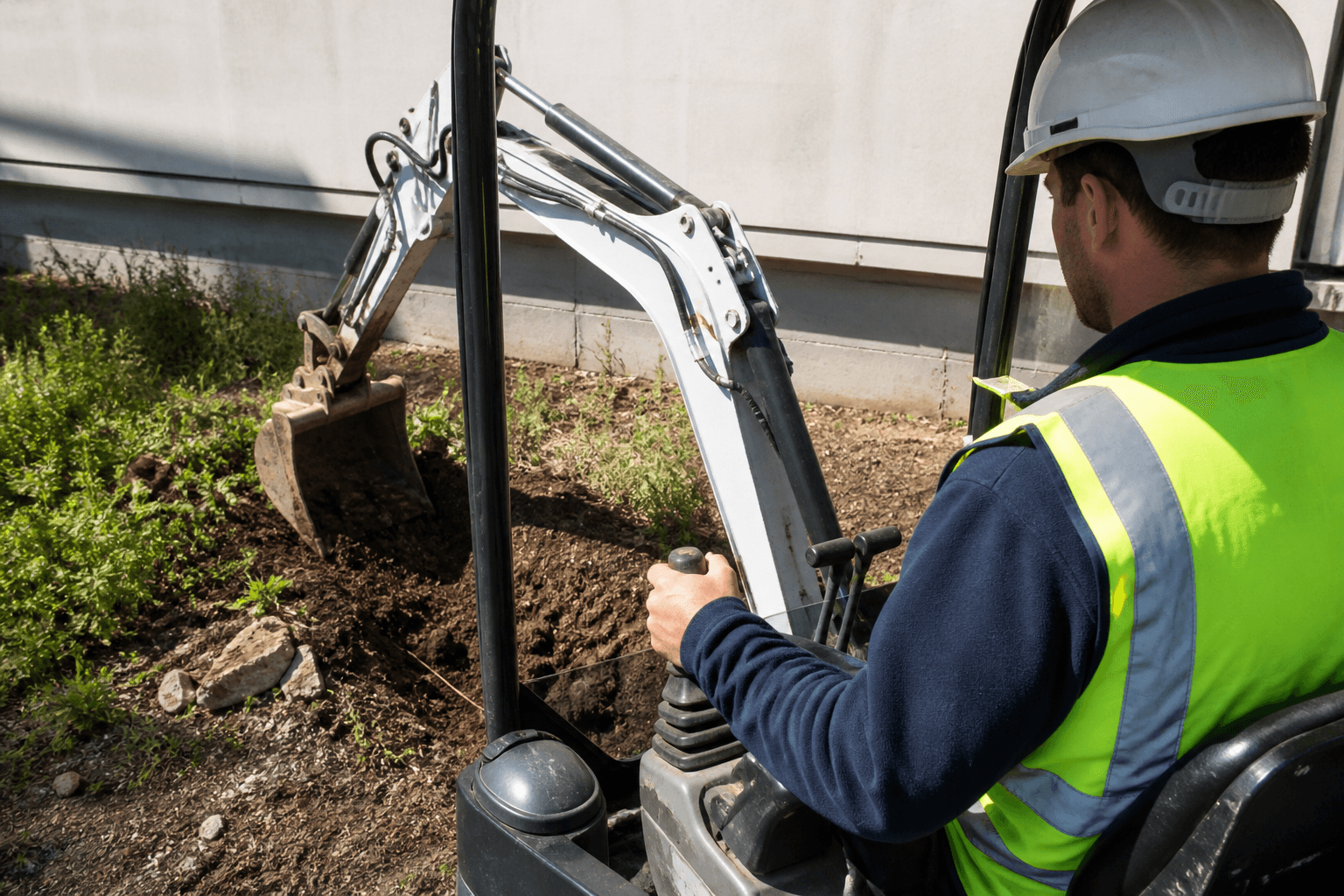
Output is driven by the size of the work area, how often the machine has to be repositioned, the material being moved and how much of the working day is lost to safety measures. A machine working in a confined area with several people nearby will clear less ground than one working on an open, segregated site. The HSE says it is important to select the right excavator for the job. If you are comparing options, you can look at plant hire options across the UK before settling on a size.
Site safety rules that affect working time
The HSE states that the law says you must organise your site so as to segregate pedestrians and excavators. Its guidance adds that people should be kept away from areas of excavator operation by the provision of suitable barriers. The HSE notes that most fatal and serious injuries involving excavators occur when the excavator is moving, slewing or working.
Where a machine is used near people, the HSE says a marshaller should be in place. It states that plant and vehicle marshallers should be trained, competent and authorised to direct excavator movements.
Operator isolation and competence
The HSE also says that excavators used must be carefully selected, maintained and operated by trained drivers.
Overhead power lines and clearance
Where lines are present, the HSE says that the safe clearance required beneath the overhead lines should be ascertained from the owner of the line. Work that cannot be done safely may have to wait until the lines are diverted or the work is rescheduled.
Moving the machine by road
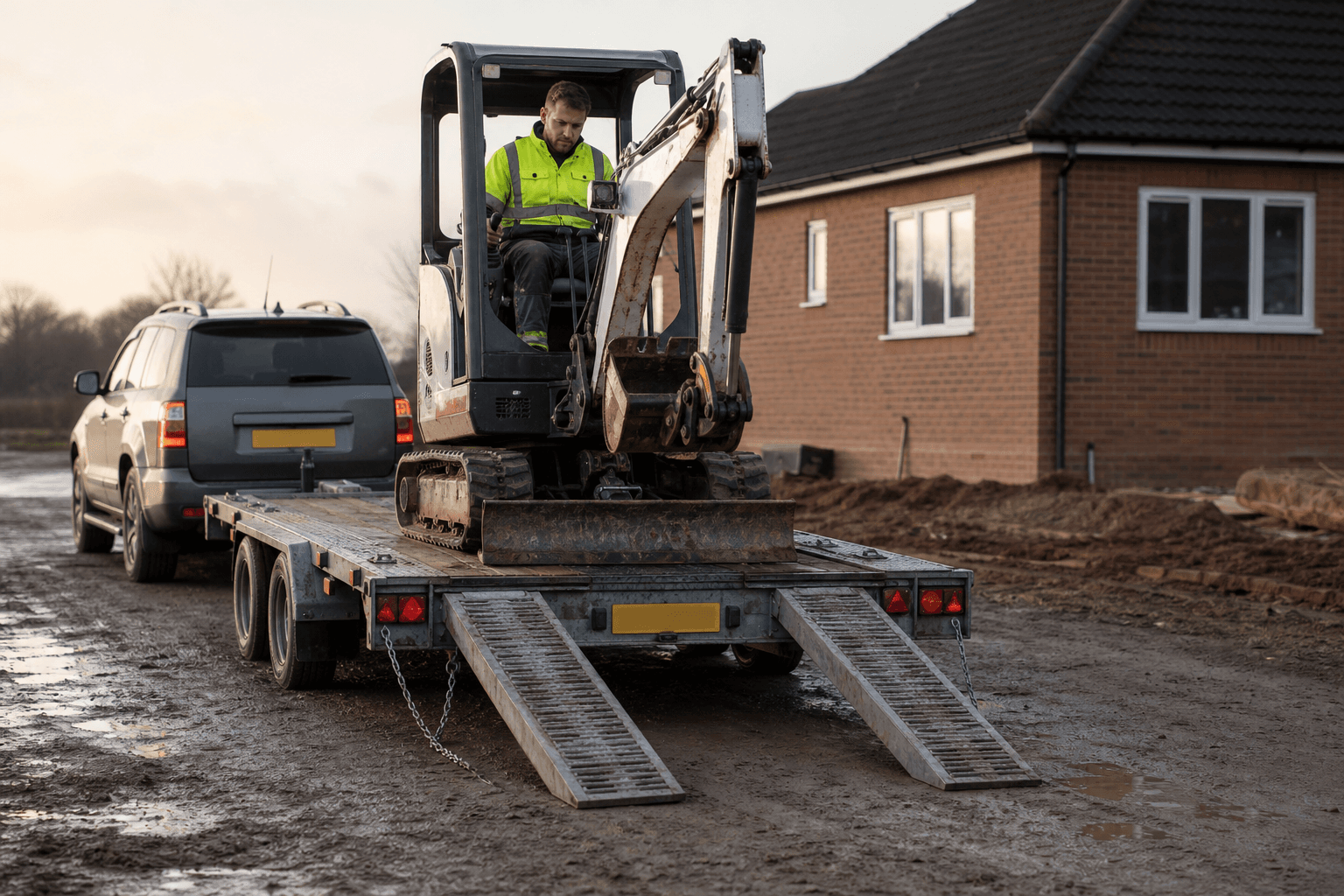
Transport affects both the cost and the timing of hire. A mini digger is usually carried on a trailer, and the trailer's weight determines what your vehicle can legally tow. Confirm the combined weight with the hire company before collection, because a machine that cannot be legally moved will delay the whole job.
Practical checklist before you hire
- Survey the site for overhead power lines and get the required clearance from the line owner before work starts.
- Set up barriers, bunting or fencing to create a pedestrian exclusion area.
- Confirm that the operator is trained and competent, and that a marshaller is in place where people work near the machine.
- Check the combined weight of the trailer and towing vehicle against your licence entitlement.
- Agree with the hire company how the machine will be isolated when idle.
- Confirm expected output, delivery timing and any charges with the company directly, as these figures vary and are not published here.
Cost and output: what to confirm with the hire company
This article does not give prices or day rates, because these vary by company and location. What drives the cost of a mini digger hire includes machine size, hire length, delivery distance and whether a trailer and operator are included. Ask the company to confirm the figure in writing and to explain what it covers, including any delivery, fuel and insurance terms.
If you need a machine in a specific area, you can compare mini digger hire in London and mini digger hire in Gravesend to see what local firms offer. Whichever you choose, the safest way to plan output is to match the machine to the task and confirm the site conditions with the company before the day begins.
Find local hire companies quickly on GetBrent, the UK marketplace for hiring or buying trailers, tools, plant, vans and storage, and for finding removals, clearance and trades firms. Compare suppliers near you, check what each one includes, and confirm the figures you need before you book.