
A skip on your own driveway or garden needs no council permit, while one on a public road, pavement or verge does. Whatever size you pick, the company you hire should be an authorised waste carrier.
At a glance
- Estimate the volume of your waste first, then allow a little spare space rather than buying the largest size you can fit.
- A skip placed on a public highway needs a permit from the local council, and the skip hire company usually applies for it on your behalf.
- Skips must not contain explosive, noxious or dangerous material, or material likely to putrefy or become a nuisance, so check restrictions before you order.
- Check that your skip firm is a registered waste carrier before you book, using the public register.
Start with the volume and type of waste
The most important step is working out how much waste you will produce. Skips are sold by volume, and the right size depends on whether you are clearing a single room, a garden or a full property. It helps to walk through the job and list each type of material, because bulky items such as sofas take up far more space than their weight suggests.
The type of waste matters as much as the amount.
| Type of job | What to consider when choosing a size |
|---|---|
| Small clearance from one room | A small skip is usually enough, but check that the waste will fit without overhanging the top edges. |
| Garden clearance | Ask whether a green waste skip is available, as this may affect the size and type you can order. |
| Building or renovation work | Plasterboard should be separated, so ask the firm whether a separate bag or dedicated skip is needed. |
| Soil or rubble | Ask for an inert waste skip, as heavy material may be limited by weight rules. |
Check where the skip will sit
Where you place the skip determines whether you need permission. On private land such as a driveway, no council permit is needed. If any part of the skip sits on the road or pavement, the rules change, because a permit is then required from the local council.
In Lancashire, the Highway Authority issues skip licences, and it is illegal to place a skip on the highway without permission. A permit is only valid once formal approval has been received, and paying for a permit does not in itself count as approval. In Newcastle, a permit can be applied for online for a maximum of 28 days, and a longer period needs a fresh application.
Because the size of skip you can place on the highway may be limited, it is sensible to ask the council or your skip company before you finalise your order. In Lancashire, each skip on the highway must not exceed 5m in length by 2m in width.
Know what you cannot put in a skip
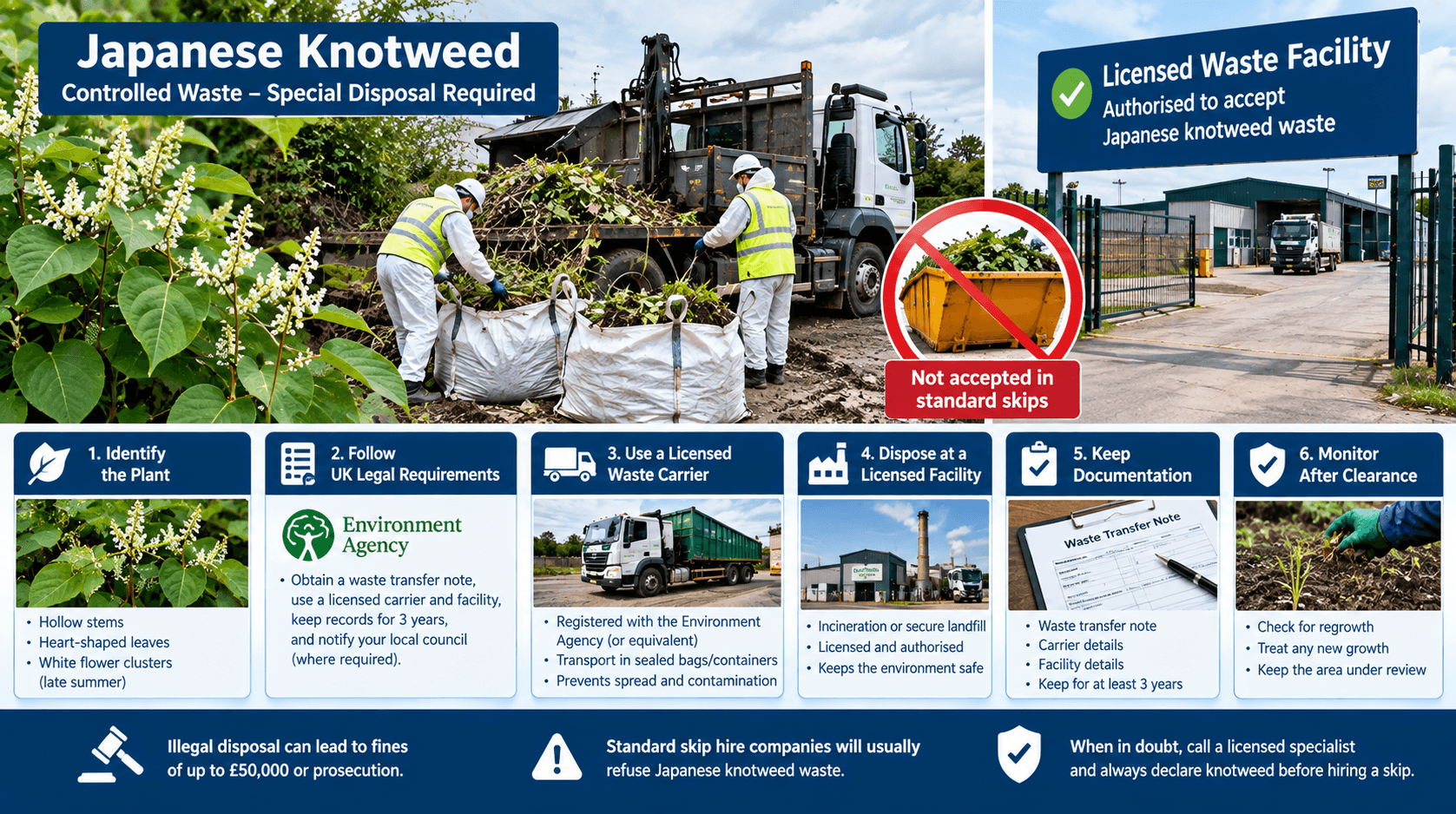
Some waste is banned from general skips, and a firm may refuse to collect a skip that contains it. It would be an offence to take business waste home and put it in your domestic bin, or to take it to a household waste and recycling centre.
Loading is equally important. Level the waste so that nothing sits above the rim, and keep all of it inside the sides of the container.
Practical checklist before you book
- Estimate the volume of waste and choose a size with some spare room.
- Confirm whether the skip will be on private land or the public highway.
- Ask who will apply for any council permit, and how long it will last.
- Check the company's waste carrier registration number on the public register.
- Ask for a waste transfer note where the rules require one, and keep your booking confirmation.
- Confirm the cost with the company or council, as prices vary by firm and by area.
Your legal responsibilities as the waste producer
Hiring a skip does not remove your responsibilities. The government's code of practice says you should check that a waste carrier you engage is authorised, with an up to date and valid upper tier registration.
Occupiers of domestic property have a separate duty, limited to taking all reasonable measures available to ensure their household waste is only transferred to an authorised person. If you add your own waste to a tradesperson's skip, the duty applies to the waste you added. Businesses, landlords and anyone clearing non-household waste should assume the full duty applies to them.
Frequently asked questions
Do I need a permit to put a skip on my driveway?
No, a skip that sits entirely on private land such as a driveway does not need a council permit. A permit is needed only where the skip goes on a public road, pavement or verge.
Who applies for a skip permit?
In most areas the skip hire company applies to the council on your behalf, because only approved skip companies can make the application. You should still confirm this when you book.
What happens if my skip is overfilled?
Waste must not rise above the top edges of the skip, and a driver can refuse to move a skip that is overloaded. This can lead to delays and additional charges, so level the load before collection.
Finding a reliable firm is the next step. On GetBrent, you can compare clearance and disposal companies across the UK, or search for clearance services in London if your job is in the capital. If you are weighing up whether a skip suits your job, our guide on whether to hire a skip or use a man and van service sets out the differences. You can also read what size skip you need for more detail on volumes.
Once you have chosen a size and checked the permit and carrier rules, GetBrent can help you find local hire companies in your area. Use the directory to compare firms, check what they offer, and contact the one that suits your job.