Preparing a caravan for winter storage correctly can mean the difference between a vehicle that is ready to tour in spring and one that needs expensive repairs. Frozen pipes, damp, flat batteries and opportunist theft are the four main risks during a long lay-up, and all four are manageable with methodical preparation. Working through the tasks below before leaving the caravan in storage will protect the vehicle and reduce the work needed when the new season begins.
Drain and Protect the Water System
The water system is the part of a touring caravan most vulnerable to winter damage. Water left in pipes, tanks or the water heater can freeze and crack fittings, leading to significant repair bills. The Caravan and Motorhome Club advises owners to flush waste water tanks and pipes, and to drain the water system thoroughly, including the water heater and toilet flush.
- Disconnect the fresh-water supply and open all taps. For mixer taps, set the lever to the central position so both the hot and cold sides of the system can drain.
- Open the caravan's drain-down valve or drain plug. Its exact position varies between models, so check the caravan handbook.
- Follow the drain-down procedure specified by the heater and caravan manufacturer - simply running the taps until no water appears does not necessarily mean the heater itself is empty.
- Remove the water filter cartridge to prevent frost damage.
- Drain water hoses completely, remove and dry the submersible pump, and store removable water equipment somewhere dry.
- Leave taps open during storage so that any residual water has room to expand rather than building pressure inside closed fittings.
- Empty and thoroughly rinse the cassette toilet, drain the flush tank, and lubricate seals where the manufacturer recommends.
Manage Damp and Ventilation
Condensation builds up inside a sealed caravan over winter, and if it is not managed it leads to mould and deteriorating soft furnishings. The Caravan and Motorhome Club recommends leaving fridge and cupboard doors ajar to allow air to circulate, and checking that vents are not blocked while making sure grilles and mesh to prevent vermin or insects getting in remain intact.
- Open wardrobe and internal cupboard doors slightly.
- Stand seat cushions upright away from walls so air can circulate around them, and remove bedding and pillows for the winter.
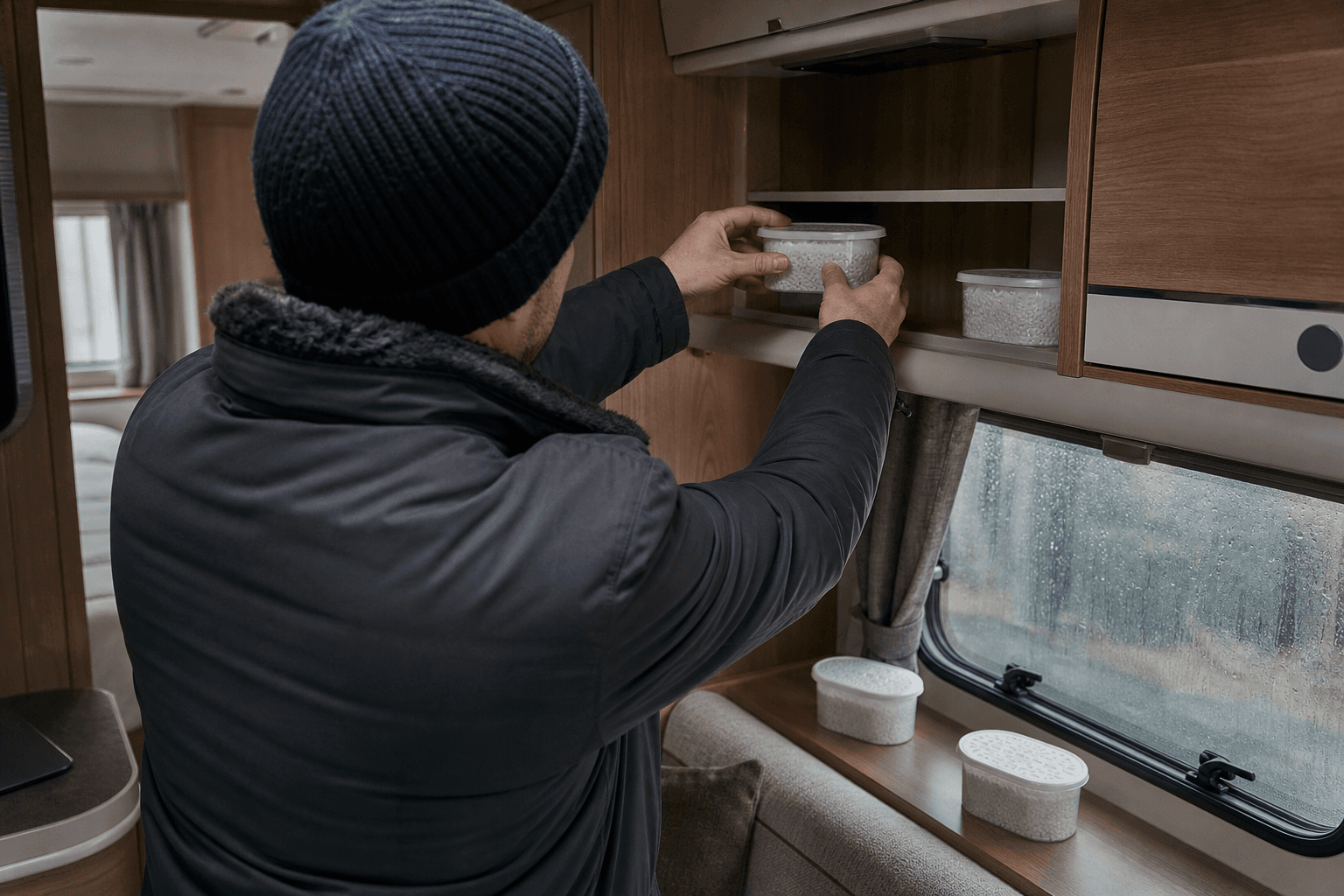
- Place moisture absorbers, such as silica gel packs, inside the van.
- Lift fixed bed bases and locker lids where possible.
- Make sure all roof lights and windows are fully closed and locked to prevent rain ingress, but leave ventilators partially open where appropriate so air can still move through the van.
Before storing, give the floors and carpets a thorough vacuum. Remove all food and perishable items, and give the interior a full clean to minimise the work needed at the start of the next season.
Gas, Electrics and the Leisure Battery
Gas must be turned off before the caravan goes into storage. Check that all appliances are off, then turn off the supply at the bottle. Gas cylinders should be stored safely and upright, and hoses should be checked for age and condition. Never store gas bottles inside the caravan living area. Always follow the instructions for your specific gas locker and regulator setup.
Switch off all electrical circuits other than any security systems that need to remain active. Cold weather is hard on leisure batteries. If the caravan is being stored somewhere without a suitable power supply, consider removing the battery entirely. Store it somewhere cool, dry and frost-free, and keep it on a maintenance charge throughout the winter to prevent permanent capacity loss. If the caravan is connected to mains power, a smart charger can keep the battery healthy without the need to remove it.
Before covering the van, lubricate external fittings. Apply silicone spray to locks, hinges and stabilisers, and cover the towing electrics and the hitch to prevent corrosion. Clean and retract the awning, ensuring it is completely dry before the van goes away for winter.
Tyres, Seals and Exterior Checks
A period of inactivity can cause flat spots to develop on caravan tyres, particularly in cold conditions. Check tyre pressure and inflate to the recommended levels specified in the caravan handbook. If the caravan will be stationary for an extended period, use wheel chocks and consider boards under the tyres to prevent moisture absorption from the ground. Use tyre covers to shield the rubber from UV deterioration and frost.
Inspect the exterior thoroughly before storage. Pay particular attention to:
- Roof lights and their seals
- Window rubbers and seals
- Awning rail areas and bodywork joints
- External service hatch seals
- Locker door rubbers
Look for cracked sealant, soft areas in the bodywork panels and any signs of water tracking. Small leaks become significant problems during a wet winter, so reseal any gaps found before storage. Check car-to-caravan electrical connectors for signs of damage and wipe electrical contacts with a water dispersant. Park the van on level, well-drained ground; avoid areas directly under trees or near dripping rooflines. If stored outdoors, positioning the nose very slightly downhill aids rainwater run-off from the roof.
Choosing a Secure Storage Site
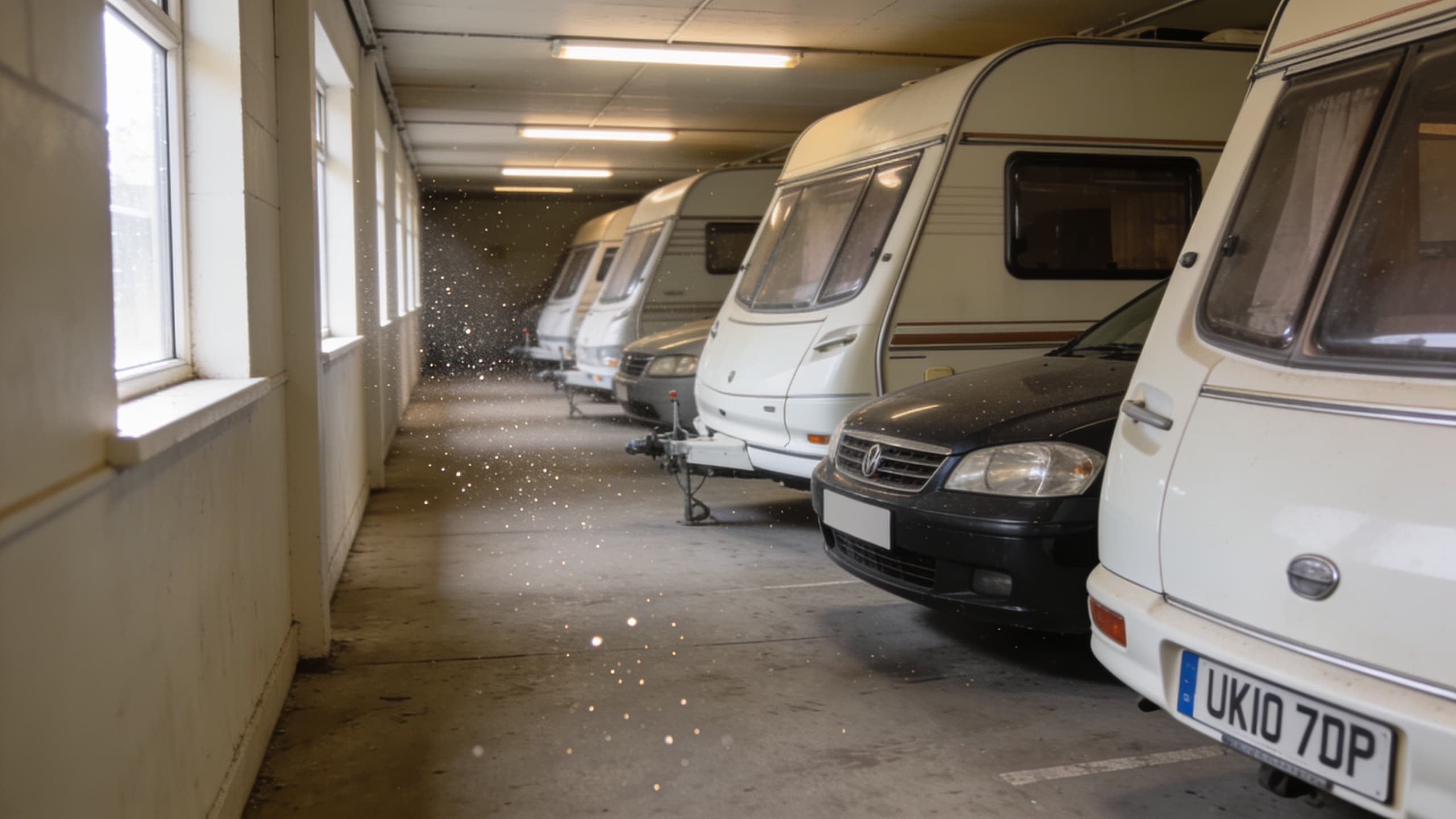
Where a caravan is kept over winter is as important as how it is prepared. The Caravan Storage Site Owners' Association (CaSSOA) is the UK accreditation body for secure caravan and motorhome storage sites, and it works with over 500 sites across the UK. CaSSOA accreditation is based on the assessment of a number of factors, including site security - perimeter fencing, access control, entry and exit systems, CCTV, alarms and fire protection - as well as on-site facilities, with accreditation based on points assessed by an independent risk surveyor.
All CaSSOA accredited storage sites are assessed for security features, access and amenities, and there are three levels of CaSSOA accredited sites: Bronze, Silver and Gold. When choosing a site, look for:
- Full perimeter fencing and lockable gates
- CCTV coverage - check whether cameras operate 24 hours a day and whether they are monitored, and confirm that coverage extends beyond the entrance
- Controlled access, ideally with electronic gates requiring a PIN or key fob
- Hardstanding or well-drained ground, which is preferable to grass for preventing chassis corrosion and damp
- A written storage contract that sets out the conditions of storage clearly
Storing at an accredited site is often rewarded by specialist insurers with premium discounts, as it reduces the risk of theft. Check the specific CaSSOA level with your insurer before committing to a site, as some policies specify a minimum accreditation level.
Owners browsing options can search locally using GetBrent's storage listings across the UK, which includes dedicated caravan facilities. Those in the south can compare options such as caravan storage in Chichester, while owners in the east of England can find sites including caravan storage in Ipswich or caravan storage in Peterborough.
GetBrent makes it straightforward to find vetted local storage providers alongside hire firms, removal companies and trades across the UK. Search the marketplace to compare caravan storage options near you and contact providers directly to confirm availability, security accreditation and current rates before committing.