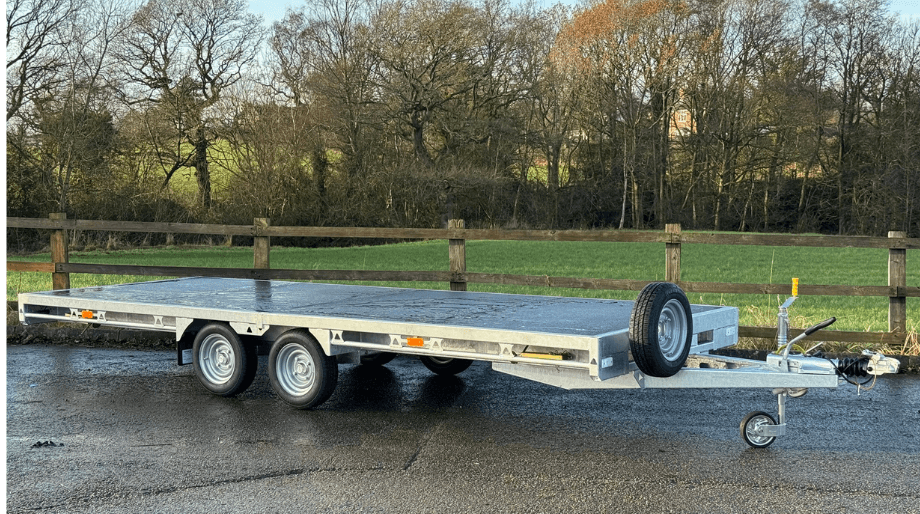
A medium plant trailer is safe to hire when you have confirmed three things: that your licence covers the combined weight, that the trailer and towing vehicle sit within their stated limits, and that the braking and coupling equipment meets the rules for the trailer's weight. Check each of these before you sign for the hire, because the consequences of getting one wrong fall on you as the driver.
Check your licence entitlement first
Your entitlement depends on when you passed your test. Trailer hire options are only useful if you can legally drive the combination you are planning. If you got your licence from 1 January 1997, you can tow a trailer up to 3,500kg MAM, which is category BE. The RAC notes that with Category BE, you can tow a trailer that exceeds the standard Category B limits, provided the vehicle and trailer are used within the manufacturer's towing limits and the trailer's maximum authorised mass (MAM) does not exceed 3,500kg.
Entitlement also depends on your test date. The GOV.UK guidance on towing with a car says the weight you're allowed to tow depends on when you got your licence. Drivers who passed before 1 January 1997 are treated differently. If you got your licence before 1 January 1997, you can usually drive a vehicle and trailer with a combined weight of up to 8,250kg MAM.
If the combination is heavier than your licence allows, you need a different category. To tow combinations heavier than your licence allows, you need to apply for a provisional licence for category C1+E and pass the lorry theory test and C1+E driving test.
Confirm the weights of the trailer and the towing vehicle
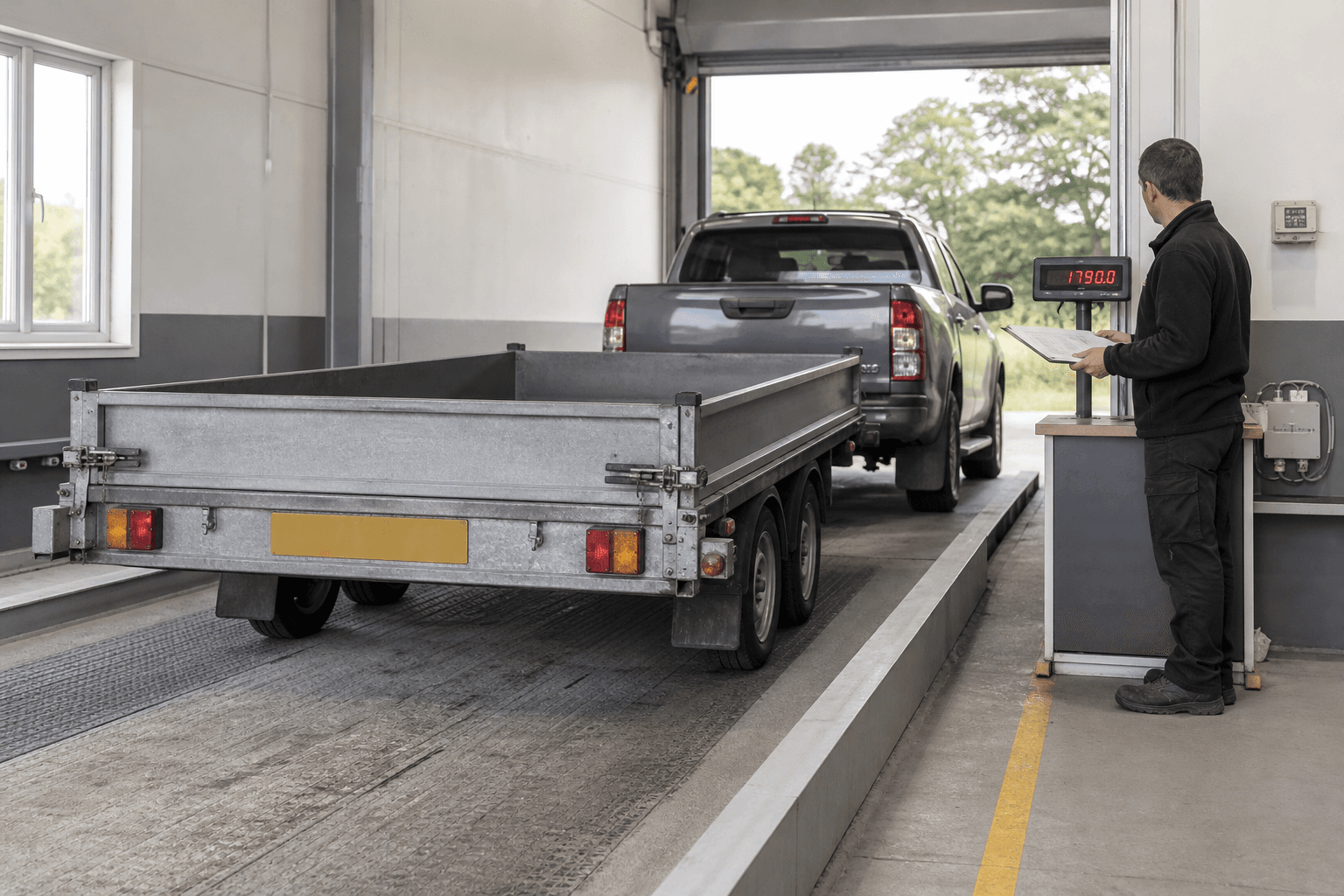
Licence entitlement is only half the picture. The vehicle has its own limits. The maximum authorised mass (MAM) of the vehicle and trailer is listed in the owner's manual and is normally shown on a plate or sticker fitted to the vehicle or trailer. Ask the hire company for the trailer's MAM and check it against the towing vehicle's figures before you collect.
Whether the trailer has brakes changes the rules. Plant trailers that carry machinery are usually braked, so the braked limits and the vehicle manufacturer's towing figure are the ones that matter.
Check the vehicle handbook as well.
Check the coupling and breakaway equipment
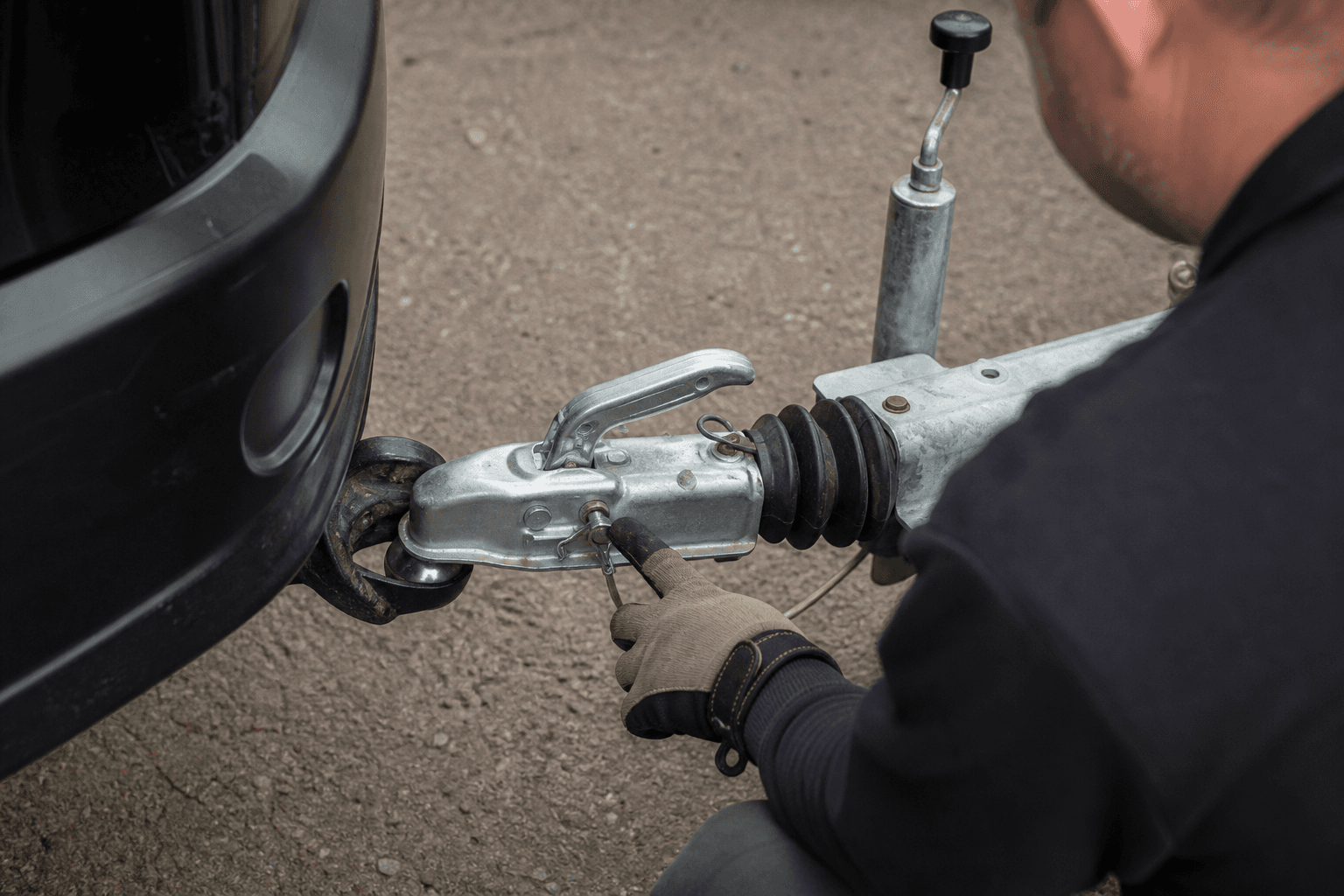
The coupling arrangement depends on the trailer's laden weight.
Use this checklist at the hire depot:
- Confirm the trailer's MAM and the gross train weight limit on the towing vehicle's plate.
- Confirm whether the trailer is braked, and check the braked towing limit in the vehicle handbook.
- Check that a breakaway cable or secondary coupling is fitted and correctly attached.
- Check the trailer's noseweight is within the car and trailer limits, and set the coupling fully engaged.
- Confirm the trailer's lights and number plate are fitted and working before you leave.
- Check that the load is secured and within the rated capacity.
Understand what drives the cost
Hire charges vary by depot, length of hire and the specification of the trailer, and they are not published as a standard figure. The factors that move the price are the trailer's size and braking specification, the hire period, whether you need a ramp, winch or ground anchor, and the distance to collect and return the trailer. Ask the company to itemise these elements so you can compare like with like, and confirm the final figure in writing before you book.
Insurance and what your own policy covers also matter. Check with the hire company and your own insurer that the combination is covered before you drive off.
Plan the route and the load
Before you set off, confirm the combined weight, the load's position and the route. If you are collecting from a depot far from your job, factor the journey into your planning. You can compare options for trailer hire in London, trailer hire in Maidstone or trailer hire in Daventry if your work spans more than one area. For sizes and specifications, see medium plant trailers on GetBrent.
Finally, keep your documents with you. Confirm the hire agreement lists the trailer's identifiers and the braking arrangement, and keep copies of the paperwork in the cab for the duration of the hire.
Find local hire companies quickly on GetBrent, where you can compare trailer hire firms by location and confirm the details, specification and pricing directly with each company before you commit to a booking.