The quickest way to remove a red wine stain from carpet is to blot it straight away with a clean white cloth, dilute it with cold water, and keep blotting from the outside edge inwards. Rubbing, heat and bleach should be avoided, because they can spread the stain or set it deeper into the fibres. Fresh spills on synthetic carpet can often be lifted at home, but wool carpets need more care and older stains are usually best left to a professional.
At a glance
- Act within minutes. WoolSafe notes that spills should be dealt with as soon as possible, because the older the stain, the harder it is to shift.
- Blot, never rub. Rubbing pushes the wine deeper and can fray the pile.
- Use cold water, not hot.
- Use only products labelled as safe for your carpet, such as WoolSafe approved products on wool. On wool, that means a WoolSafe approved product or one specified for wool.
- Call a professional for old, large or stubborn stains. This is especially true for wool carpets.
What to do in the first few minutes
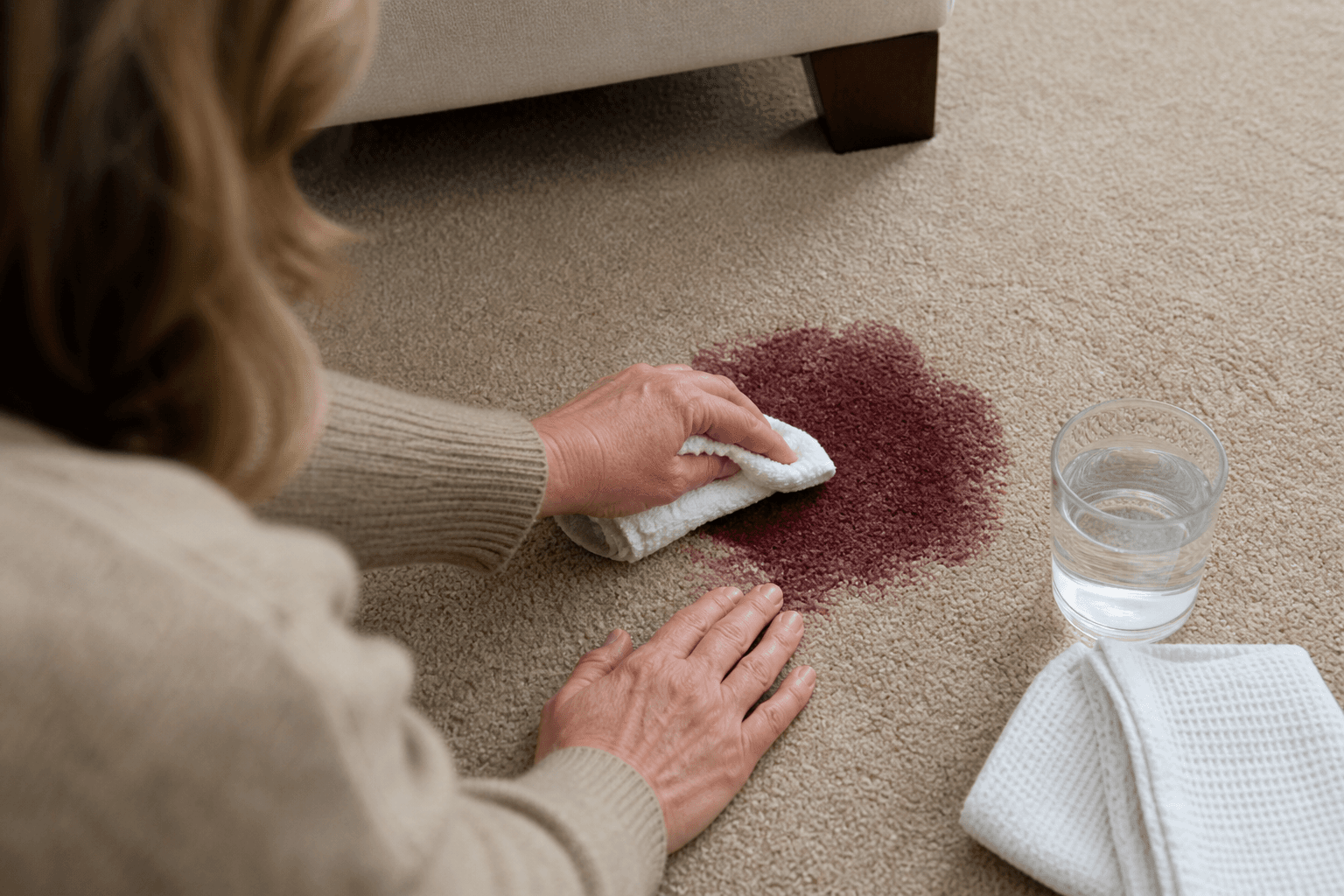
Speed matters more than anything else. Remove as much liquid as you can by pressing a clean white cloth or kitchen roll onto the stain, changing the cloth as it soaks up colour. Work from the outside of the stain towards the middle, so the wine does not spread into clean carpet.
Once most of the liquid is gone, pour a little cold water on the spot and keep blotting. Cold water is the recommended choice for diluting spills, and hot water should be avoided. Stop once no more colour transfers to the cloth, then leave the area to dry.
A practical checklist for the first few minutes:
- Grab a clean white cloth or kitchen roll. Coloured cloth can transfer dye into the carpet.
- Press, lift and press again. Do not scrub.
- Dilute with cold water, then blot again.
- Do not walk on the area until it is dry.
Treating a stain once it has dried
A dried red wine stain is harder, but it is not always lost. A common approach is to dampen the area with cold water, then apply a small amount of mild detergent or washing-up liquid mixed with cool water. Dab it on with a clean cloth, and keep dabbing until no more stain transfers.
Whatever you use, test it first on a hidden part of the carpet, such as inside a cupboard or under a piece of furniture, and wait for it to dry. Use only a small amount of product at a time, because too much liquid can soak through to the backing and leave a ring as it dries. Afterwards, rinse the area with a clean damp cloth to remove any soap residue, and blot it dry.
Which products are safe on wool and synthetic carpet
The fibre type decides what you can safely use. Wool needs gentler treatment than synthetic carpet, and the label or supplier paperwork usually tells you which fibre you have. WoolSafe states that on wool and wool-rich carpeting, only WoolSafe approved chemicals should be used, and that the carpet should be pre-tested before any wet cleaning.
The table below sets out the options most people have at home and how they compare on each fibre type.
| Product or method | Wool carpet | Synthetic carpet |
|---|---|---|
| Cold water | Yes, as a first step | Yes, as a first step |
| WoolSafe approved spotter or shampoo | Yes, when used as directed | Yes, when used as directed |
| Mild detergent or washing-up liquid, diluted | Use with care and rinse well | Yes, with a rinse |
| Diluted white vinegar | Test first, use sparingly | Yes, diluted |
| Avoid | Only on light-coloured carpet after a patch test | |
| Bleach | Never | Never |
White wine adds more liquid and sugar, which can leave the carpet sticky, and soda water works no better than plain cold water.
What never to do
Some habits make a stain worse, and they are the same whatever the fibre type. WoolSafe advises that spot removal should begin by scooping up solids and blotting up liquids first, avoiding rubbing the carpet surface. The main mistakes to avoid are:
- Rubbing or scrubbing. This pushes the stain deeper and damages the tips of the fibres.
- Using heat. Hot water, hairdryers and steam can set the stain permanently. Dry the area naturally.
- Using bleach. Bleach can strip the colour from the carpet, and bleaching agents should not be used on carpet.
- Soaking the carpet. Too much liquid can reach the backing and leave a ring.
- Using washing-up liquid on wool without a rinse. It can leave a sticky residue that attracts more dirt.
When to call a professional carpet cleaner
Many fresh spills can be dealt with at home, but some stains need a professional. WoolSafe advises that for extensive or old set-in stains, a WoolSafe Approved Service Provider can be engaged. Call someone if the stain has not lifted after a few careful attempts, if the colour of the carpet changes, or if the wine has soaked through to the underlay.
A professional is also the safer choice for valuable, patterned or deeply coloured wool carpets. If you are unsure, ask for a visit or quote first. You can compare a few quotes before you book a tradesperson to find out what is fair for your job.
Should you hire a carpet cleaning machine?
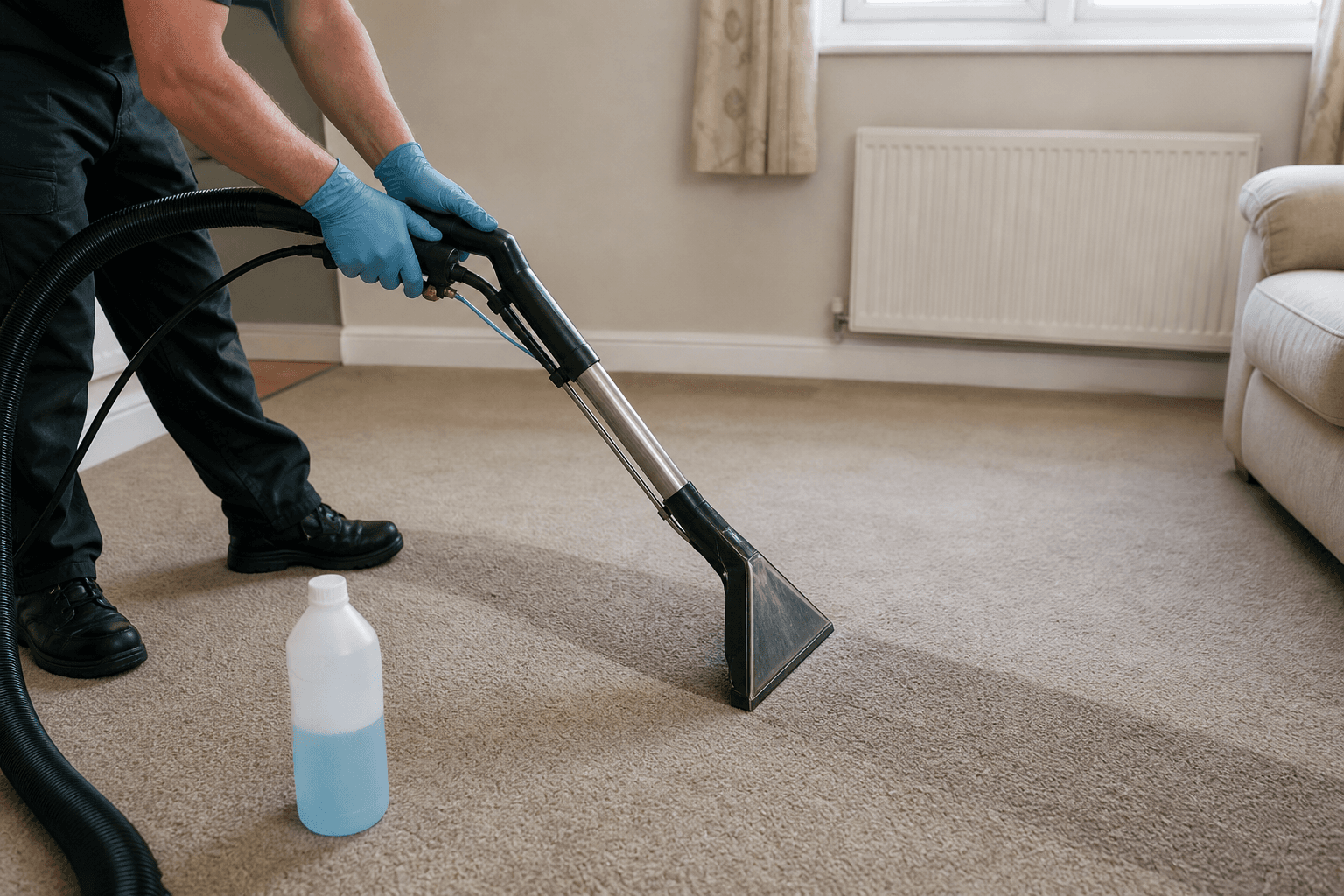
Hiring a machine suits a whole room that is lightly soiled, where you have the time to do the work and can manage the drying. A hired machine can lift loose surface dirt, but domestic equipment may not have the same extraction power as professional machinery. Renting can work well for a lightly soiled room, but a rental machine will not make up for a wine stain that has been left to set.
A machine can also be a poor choice on wool. Over-wetting the carpet is a common problem, and wool should only be treated with products approved for it. If you are unsure, a professional cleaner from our trade services directory can assess the carpet before any equipment is used.
Frequently asked questions
Can I use bleach on a red wine stain?
No. Bleach can remove the colour from the carpet and leave a permanent pale mark, so it should never be used on wine stains.
Does white wine or club soda remove red wine from carpet?
No. White wine adds more liquid and sugar, and club soda works no better than cold water, so cold water and blotting are the more reliable choice.
Should I cover a dried wine stain with a towel and wait?
No. Leaving a stain to dry makes it harder to lift, so rehydrate it with a little cold water and blot it as soon as possible.
Whether you can handle a red wine spill yourself depends on the fibre, how old the stain is and how far it has spread. Blotting fresh spills at home is a sensible job for most households, but wool carpets, large or set-in stains and valuable rugs are better left to a professional cleaner. You can find a trusted local carpet cleaner, or a hire shop for cleaning machines, on GetBrent through trade services in London and trade services in Leeds, where you can compare options before you book.