A tipper trailer can be hired legally by most drivers, but the right check is the combined weight of your towing vehicle and the loaded trailer, followed by the driving licence, tipping site, and waste paperwork. The rules below are drawn mainly from GOV.UK and HSE guidance, and where a rule differs by nation this is stated. Because the sources on towing weights and licences are GOV.UK and nidirect, the towing rules described here apply across Great Britain and Northern Ireland as set out on those pages.
Check your licence and your towing vehicle first
Your entitlement to tow depends on when you passed your car test. If you got your licence before 1 January 1997 you can usually drive a vehicle and trailer with a combined weight of up to 8,250kg MAM. That allowance is for drivers who passed before 1 January 1997. For those who passed on or after that date, GOV.UK says: "With a petrol, diesel, electric or hydrogen vehicle, you can tow a trailer with a MAM up to 3,500kg. "
To confirm what your licence allows, use the GOV.UK licence information service. GOV.UK tells holders to view their driving licence information to check. If a tipper trailer takes you over these limits, you will need additional entitlement. The Northern Ireland guidance states that the Highway Code NI (Rule 98) says that you must not tow more than your licence permits.
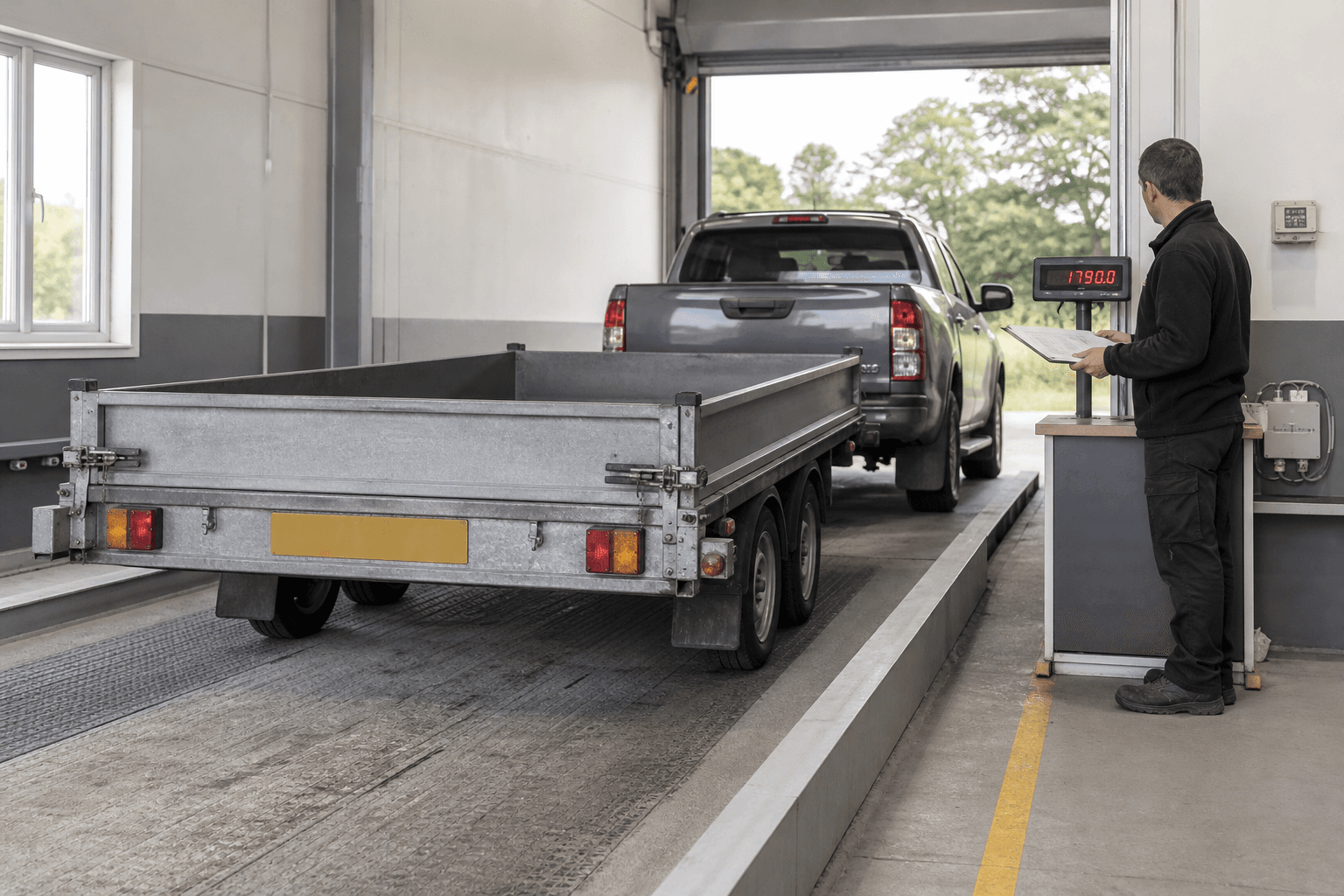
Your vehicle is the other half of the calculation. Most cars have a maximum weight they can tow, normally found in the vehicle handbook or on the manufacturer's plate as gross train weight. Check the trailer's own plate too. The MAM is normally shown on a plate or sticker fitted to the vehicle or trailer.
Understand the trailer's size and braking limits
Dimensions matter as much as weight. The maximum trailer width for any towing vehicle is 2.55 metres. The maximum length is 7 metres for a trailer towed by a vehicle weight up to 3.5 tonnes (3,500kg) (nidirect, Northern Ireland guidance).
Braking is a separate requirement. Any trailer weighing over 750kgs must have a working brake system. The Highway Code also addresses how a loaded trailer changes handling. The Highway Code NI (Rule 160) says if you are driving a long vehicle or towing a trailer give other vehicles, especially cycles and motorcycles, plenty of room. The extra length will affect overtaking and manoeuvring and the extra weight will also affect the braking and acceleration.
- Confirm the trailer's MAM and that it is not overloaded on the day.
- Check the vehicle's gross train weight on the VIN plate.
- Confirm the trailer is braked if it is over 750kg.
- Check the trailer's width and length against the limits above.
Plan the tipping site and the lift safely
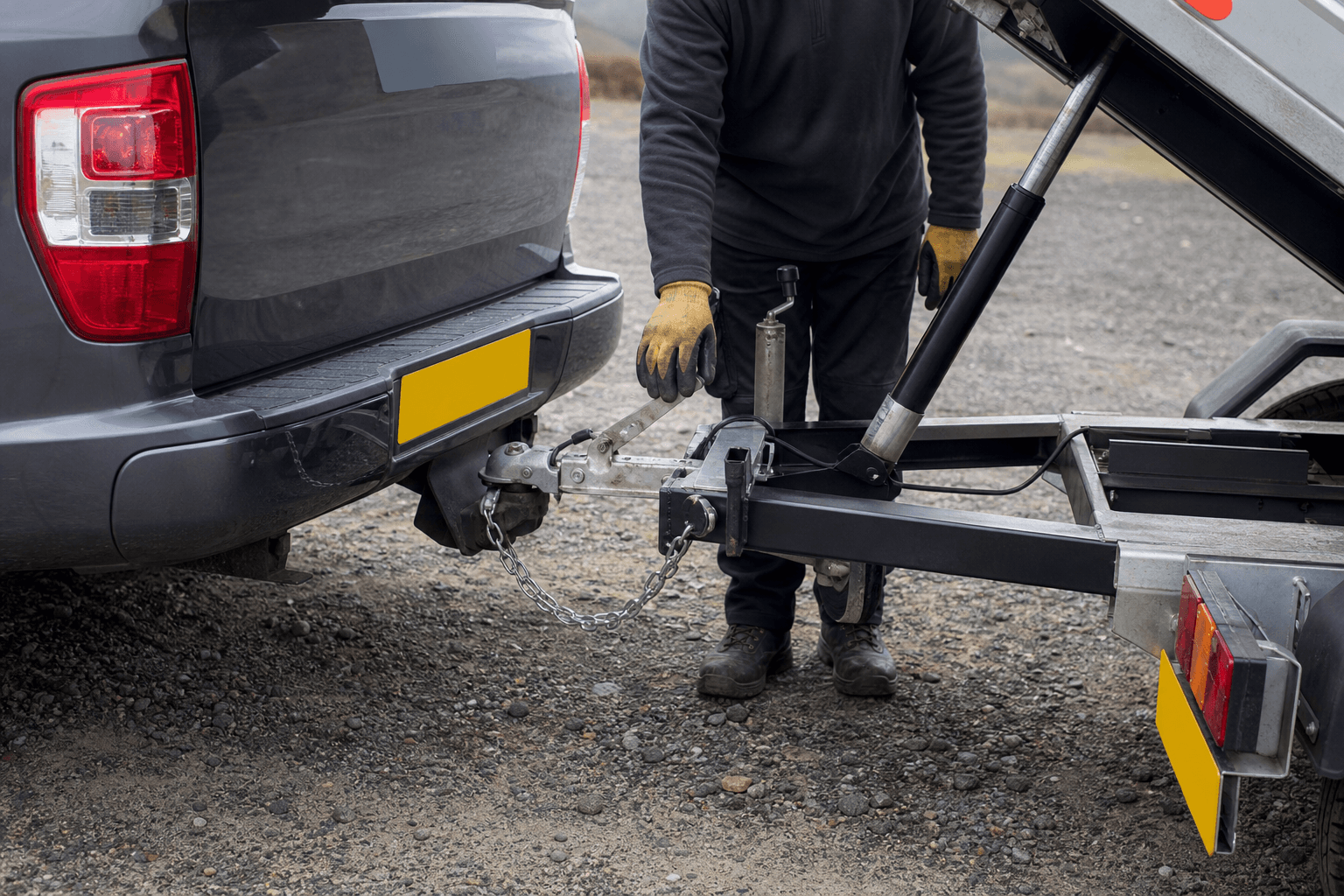
The HSE treats tipping as a hazard in its own right. Tipping can be dangerous. The site must be suitable. Tipping sites should be level, firm and stable, and clear overhead with no power cables or pipe work. Loads should be evenly distributed before tipping and only people involved in the operation should be in the immediate area.
Operating the tipping body needs discipline. Never allow anyone to stand or walk behind the vehicle when the body is raised or during tipping. The operator should not drive more than a few metres forward to make sure the load is clear, and should only do this after checking the load is at the bottom of the tipping body.
Sheeting a load on a tipper can carry a fall risk. If you are hiring a trailer for a job where you will sheet it by hand, ask the hire company how the trailer is sheeted before you book.
Check the waste paperwork if you are carrying waste
If your load is waste, the paperwork becomes a legal requirement. The duty of care is set out in section 34 of the Environmental Protection Act 1990. The duty requires reasonable steps to prevent unlawful disposal, prevent escape of waste, and ensure transfer only to authorised persons. It also requires provision of an adequate written description of the waste.
Carrier registration also matters. A waste carrier is any person who normally and regularly collects, carries or transports waste in the course of any business or with a view to profit, including those that produce and transport their own waste. The Environment Agency's public register lets you verify a carrier. You should check whether a person or business is authorised to take waste before you transfer your waste to them, for example using the public register.
Ask your hire provider to confirm what they expect from you. Most of the duties above sit with the person whose waste it is and the person moving it, so clarify this before the trailer leaves the yard.
Practical checklist before you book
- Check your licence entitlement on GOV.UK using your own licence information.
- Confirm your vehicle's gross train weight on the VIN plate and the trailer's MAM on its plate.
- Check the trailer is braked if it weighs more than 750kg.
- Check the trailer's width (2.55 metres maximum) and length against the limits.
- Confirm the tipping site is level, firm and clear of overhead hazards.
- If the load is waste, confirm the carrier's registration and keep the waste transfer paperwork.
- Ask about sheeting arrangements and the trailer's condition before collection.
Confirm the figure directly with the company before you commit, and check whether the rate includes insurance, delivery, and any waste disposal.
Once you know what you need, you can compare trailer hire options across the UK or look at tipper trailers specifically. If you are working in a particular area, trailer hire in London and trailer hire in Maidstone are good places to start a local search.
GetBrent lists hire companies across the UK, so you can find a local tipper trailer provider, compare what they offer and confirm the details that matter for your job before you book. Start your search on GetBrent to find trailer hire firms near you.