Before you book tow truck hire, check that you are legally allowed to tow the vehicle you need to move, that your own vehicle and licence are suitable for the combination, and that the operator can meet the safety requirements that apply. The rules below are drawn from GOV.UK and the Highway Code and apply in Great Britain and Northern Ireland. Where a rule differs between nations, the article says so.
Check your licence and the weight limits
If you are the one driving a towing vehicle, the first thing to establish is what your licence allows. GOV.UK states that you can tow trailers up to a certain weight with your car driving licence , and that the weight you're allowed to tow depends on when you got your licence . Your driving licence information shows which categories of vehicle you are allowed to drive, and if you do not have 'category BE' on your physical driving licence, DVLA will add this the next time you renew your licence.
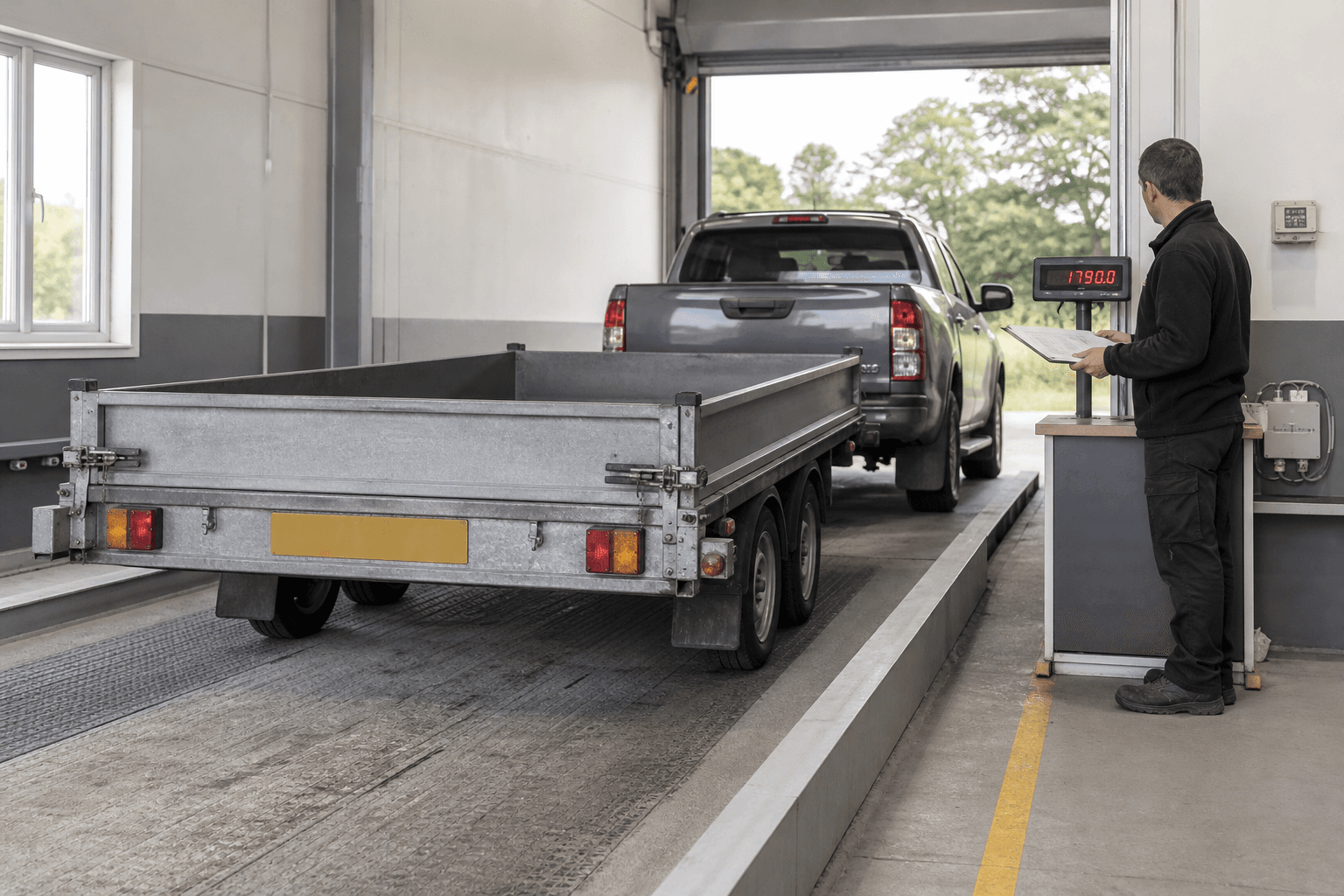
The Highway Code sets the legal limit in plain terms. Under rule 98, drivers MUST NOT tow more than their licence permits, and if you passed a car test after 1 Jan 1997 you are restricted on the weight of trailer you can tow . The Highway Code also says you MUST NOT overload your vehicle or trailer, and you should not tow a weight greater than that recommended by the manufacturer of your vehicle .
Northern Ireland has its own licensing rules, which NIDirect sets out separately. For a licence issued in Northern Ireland after 1 January 1997, NIDirect notes that drivers who passed a car test on or after 1 January 1997 but before 19 January 2013 need to pass a further driving test to gain entitlement to category B+E (Car and Trailer combinations) and also for all larger vehicles. Drivers in Northern Ireland should check their own entitlement on NIDirect rather than relying on the Great Britain position.
Manufacturer limits matter as much as the licence. NIDirect explains that vehicle manufacturers normally recommend a maximum weight of trailer proper to their vehicle. Towing limits are normally found in the vehicle handbook or specification sheet.
Check the trailer and the towing equipment
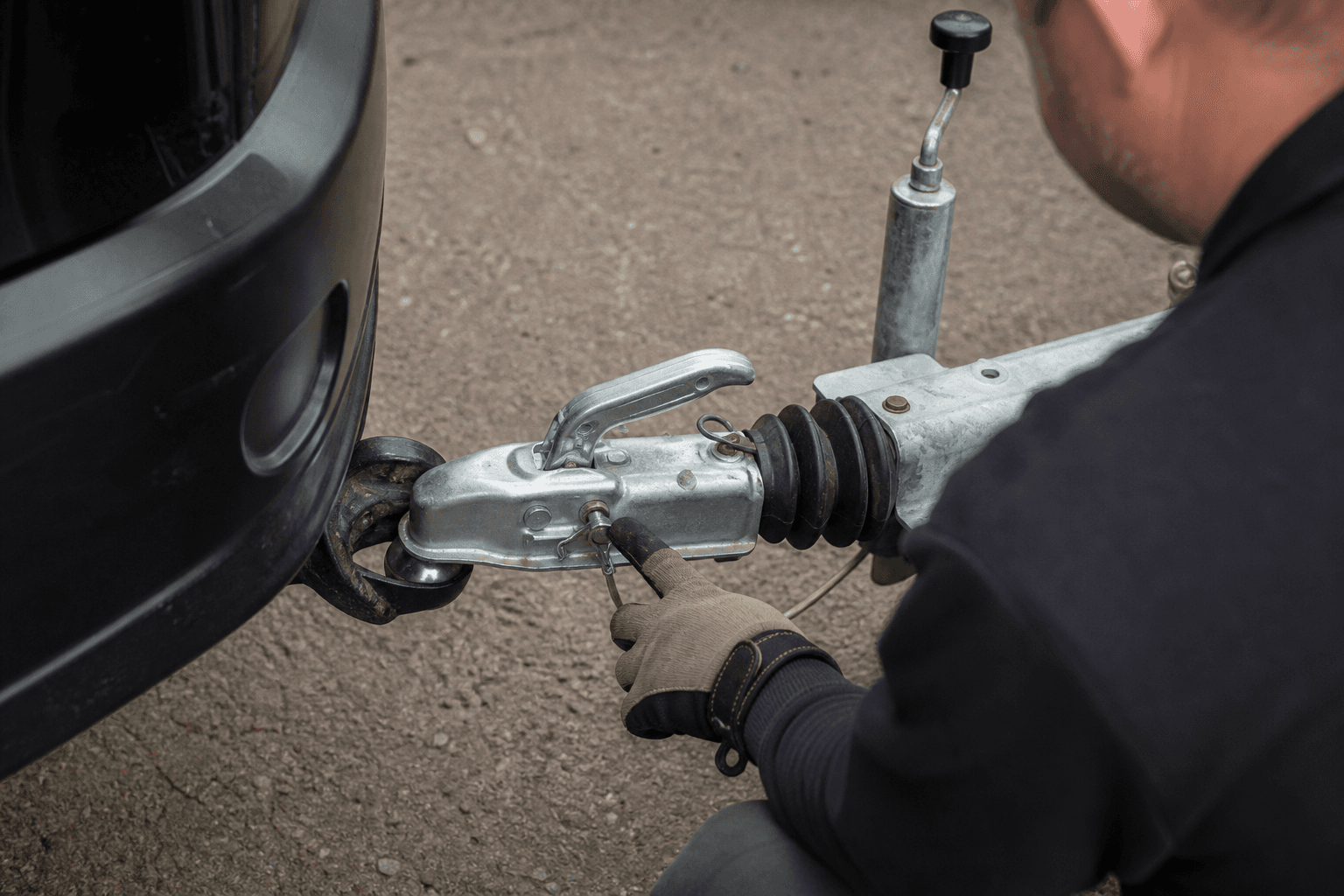
The equipment has to meet legal standards as well as the weight limits. GOV.UK states that the equipment used with a trailer or caravan must meet certain safety standards and be used correctly. On tow bars, GOV.UK says that if you get a tow bar for your car, it needs to be 'type approved'. NIDirect makes the same point, noting that towing bars need to be 'type approved'.
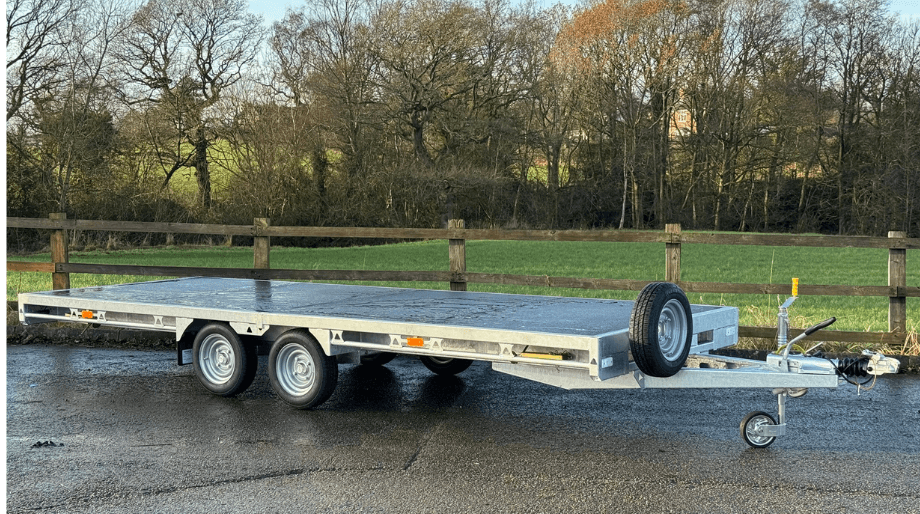
The Highway Code sets out several equipment requirements that apply to the towing vehicle and trailer. A driver MUST ensure that both your vehicle and your trailer are in a roadworthy condition. The Code adds that you MUST check that all tyres are legal, the trailer braking system is in full working order and all trailer lights are working correctly . It also states that your trailer MUST be fitted with a secondary coupling device, such as a safety chain .
If a trailer is wider than the rear of the towing vehicle, the rules on mirrors apply. The Highway Code says that if your vehicle is narrower than your trailer or load, or your trailer or load obstructs your rearward view, then towing mirrors MUST be used . NIDirect adds that if your caravan or trailer is wider than the rear of the towing vehicle, you may need to fit suitable towing mirrors.
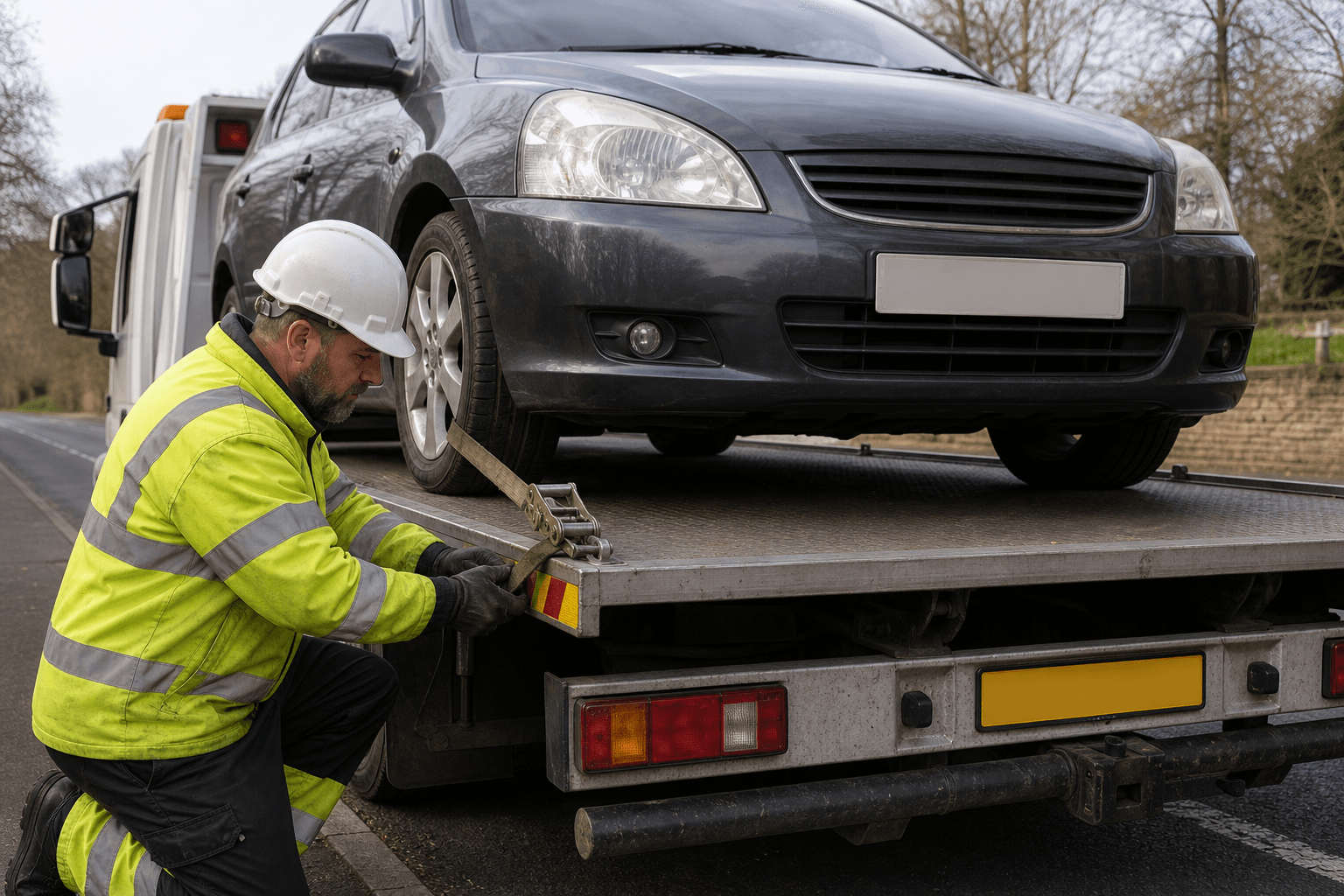
Load security is also a legal requirement. The Highway Code says you MUST secure your load and it MUST NOT stick out dangerously. For a recovery job, ask the operator how the disabled vehicle will be secured and what equipment will be used.
Check the operator and the job
Not every vehicle used for recovery needs the same paperwork. Ask the operator which licence rules apply to their vehicle and your job.
Ask the operator directly about these points before you agree a job:
- Whether the tow truck is the right type and weight for the vehicle being moved, and whether it is used only for recovery work.
- Whether the driver holds the correct licence category for the truck, which depends on the truck's weight.
- Whether the vehicle being recovered can roll, because this decides what equipment is needed. Keeping the tow eye or tow hook ready can also speed up the set-up.
- Whether the operator carries suitable insurance for the work.
What drives the cost
The main factors are the type and weight of the truck needed, the distance involved, the condition of the vehicle being moved, and whether the job is an emergency roadside call or a planned transfer. A heavier vehicle or a vehicle that cannot roll usually needs more specialist equipment, and that is reflected in the quote. Ask for a written price that states what it covers, including any call-out or mileage charges.
Practical checklist before you book
- Check your own driving licence entitlement on GOV.UK and confirm it covers the combined weight.
- Confirm the towing vehicle's manufacturer limits in the handbook or specification sheet.
- Check the trailer or tow truck has working brakes, lights and tyres, and a secondary coupling.
- Confirm tow bars are type approved and mirrors are fitted where required.
- Ask the operator to confirm the vehicle is being used for recovery and that the driver's licence matches the truck.
- Get the quoted cost in writing and confirm the figure with the company.
Once you know what you need, you can compare local options.