Flammable liquids and waste are two storage risks covered in the HSE, Environment Agency and GOV.UK guidance reviewed here. This article draws only on HSE, Environment Agency and GOV.UK guidance. For a wider view of options, see our storage category.
Flammable liquids
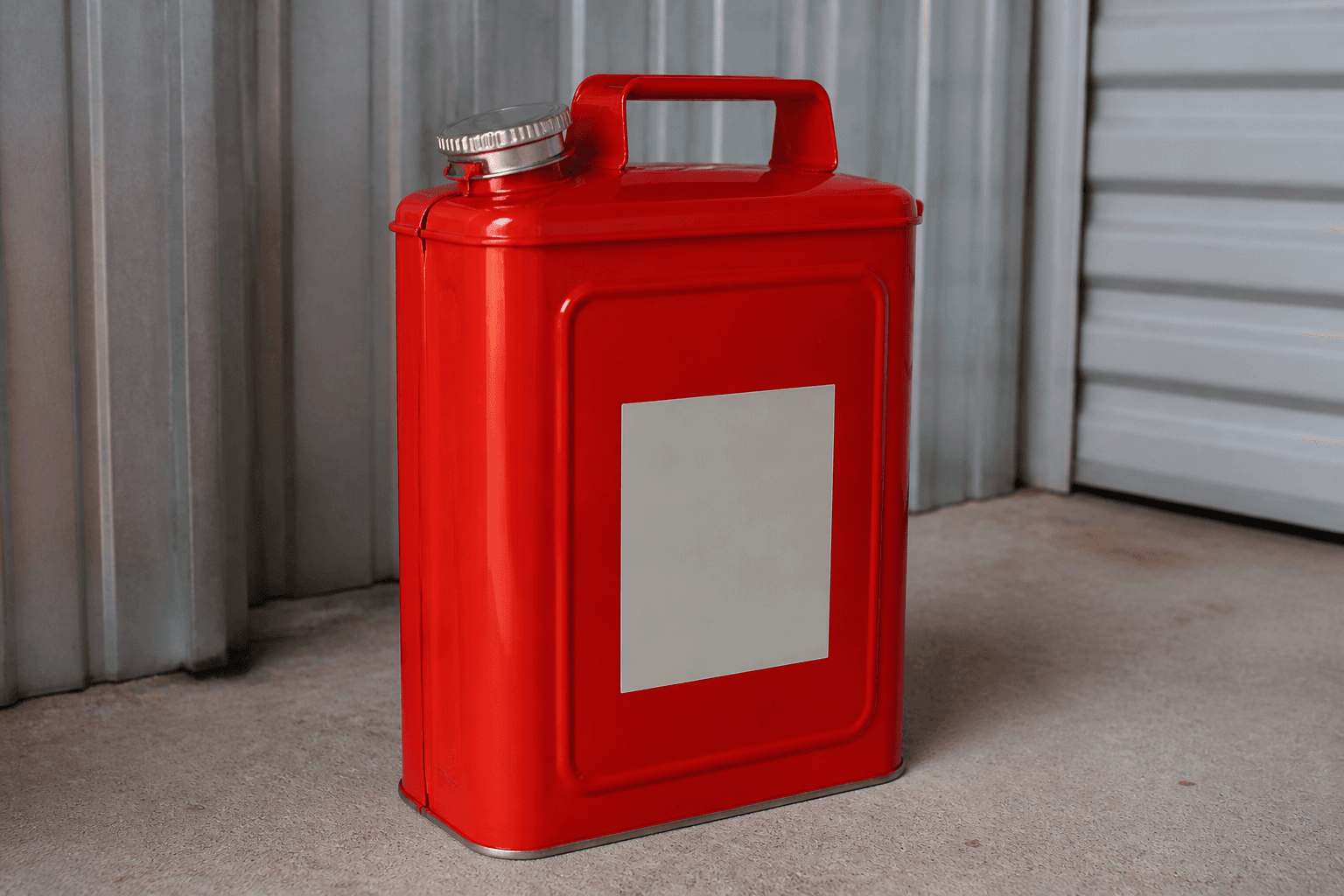
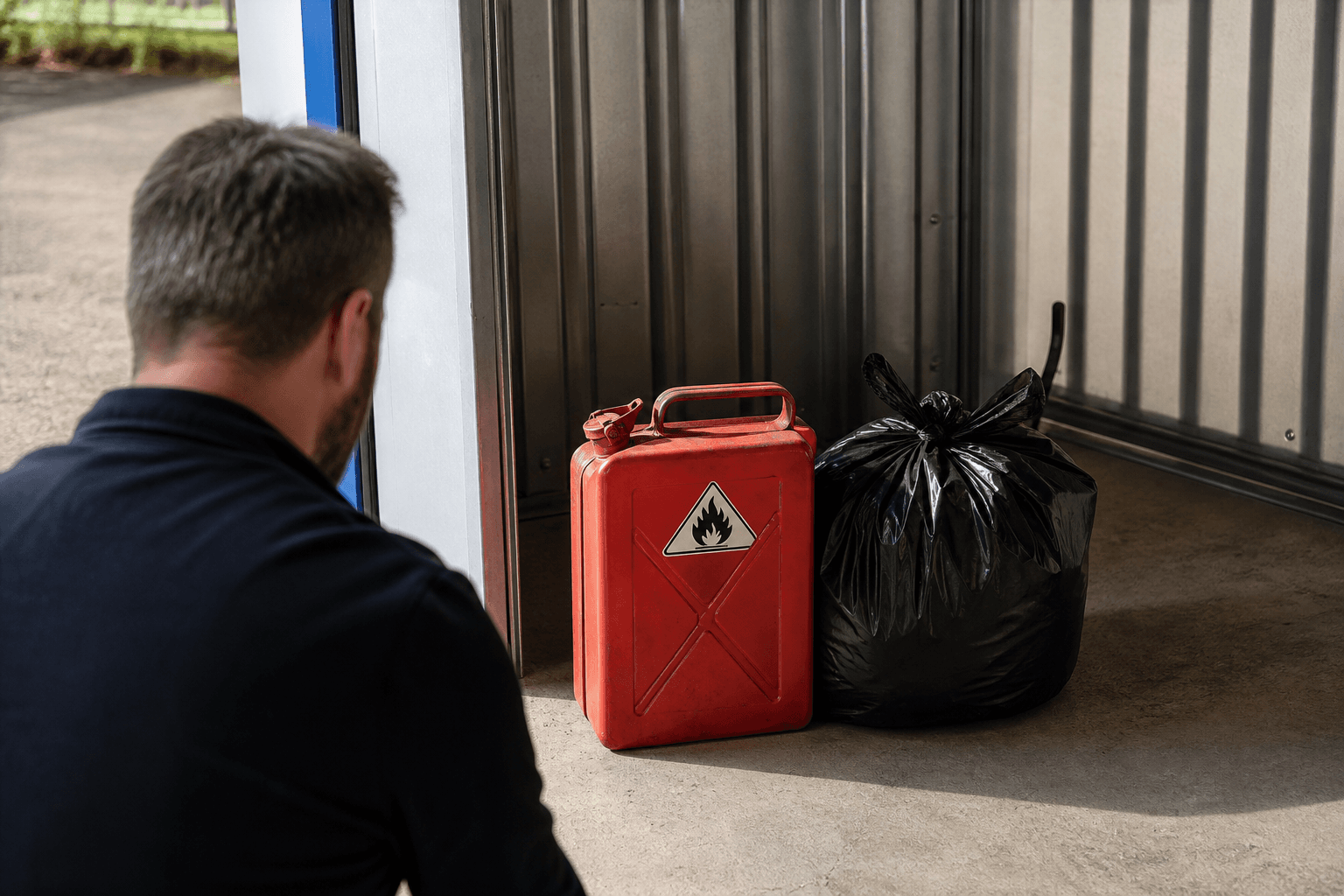
HSE guidance indicates that a workroom may hold small quantities of flammable liquids in a fire-resisting cupboard or bin, and that the outside of that cupboard should be marked to show it contains flammables. Small quantities of flammable liquids may be stored in the workroom in a fire-resisting cupboard or bin. Mark the outside of the cupboard or bin to show it contains flammables Larger quantities are directed to open air, an outside store, or a separate fire-resisting room built to the guidance in L138, the Approved Code of Practice under the Dangerous Substances and Explosive Atmospheres Regulations 2002. Store larger quantities of flammable liquids either in the open air or in an outside store or in a separate fire-resisting room
The same HSE page says smoking should not be allowed, particularly where flammables are kept, and that storage areas need low-level ventilation to disperse heavy vapours. Smoking should not be allowed, particularly in any area where flammables are stored It also advises keeping oxidising agents away from reducing agents and from flammable and combustible materials. Store oxidising agents away from reducing agents and from flammable and combustible materials This guidance is written for workplaces, so it shows the standard to aim for rather than a complete rulebook for a storage unit.
Waste
The Environment Agency states that many waste activities, including storing waste, require an environmental permit and are regulated by the Agency. many waste activities, such as recycling, treating, storing and disposing of waste, require an environmental permit and are regulated by the Environment Agency The company or organisation that operates a waste site is responsible for complying with that permit. The company or organisation that operates a waste site is responsible for complying with its environmental permit.
GOV.UK guidance for land managers states that they have a legal duty of care to make sure their waste does not harm the environment. You have a legal duty of care to make sure your waste does not harm the environment, such as pollution of surface water or groundwater. The same guidance lists storing waste among the waste exemptions that must be registered with the Environment Agency before the activity starts. You must register each of these waste exemptions with the Environment Agency before you carry out the activity. If you are looking for a unit in the capital, see self storage in London.
Checks before you pack
Work through this list before you load a unit or pass waste to anyone else.
- Set any flammable liquids aside from the general load, and ask the operator how it handles them before you bring them in.
- Keep oxidising agents apart from flammable and combustible materials, as HSE advises.
- Do not allow smoking near anything flammable.
- Check that any waste carrier is registered before you hand over your waste.
- Check that any site taking your waste is a registered exempt site or a permitted site.
Confirm any charge directly with the company or council, because costs depend on the site, the load and the service required.