Both parties have duties, and knowing where the line falls helps you check the right things before you collect a machine from a depot or accept a delivery. The rules described here come from the Health and Safety Executive (HSE) and apply in Great Britain, so they cover England, Scotland and Wales.
What the hire company must do
Those duties include the maintenance of all work equipment, the inspection of equipment which may be subject to deterioration, and the statutory examination of certain equipment .
What the person hiring it must do
HSE says that those hiring out work equipment must ensure it is safe to use at the point of hire. You should also make reasonable attempts to find out what the equipment will be used for and provide advice on how it should be used. The safe use of the equipment is the responsibility of the person who hires it.
Day-to-day pre-use checks are normally the user's responsibility unless the hire agreement says otherwise. Unless part of the hire agreement, those hiring out work equipment can't normally be responsible for the day-to-day and other pre-use safety checks which should be undertaken by the user. Read the hire agreement to see whether any pre-use checks are included.
The hire company also has a limit. HSE notes that those hiring out equipment do not have to go into the detailed design of that equipment or enhance its safety beyond the requirements of the relevant product supply legislation , provided the product carries the right conformity marking and comes with instructions.
Responsibility for damage and care while you have it
Hire is a different relationship from a sale. Bromley Council's guidance says that the trader remains the owner of hired goods, and you do not have the right or the option to buy them. Check the damage and loss terms in your hire agreement before you sign, as these set out what you pay if something goes wrong.
Practical checklist before you take the equipment
- Tell the depot what the job is, so it can confirm the equipment is suitable.
- Ask whether any pre-use checks are included in the hire agreement, and carry out the ones that are not.
- Look for the conformity marking and instructions, and ask for them if they are missing.
- Check the equipment is in good condition, with guards and safety devices in place and working.
- Ask whether lifting equipment has a current thorough examination before you use it.
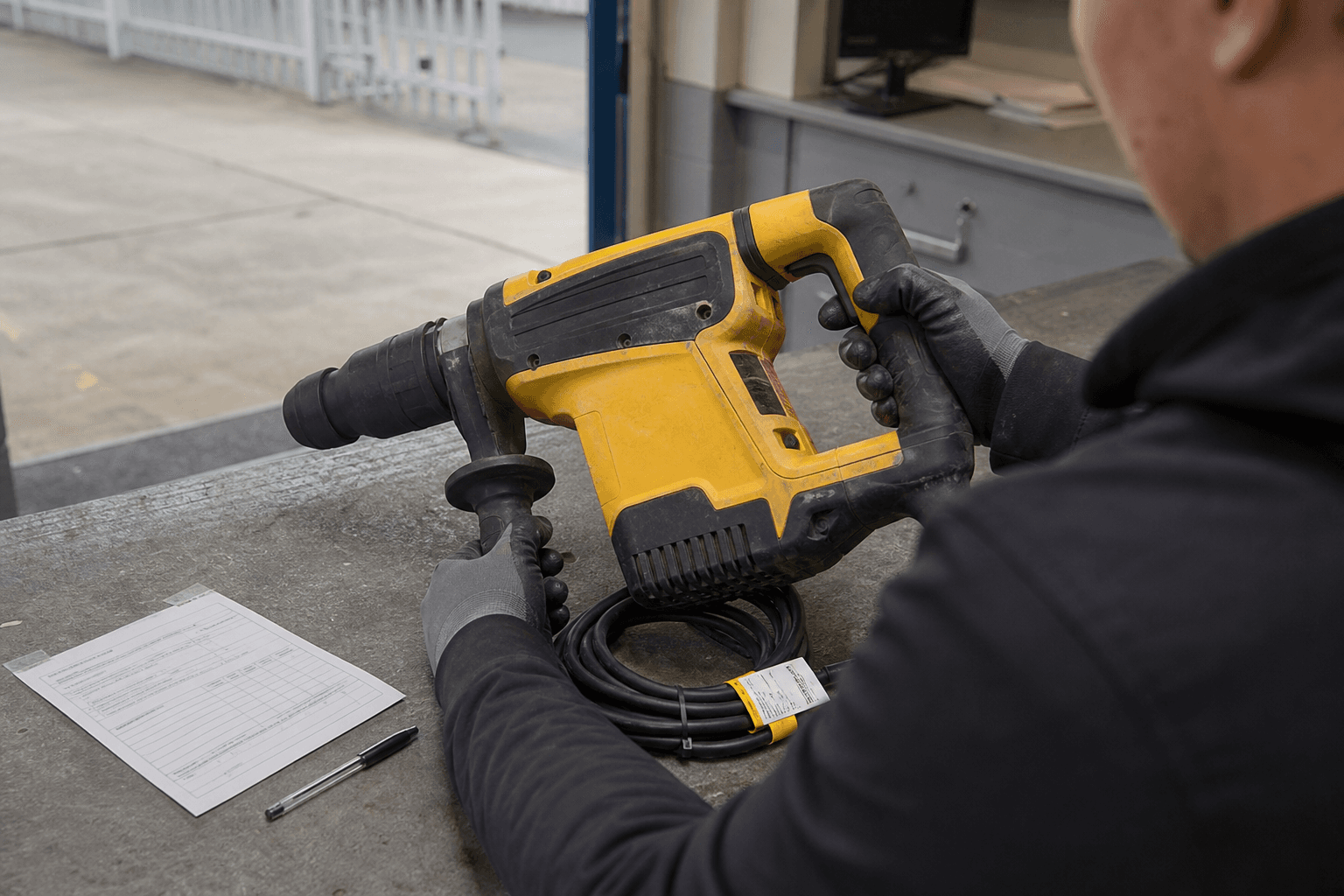
- Check the damage, loss and breakdown terms, and note any existing marks on paperwork at collection.
- Report any fault to the hire company straight away and do not attempt repairs yourself.
Some businesses also check hire paperwork more closely when they book. If you are hiring for work, you can use a dedicated tool hire category to compare what each firm offers before you call.
Where the rules differ
The HSE guidance above applies in Great Britain. In Northern Ireland, HSENI states that all suppliers must supply safe work equipment, whether this is new, second-hand or hired out. Local depots in London, Enfield and Harrow are listed on GetBrent, for example tool hire in London, tool hire in Enfield and tool hire in Harrow.
Finding the right depot is easier when you can compare them side by side.