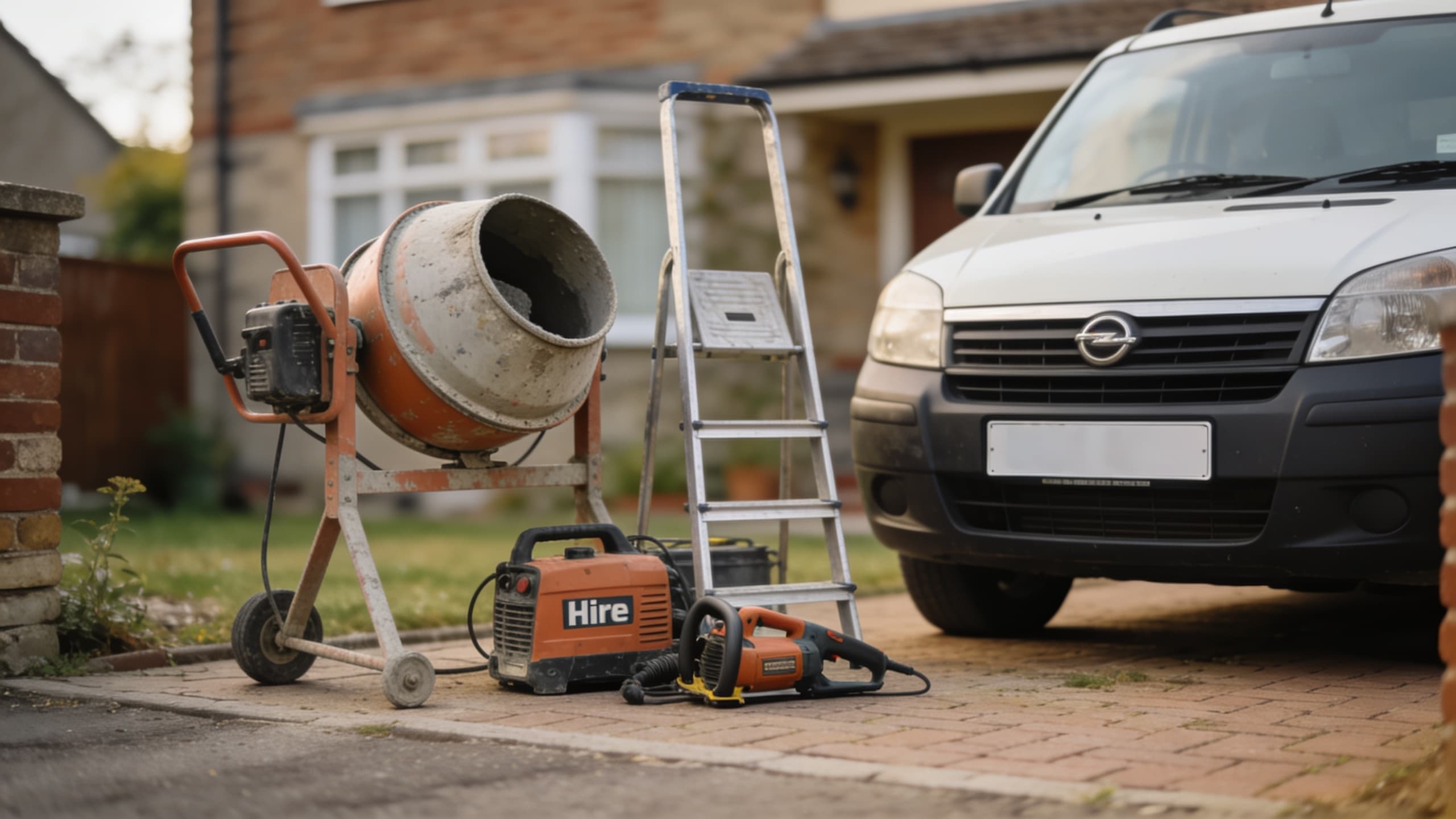
Delivery and collection charges on hire are fees added to your rental agreement to transport equipment to and from your location. They vary based on distance, item weight or size, vehicle type needed, and your postcode. Most hire companies calculate these separately from the daily or weekly rental rate, so it is essential to confirm the total cost before you commit.
What are delivery and collection charges?
When you hire equipment - whether a skip, scaffolding, power tools, a van or a storage unit - the hire company's quoted rate usually covers only the rental period itself. Delivery and collection charges are additional fees that cover the cost of transporting the item to your address and, when the hire ends, bringing it back to the depot.
These charges are not optional on most items. A skip cannot be left on a public road without a permit, and a hired van must be returned by the agreed date. The hire company builds transport costs into its business model, so these fees apply to nearly all orders.
The key distinction is that hire rates and transport charges are typically quoted separately. A tool might hire at one rate per day, but the delivery to your site and collection afterwards will be charged on top. This separation means you need to ask for and review both figures before you book.
What factors affect delivery and collection costs?
Delivery and collection charges are not fixed across the UK. They depend on several practical factors:
- Distance from the depot. The further your location from the hire company's base, the higher the charge. A postcode in central London will typically cost less to serve than a rural area 50 miles away.
- Item size and weight. A large skip requires a specialist vehicle and crew, so collection costs more than returning a handheld power tool. Heavier plant needs larger vehicles and more fuel.
- Access to your site. If a vehicle cannot reach your property - for example, if a skip must be positioned on a narrow residential street or a storage unit delivered up several flights of stairs - the hire company may charge extra or decline the job.
- Vehicle type required. Collecting a skip uses a different vehicle from collecting a tool, so costs differ. Removals firms may charge based on the number of staff and van size needed for your specific load.
- Urgency and timing. Standard delivery windows are usually cheaper than next-day or out-of-hours slots.
- Local regulations. If your address requires a skip permit from the local council, you may bear the permit cost separately, though some hire companies factor this in. Councils set their own fees, so the total cost varies by area.
How to compare quotes and avoid surprises
Because delivery and collection charges vary, it is important to gather full quotes from multiple companies before deciding. Here is a checklist to help:
- Provide your full postcode and site address to each company. Vague addresses lead to inaccurate quotes.
- Confirm whether the quote includes VAT. Some companies quote before tax; others include it.
- Ask for delivery and collection charges as separate line items, not rolled into a single total.
- Check whether access charges apply. If your property is difficult to reach, ask if there will be an extra fee.
- Confirm the delivery window. A specific day is better than "sometime next week", because delays can affect your project schedule.
- Ask whether the hire company or you must arrange a skip permit or parking permit. Clarify who pays.
- Request the quote in writing, either by email or through the hire company's website. Do not rely on a phone estimate alone.
- Check the cancellation and modification terms. If you cancel close to the delivery date, you may still be charged.
Once you have quotes, calculate the total cost of hire plus delivery and collection together. A company with a cheaper daily rate might be more expensive overall if its transport charges are high, or vice versa.
Special considerations for vans, removals and site equipment
Van hire and removals work differently from tool or skip hire. A van rental typically includes a mileage allowance, so you collect the van yourself and return it to the depot. Collection and delivery by the hire company is not standard and is usually not offered. However, removals firms do charge for labour and vehicle use together, and these costs depend on the job size and distance.
For plant and tool hire, companies may offer different delivery options - for example, site delivery only, collection only, or both. Ask which is included in your quote. Some tool hire companies in London offer rapid delivery to nearby postcodes; others may not deliver at all and require you to collect and return items yourself.
For heavy equipment, the hire company or the HSE (Health and Safety Executive) may require the operator or site supervisor to confirm that the equipment can be safely positioned and used at your location. Delivery may be delayed if the site is not ready, and the hire company may charge you for a wasted trip.
Finding local hire companies on GetBrent
GetBrent.co.uk connects you with local hire companies, removals firms and clearance specialists across the UK. When you search for equipment or services in your area, you can request quotes from multiple providers at once and compare delivery charges alongside rental rates. Always confirm the full cost, including transport fees, before confirming your booking with the company.