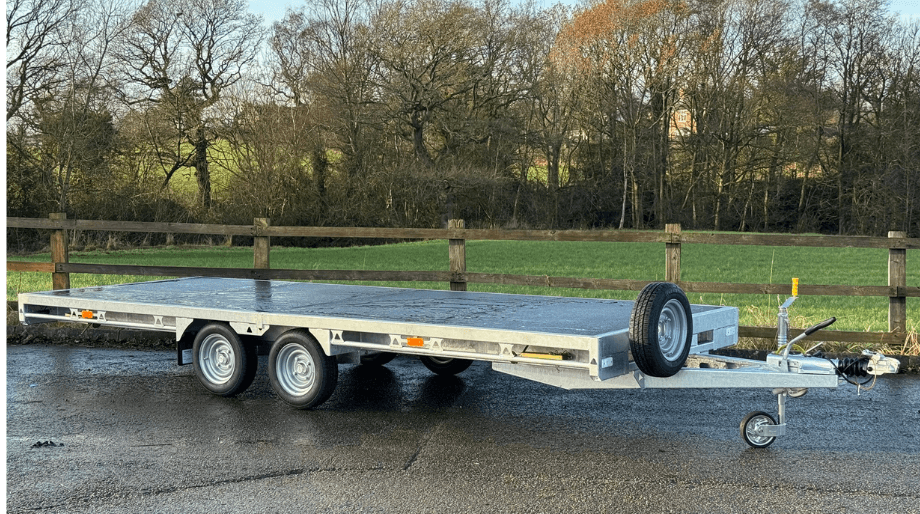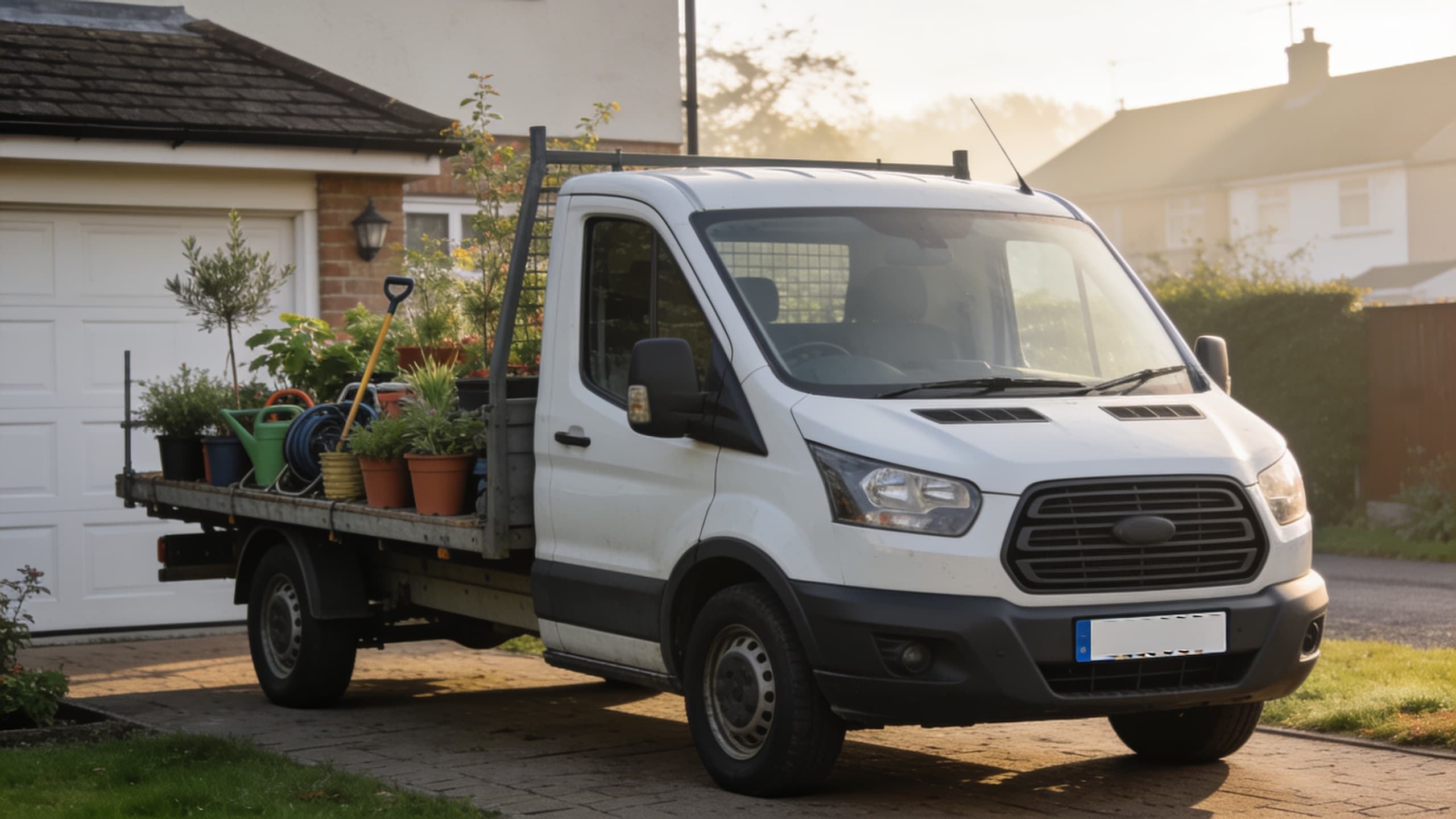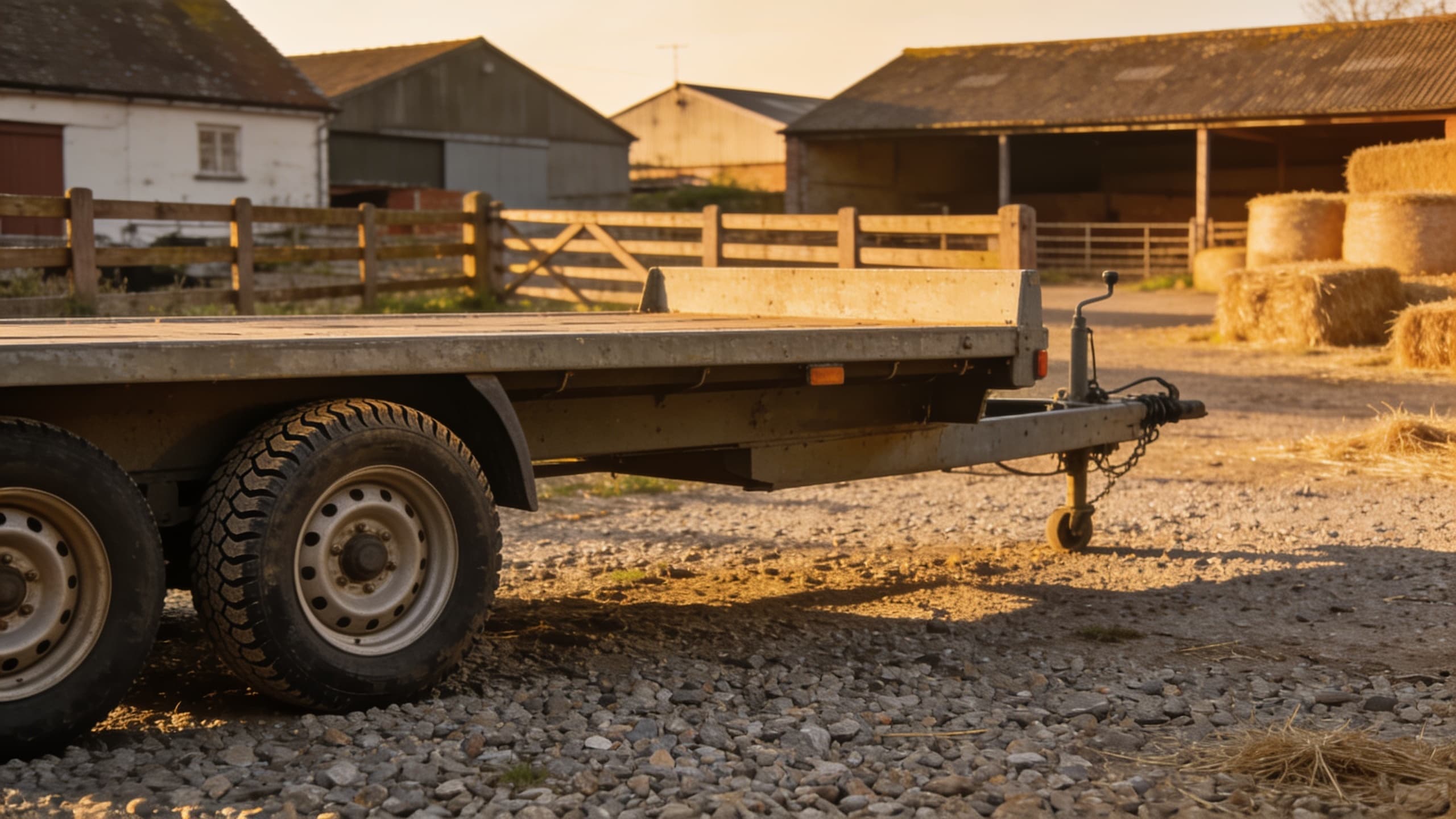
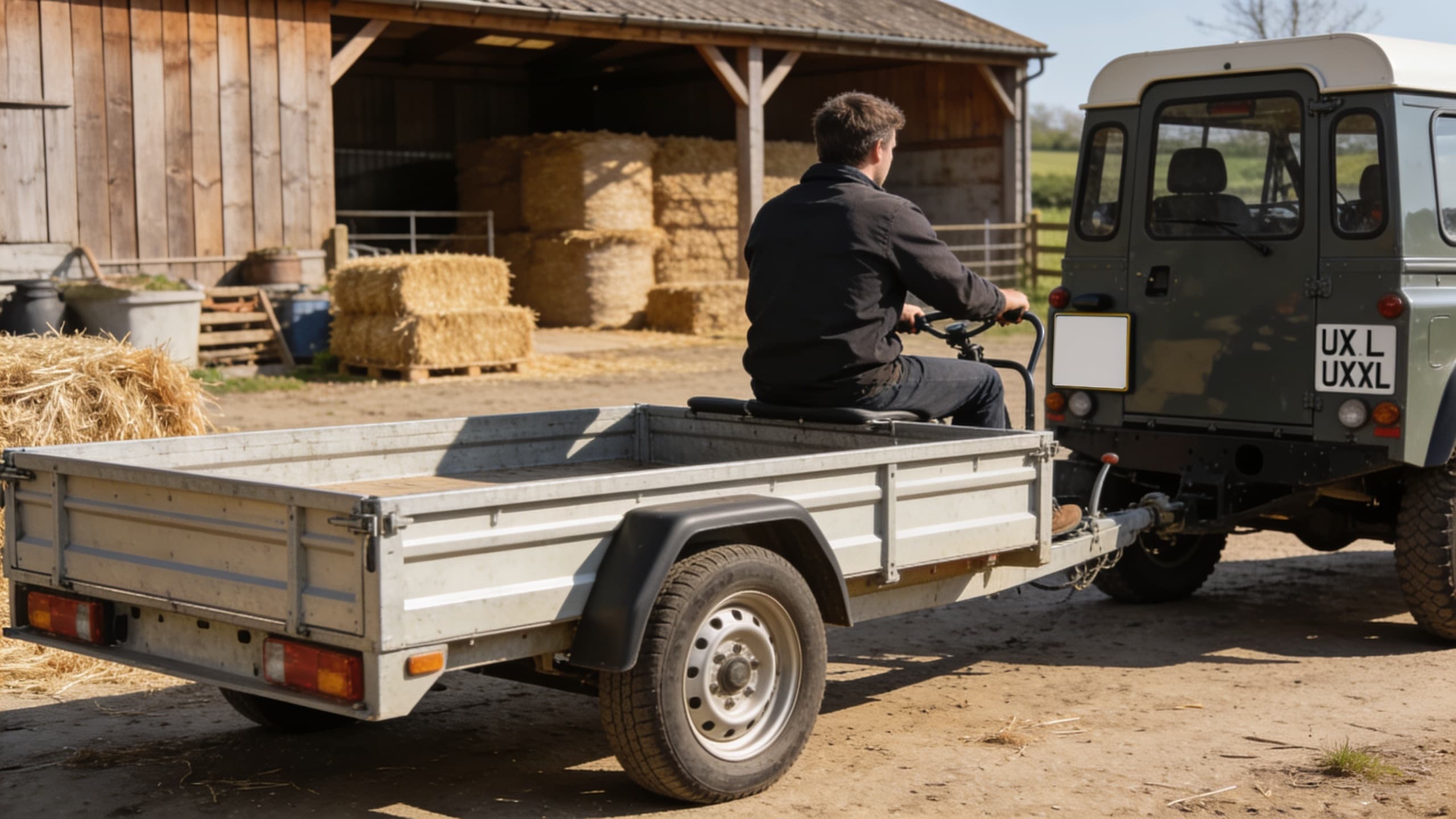
A flatbed trailer is one of the most flexible hire options for moving goods, materials or equipment, but booking one without checking the right details can lead to legal problems, unsafe loading, or unexpected costs. Several key areas need verification before confirming a hire.
Check the Weight and Dimension Limits
Every flatbed trailer has a maximum Gross Vehicle Weight Rating (GVWR) and a towing capacity. These figures are fixed and non-negotiable - they appear in the trailer's documentation and must be respected regardless of how much space remains on the bed.
You must also confirm the overall length, width and height of the bed itself. If the trailer is hired to carry materials, equipment or waste, overhanging or oversizing the load beyond the trailer dimensions is not only unsafe but can breach traffic law. The DVSA and Highway Code set out strict rules on load security and overhang limits.
Ask the hire company for the exact dimensions and weight limits in writing. If you are moving items that are close to the limit, weigh them or estimate their weight carefully. An underestimate can result in an unsafe journey and potential prosecution.
Verify Your Driving Licence Category and Insurance
The category on your UK driving licence determines what you are legally permitted to tow. If your licence was issued before December 2021, you may have access to higher towing categories than someone issued a licence more recently. Check your DVLA licence photocard or online record to confirm which towing categories you hold.
Different trailer and vehicle combinations require different licence categories. Hiring a flatbed without confirming you can legally tow it will invalidate your insurance and expose you to prosecution. The DVSA enforces these rules and takes breaches seriously.
You must also inform your vehicle insurance provider that you intend to tow a hire trailer. Some policies exclude trailer towing entirely; others require advance notification or a specific endorsement. Towing without proper cover is a criminal offence and will not be covered if an accident occurs.
Inspect the Trailer Condition and Documentation
Before the trailer leaves the hire depot, it must have a valid MOT certificate and be properly taxed. The hire company is responsible for these, but you should confirm both are current by asking to see the documents. A trailer without a valid MOT cannot legally be used on the road.
Check the physical condition of the bed, straps, corners and undercarriage for signs of damage, rust or wear that might affect safe loading or towing. Look at the tyres for adequate tread depth and pressure, and inspect the lights and reflectors are working. Document any existing damage with photographs before you leave the depot - this protects you against being charged for pre-existing wear when the trailer is returned.
Ask whether the trailer is fitted with an ABS (anti-lock braking) system. Trailers built from September 2011 onwards are required to have ABS by law. Older trailers may still be legal to hire, but you should be aware of the difference in braking performance and adjust your driving accordingly.
Understand the Hire Terms and Your Liability
Hire agreements typically set out what happens if the trailer is damaged, what is included in the rental, mileage or time limits, and what you must do when you return it. Read these terms carefully before committing. Many companies require you to pay for repairs if damage occurs during your hire period, regardless of fault.
Check whether the hire price includes roadside assistance, insurance excess cover, or recovery if the trailer breaks down. These optional add-ons can affect the total cost and your peace of mind, so compare what is offered and what is not.
If you are using the trailer to remove waste, such as building rubble or garden clearance, confirm whether the hire company handles disposal or whether you must arrange this separately. If you arrange disposal at a landfill or skip, you may need an Environment Agency waste carrier licence or a registration. Your local council or environmental authority can advise on this requirement for your specific location and waste type.
Confirm Towing and Hitching Compatibility
The towing hitch on your vehicle must be compatible with the coupling on the trailer. Most hire companies provide trailers with a standard coupling, but it is your responsibility to ensure your vehicle's tow bar matches. If you are unsure, ask the hire company to confirm compatibility before collection.
Check that your vehicle is in good working order. Worn suspension, brakes or tyres on your car or van will affect how safely you can tow. If you are hiring a flatbed trailer for a heavy load, ensure your vehicle is rated to tow that weight safely in real conditions - climbing hills or motorway driving with a full load puts additional strain on engines and brakes.
Before You Book - A Quick Checklist
- Confirm the trailer's GVWR and towing capacity against your load weight
- Check your DVLA licence category permits towing this size of trailer
- Notify your vehicle and liability insurance provider of the hire
- Request sight of the trailer's MOT certificate and tax disc before collection
- Inspect and photograph the trailer condition on arrival
- Verify the hitch coupling matches your vehicle's tow bar
- Read and understand the hire company's terms and cancellation policy
- Confirm any disposal arrangements if the trailer is carrying waste
Finding a reliable flatbed trailer hire company is straightforward when you know what to check. GetBrent.co.uk allows you to compare trailer hire options from local providers across the UK, view their equipment and terms, and book online. Check the company's reviews, confirm their response to your specific questions, and do not hesitate to ask for clarification on any point before you commit to a booking.