A concrete mixer hire is best chosen by matching the drum size to the volume of concrete you need, and by checking that your vehicle and licence can move the machine safely. Most small jobs such as paths, garden slabs and fence posts are handled by a compact mixer, while larger foundations and driveways call for a bigger drum. This guide explains the main sizes, what you will need at the site, and the legal points that apply to towing across England, Scotland, Wales and Northern Ireland.
At a glance
- Drum size is the main factor in choosing a mixer, so estimate the total volume of concrete before you book.
- If you got your licence from 1 January 1997, you can tow a trailer up to 3,500kg MAM with a car licence.
- The Highway Code says you MUST NOT tow more than your licence permits, and you MUST NOT overload your vehicle or trailer.
Choosing a concrete mixer size
Concrete mixers are sold and hired by drum capacity, and the size you need depends on how much concrete you will mix in one batch. A small drum suits repairs and garden work, while a larger drum suits a driveway or a foundation pour. Choosing a drum that is too small means extra batches, and choosing one that is too large can make the machine harder to move and clean.
The table below gives a general guide to how the job type relates to the type of mixer. Your hire company will confirm which model it has in stock and what capacity it delivers.
| Type of job | Typical mixer choice | Points to consider |
|---|---|---|
| Small repairs, fence posts and garden tasks | Compact drum mixer | Easy to move by hand or by a small van, and suitable for limited space |
| Paths, patios and small slabs | Medium drum mixer | Needs a clear area and steady supply of materials |
| Driveways, foundations and larger pours | Large drum mixer or a ready-mixed delivery | Needs a suitable vehicle to transport the machine, and more people to handle the batches |
Before you choose, measure the area and work out the depth of the slab or footing. Multiply length, width and depth to get the volume, and add a small margin for waste. Your hire company can then recommend the drum size that suits your batch rate.
Towing the mixer to site
Many mixers are moved on a trailer, so the towing rules matter as much as the mixer size. GOV.UK says that you can tow trailers up to a certain weight with your car driving licence , and the allowed weight depends on when you got your licence. If you got your licence from 1 January 1997, GOV.UK says you can tow a trailer up to 3,500kg MAM.
The Highway Code sets the rules for drivers, and in Rule 98 it says that you MUST NOT tow more than your licence permits. The Highway Code also says that you MUST NOT overload your vehicle or trailer. The Highway Code applies across Great Britain, and nidirect states the same 1 January 1997 restriction for Northern Ireland.
Check the weight of the trailer and the mixer together before you collect it. GOV.UK explains that you'll need to know the weight of both the vehicle and trailer - also known as the 'maximum authorised mass' (MAM). The vehicle's gross train weight is also important, because GOV.UK defines it as the weight of the fully-loaded car plus fully-loaded trailer.
Some businesses also need to consider a larger vehicle. If your towing set-up goes above a car licence limit, apply for a provisional licence for a medium-sized lorry and trailer (category C1+E). If you are carrying equipment for work, a company or self-employed person should also check whether any additional rules apply. Many people hiring tools also look at tool hire companies across the UK to compare what vehicle and trailer they can supply.
What you will need on site
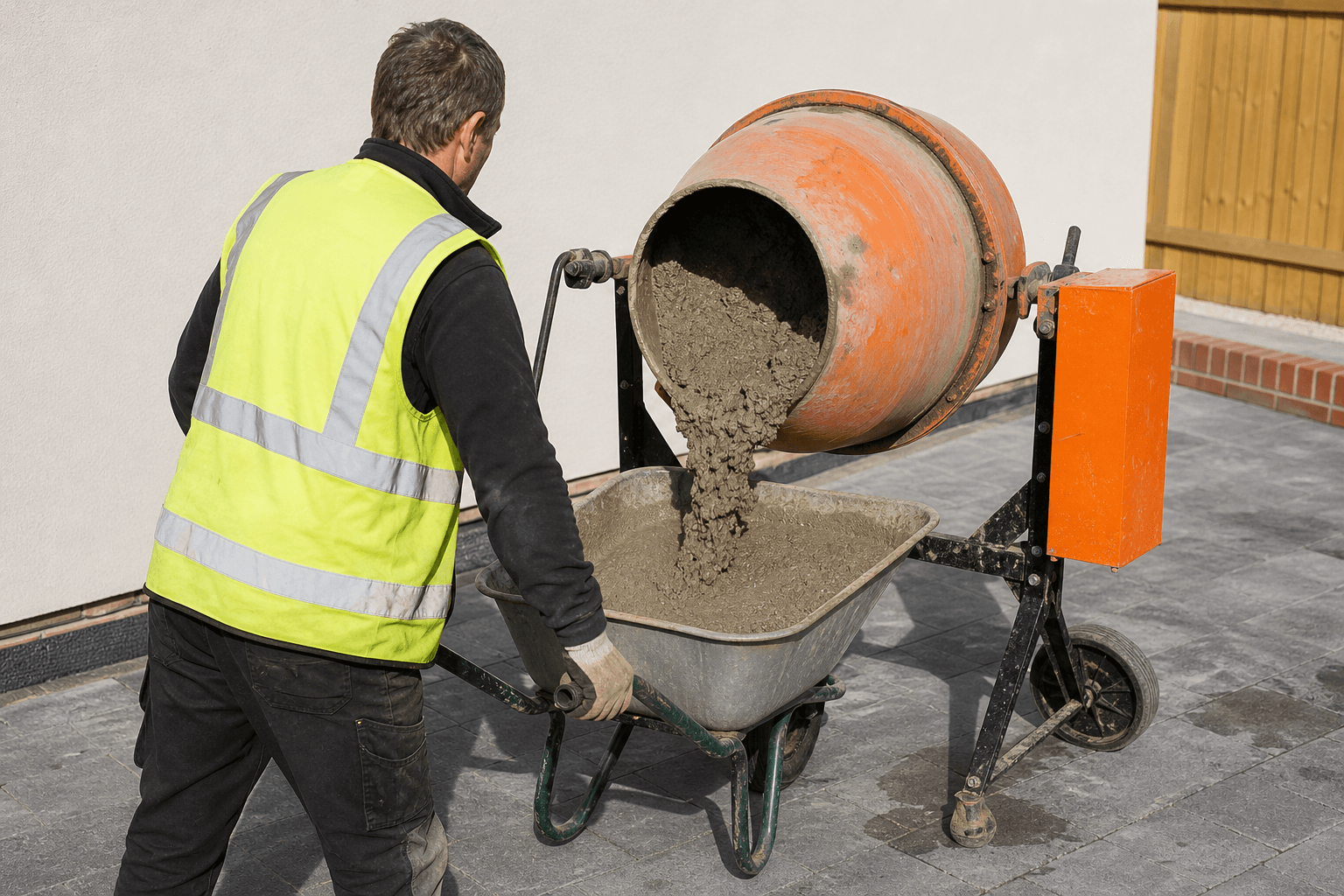
A concrete mixer is a heavy machine with a rotating drum, so the site needs to be prepared before the machine arrives. People working near the mixer should keep hands, shovels and other objects away from the drum while it turns.
The mixer should stand on a flat, firm surface, and the area around it should be clear of debris, tools and trip hazards. Keep the area dry, because wet ground increases the chance of slipping and can make the machine unstable. Check that any electrical supply is safe, and that any petrol or diesel mixer is refuelled only when the engine is off.
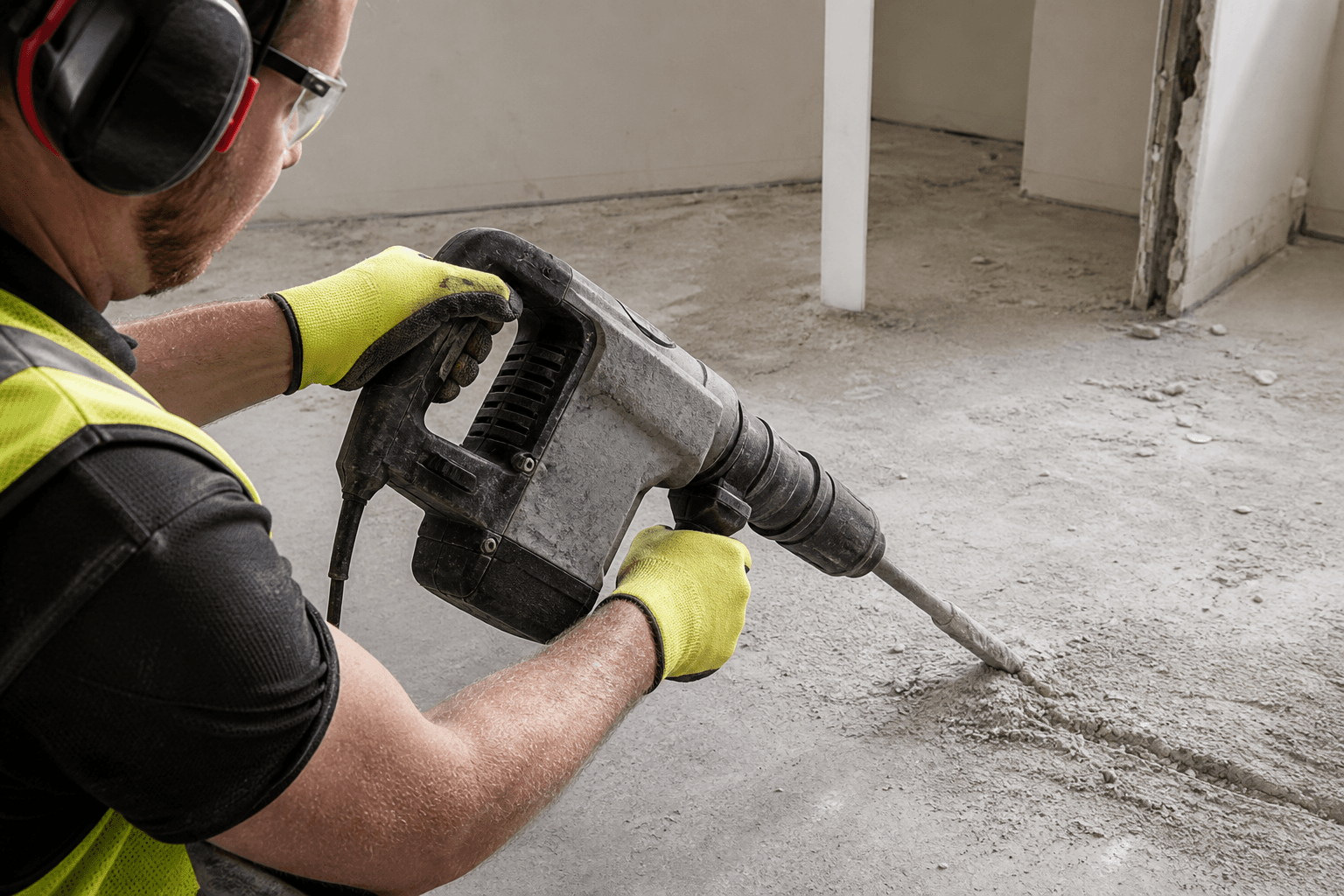
Cement mixes can harm the eyes, lungs and skin, so follow the instructions given by the manufacturer of the cement product. Ear protection, gloves and eye protection are sensible for most mixing jobs, and loose clothing should not be worn near moving parts.
Checklist before you collect the mixer
- Work out the total volume of concrete and choose a drum size that suits your batch rate.
- Check your driving licence entitlement and the MAM of the trailer and mixer combined.
- Confirm the vehicle's gross train weight and make sure it is not exceeded.
- Any trailer weighing over 750kg must have a working brake system.
- Prepare a flat, firm and clear work area, with a safe supply of water and materials.
- Ask the hire company for operating instructions, and read them before the first use.
- Confirm the hire cost, deposit and any delivery charge with the company, as these vary by depot.
You should confirm all charges directly with the hire company before you book, because prices are not set nationally.
Frequently asked questions
Can I tow a concrete mixer with a car?
You may be able to, if the mixer and trailer combined stay within your licence limit and the vehicle's gross train weight. A standard car licence from a test passed on or after 1 January 1997 allows a trailer up to 3,500kg MAM.
Does the drum size affect how I should load the mixer?
Yes, because the Highway Code asks drivers to distribute the weight in a trailer evenly, with heavy items over the axles. The manufacturer's recommended weight and tow ball load should not be exceeded.
Who should operate a concrete mixer?
Only trained and authorised people should use it. The mixer must be kept clean, and the area around it should stay clear of slip and trip hazards.
If you are looking for a supplier, you can start with tool hire in London or compare options in tool hire in Westminster and tool hire in the City of London. For other site equipment, read our guide to dumper hire, and for insurance terms, see how damage waivers work. GetBrent helps you find local hire companies that supply concrete mixers, trailers and other tools, so you can compare options and confirm the details with each firm before you book.